
A Year of the Pandemic for New York's Restaurant Industry: Suffering a 'Double Blow'
One year after the outbreak of the pandemic, New York City's restaurant industry has faced multiple impacts, including a sharp decline in tourists, the loss of office workers, and repeated restrictions on indoor dining. Over a thousand restaurants have closed, with employment and income dropping significantly. This article reviews key data and the policy timeline, and explores the relationship between restrictions and the spread of the pandemic.
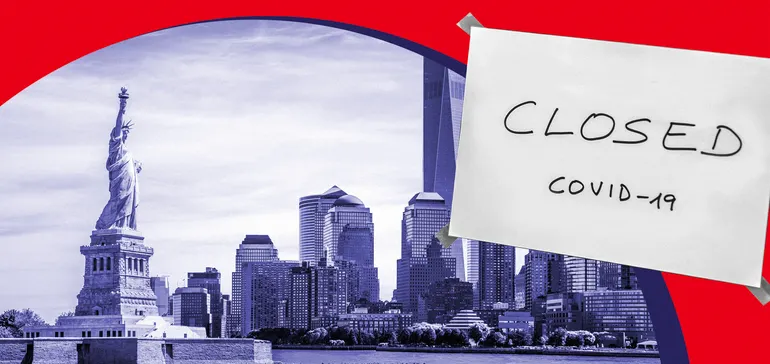
This article is the second in a six-part series examining the impact of the pandemic on major dining cities. Subsequent articles will bepublished here。
Overview
- Restaurant closures to date:At least 1,000 as of January, according to Eater NY.
- Restaurant industry job losses to date:122,400 jobs lost from March 2020 to January 2021, a 48% decline.
- Restaurant industry revenue losses to date:$10.3 billion lost from March to November 2020, a 59% decline.
"People are very frustrated with the disparities in enforcement in New York City, and that continues to this day. Public health and safety must come first, but after a year of crisis, we also need to address the economic crisis."
— Andrew Rigie, Executive Director of the NYC Hospitality Alliance
New York City's restaurants have long been known for allowing diners to taste flavors from around the world without leaving the five boroughs. However, the pandemic has plunged this world dining capital, once home to more than 25,000 dining establishments, into crisis.
With nearly 70 million tourists who once visited Times Square or saw Broadway shows each year now absent, the future of many restaurants is uncertain. Operators in core business districts have also lost the vast office population—regulars for morning coffee, lunch, and happy hour. And this situation is unlikely to improve for months.
Broadway is not expected toresume performancesuntil the fall. As of early March, only 10% of office workers in Manhattan had returned, according to a survey by the nonprofit Partnership for New York City.By September 2021, only 45% of employees are expected to return to city office buildings.
New York City's "Open Streets: Restaurants" program, which allowed restaurants to expand outdoor dining into nearby parking spaces, sidewalks, and roads, helped thousands of restaurants stay afloat temporarily. However, a year of intermittent indoor dining bans and restrictions has taken a heavy toll. According to a survey by the NYC Hospitality Alliance, 92% of local restaurants were unable to pay December rent.
With thousands of restaurants still at risk of closure, a key question arises: Did the losses suffered due to indoor dining restrictions actually help slow the spread of COVID-19?
Impact of NYC Dining Policy Changes on COVID-19 Incidence Rates
(Chart note: Monthly percentage increase in new COVID-19 cases from May 2020 to March 2021.)
Like other major cities, New York City experienced a surge in cases early in the pandemic when experts were still figuring out containment methods. Although cases increased by more than 2,600% between March 16 and April 16, 2020 (one month after the full indoor dining ban), growth stabilized by summer. At the end of June, with indoor dining restrictions still in place but outdoor dining allowed on city streets, the month-over-month case increase fell to single digits. Even after some restaurants were allowed to resume indoor dining at the end of September, cases rose about 6% in October and 11% in November. However, the citywide closure of indoor dining in December did not appear to slow the January surge—when cases increased by more than 35%, similar to the increase recorded on May 16.
According to contact tracing data for cases from September to November, 1.43% of cases were traced to exposure at restaurants and bars, while private household gatherings were the largest source of transmission, accounting for over 73%, as reported by Eater New York.
"We saw that indoor dining, which was heavily regulated and reduced in capacity, was not a major source of COVID-19 infections," said Andrew Rigie, Executive Director of the NYC Hospitality Alliance.
In the fall, New York City restaurants had to rely on Governor Andrew Cuomo's "Cluster Action Initiative." The plan designated color-coded zones across the five boroughs, especially in Brooklyn and Queens, where each color (which could change block by block) determined whether restaurants were allowed outdoor dining, indoor dining, or takeout only.
"All the restrictions were expensive and difficult to comply with," Rigie said. "The color zones didn't really change the requirements; they just limited the number of customers and locations we could serve."