
Virtual Brand Marketing: Opportunities and Challenges for Chain Restaurants
With the rise of third-party delivery platforms, virtual brands have become an important strategy for chain restaurants to cope with declining dine-in demand. However, marketing virtual brands requires both rapid market entry and building awareness in crowded platforms, while facing challenges such as commissions, data utilization, and brand differentiation. This article analyzes the practices of multiple catering companies and looks ahead to the development prospects of virtual brands in the post-pandemic era.
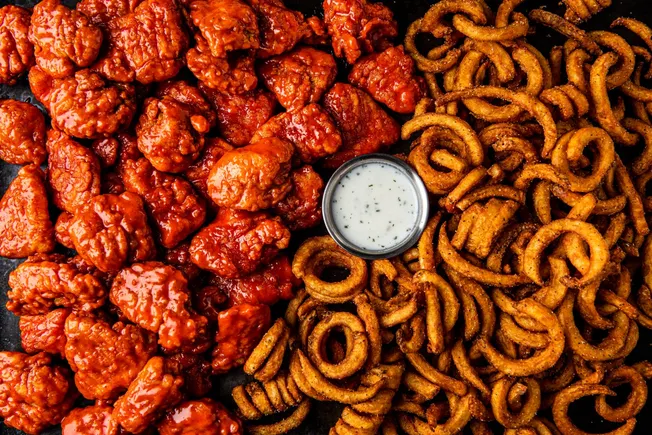
Browsing third-party food delivery apps, users will see a large number of local restaurants, familiar chain brands, and an increasing number of companies with generic names offering items like chicken wings, burgers, and pizza. Many of the latter are virtual brands, some operated by physical restaurants—which, not long ago, had expressed dissatisfaction with platforms like Uber Eats and DoorDash over commission issues, yet are now actively courting consumers eating at home as dine-in demand declines.
While some small restaurants have pivoted to virtual brands, more virtual brands come from major players in the casual dining sector, which are grappling with the ongoing impact of the pandemic on dine-in traffic. Last month, Applebee's, after launching the Neighborhood Wings concept in 2020, released a new brand called Cosmic Wings featuring aCheetos-flavored menu. Bloomin' Brands took itsTender Shake brand national, and Denny's announced plans for The Burger Den and The Melt Down brands. Most notably, Brinker International, parent company of Chili's, estimates that its It's Just Wings brand willgenerate $150 millionin annual sales.
"Virtual brands are proliferating in part because they can get to market quickly," said James Walker, senior vice president at Nathan's Famous, which operates the virtual chicken wing and waffle brand Wings of New York.
But speed should not be confused with ease.
"Building awareness requires real investment, and brands must focus on quality. It's no different from a physical brand," Walker said.
Marketing these brands—whether operated from physical restaurants or through ghost kitchens—presents unique challenges, as consumer behavior patterns for off-premise dining persist, while third-party platforms and the restaurants on them compete for diners.
The challenge is compounded by the fact that most virtual brands rely on third-party partners like Uber Eats, DoorDash, and GrubHub to support discovery and order fulfillment. These platforms take adouble-digit commissionfrom orders and have faced criticism from restaurants, drivers, and diners, but they are the most accessible route to market and also provide marketers with access to customer data. For most restaurants, third-party platforms are a current cost of doing business.
"The challenge of marketing virtual brands is learning how to best utilize the third-party marketing space," said Michael Breed, vice president of marketing at Brinker, via email. "We've found that smart, targeted marketing—and relevant messaging—creates the best user experience."
The pros and cons of third parties
For its virtual brands The Wing Experience and The Burger Experience, casual dining chain Smokey Bones focuses on menu categories it already has culinary capabilities in, such as wings and burgers, to avoid operational disruption. At the same time, Smokey Bones strives for enough differentiation to ensure revenue is incremental.
Marketing two distinct brand names gives the company more opportunities to generate awareness, both in its own channels and in the third-party space.
"The third-party marketplace is like a digital food court where customers can choose from many different restaurant options on their mobile devices," said Smokey Bones CEO James O'Reilly. "From a marketing perspective, virtual brands provide more awareness of our culinary options under different brand names in a marketplace that has extremely high reach."
"If we set aside the commission rates, these platforms have better intelligence on these delivery customers... We can leverage their intelligence about customers."
—James Walker, senior vice president at Nathan's Famous
Smokey Bones partnered with major providers in the third-party marketplace in 2019 and has invested in these relationships, cross-promoting with them and often promoting "aggressively" on these platforms. Smokey Bones studies analytics and insights to understand how to perform better and be more prominent on platforms that are not suited to the traditional first-party marketing the brand typically develops.
"In the third-party marketplace, creative communication of the brand proposition is largely dictated by how brands work with these partners and their creative guidelines, which require a high degree of consistency," O'Reilly said.
While activities on third-party platforms are limited to food photography, menu descriptions, pricing, and promotional information, these apps do provide marketers with consumer data they wouldn't otherwise have access to, which is increasingly a priority as the data privacy landscape tightens.
"Third-party platforms get a bad rap because of commission rates, but if we set aside the commission rates, these platforms in most cases have better intelligence on these delivery customers, and we can leverage their intelligence about customers," Walker said.
To capitalize on this data, marketers need to look for other marketing tactics to drive delivery sales for virtual brands on these crowded platforms. This might even involve traditional tactics like direct mail. Walker cited the example of mailing postcards within the delivery radius, with QR codes that direct customers straight to the brand's page on the platform.
The path forward as the pandemic recedes
Third-party platforms have provided virtual brands with an easy entry into the delivery space. But as these virtual brands accumulate assets—and as consumer behavior for off-premise dining solidifies—marketers may have the opportunity to operate independently. Brinker announced plans in January to offer It's Just Wings menu items for takeout at Chili's,bypassing third-party delivery commissions。
"We are committed to building the brand for the long term and see significant upside and potential. Chili's had a strong takeout, curbside, and delivery base before the pandemic, and it remains strong, so we're excited to explore and showcase the various ways we can further expand our business through virtual brands," Brinker's Breed said.
Smokey Bones, for its part, has partnered with an e-commerce provider to create its own online ordering, delivery, and pickup platform for The Wing Experience and is doing the same for The Burger Experience.
"We've been so encouraged by the results of our virtual brands that we are investing beyond the third-party marketplaces to develop our own direct-to-consumer platforms, and as that progresses, we are gaining more brand traction," O'Reilly said.
"We've been so encouraged by the results of our virtual brands that we are investing beyond the third-party marketplaces to develop our own direct-to-consumer platforms."
—James O'Reilly, CEO of Smokey Bones
Through its own platforms, Smokey Bones' virtual brands can capture a larger share of profits and—perhaps just as importantly—gain first-party data.
"Any brand that has the strength and resources to communicate one-on-one with customers, or can pivot to that capability, must do so," Nathan's Walker said. "Owning as much of the customer relationship as possible is critical, not only from a cost-of-marketing-campaigns perspective, but also to learn how to best market to them."
Whether continuing to rely on third-party platforms or pivoting to owned platforms, virtual brands appear poised to persist, even as vaccination efforts advance and the dine-in outlook brightens. But not all virtual brands are suited for the future.
"I think the virtual brands that will truly survive beyond the current situation are those that management teams have poured their hearts into in a strategic—not just opportunistic—way," Walker said.
