
Leveraging "Host Kitchens" for Expansion: What Do Restaurant Brands Need to Know?
The host kitchen model is becoming a new path for rapid expansion of restaurant brands. Wow Bao opened 53 new locations in a single day through this model, and Nathan's Famous has deployed 235 delivery kitchens. This article analyzes the model's growth potential, brand consistency challenges, and partner selection strategies.
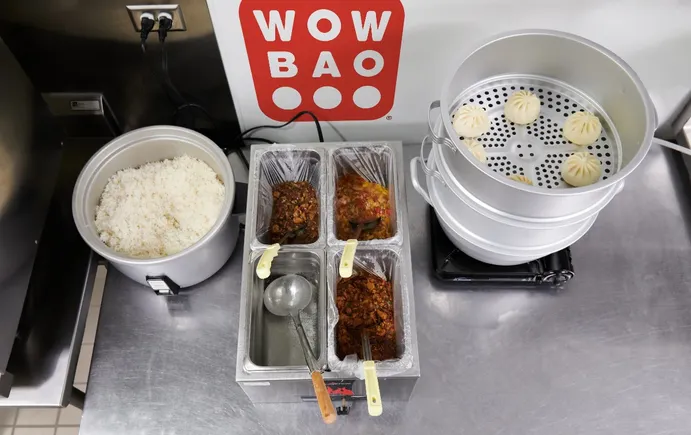
This year, Asian fast-casual chain Wow Bao achieved a milestone that was hard to imagine just a few years ago: opening 53 locations in a single day. How did it do it? None of these locations are traditional brick-and-mortar restaurants; instead, they are all set up inside the existing kitchens of other restaurants.
"Opening a brick-and-mortar restaurant involves a series of issues such as construction timelines, staffing, and capital expenditures," said Geoff Alexander, President and CEO of Wow Bao. "We don't have to bear any of that."
This strategy is part of the company's "Dark Kitchen program," which was launched in 2019 to expand rapidly without relying on traditional expansion paths. Through the program, Wow Bao partners with various restaurants to launch its brand in delivery-only kitchen formats, with a menu featuring bao buns, rice bowls, and potstickers. When the pandemic hit, this setup paid off.
Alexander said that since April 2020, Wow Bao has opened 400 delivery-only kitchens and expects to add another 300 by the end of the year. Before launching the Dark Kitchen program, Wow Bao had only 6 brick-and-mortar locations and 6 airport locations in Chicago.
During the pandemic, other restaurant and food-related companies also used host kitchens for rapid expansion, including Dickey's Barbecue Pit—which aims to be in 25 host kitchen locations by the end of the year—and Nathan's Famous, which opened its 100th ghost kitchen in February. Creating Culinary Communities (C3) partnered with POS integration company Chowly in June to offer C3's virtual brands to more than 10,000 kitchen partners nationwide. Nextbite is also expanding its virtual brands and celebrity collaborations, adding George Lopez Tacos earlier this year.
Alexander said host kitchens offer unlimited opportunities for restaurant brands. He said if you have seven brands, you could have seven different restaurants in New York City each operate one of those brands, then find another seven restaurants in the next block to each take on a brand. He added that nearly every restaurant in the U.S. could accommodate a Wow Bao, and this could even become a global opportunity.
"You can bring more restaurants online overnight," he said.
Despite the rapid growth, Alexander doesn't see a risk of oversaturation; instead, he believes it offers consumers more choices.
He noted that ghost kitchen providers, by contrast, need to find large enough spaces to accommodate shared kitchen operations, which means limited opportunities in cities.
Host kitchens can also help struggling independent restaurants gain a new revenue stream at minimal cost or business disruption.
"From last summer to now, I've heard many operators say that without us, those restaurants might not exist anymore," Alexander said. "We are their beacon of hope, allowing them to stay open and pay rent."

Host kitchens bring rapid expansion and quick returns
Wow Bao built its own host kitchen program, while chains like Nathan's Famous rely more on partnerships with host kitchen service providers like Franklin Junction. James Walker, Senior Vice President of Nathan's Famous, said the company is using this channel not only to expand its main brand but also to promote its two virtual concepts: Wings of New York and Arthur Treacher's.
"We want to bring our products to consumers in a way that is meaningful to both consumers and business partners," Walker said. "Both aspects are crucial to us."
As of August, Nathan's delivery kitchen portfolio had grown to 235 locations, many of which were launched during the pandemic.
"Opening 235 brick-and-mortar locations would not only involve higher capital expenditures but also take much longer," Walker said.
He noted that demand for Nathan's, Wings of New York, and Arthur Treacher's is strong nationwide and globally, making partnerships with companies like Franklin Junction that can accelerate expansion a logical choice.
"We believe our three brands matter because they have brand equity, history, and very strong consumer appeal," Walker said.

Partnering with Franklin Junction also allows Walker and his team to focus on other business opportunities. The platform manages and supports the customer restaurants serving as host kitchens, in a manner similar to how Nathan's manages its franchisees.
He also mentioned that Franklin Junction prefers to work with established brands rather than delivery-only concepts.
"We believe there are already many excellent brands in the market looking for rapid expansion opportunities to enter new markets and reach new consumers, goals that might otherwise take years and significant capital, or might not be achievable at all," said Rishi Nigam, CEO of Franklin Junction.
Nigam said that because consumers recognize the Nathan's brand, it can maintain strong sales within a year or two of launching virtually in new markets.
Darrin White, Chief Operating Officer of Frisch's Restaurants, said he prefers partnering with established restaurant brands like Nathan's Famous. White owns and operates nearly 100 Big Boy restaurants in Indiana, Kentucky, and Ohio, and franchises 25 locations. He is a long-time supporter of host kitchen partnerships and has seen revenue growth from brands in the Franklin Junction network.
White said a brand with history—even if that history is just a few locations in a certain city—has more recognition and consumer awareness than a purely virtual brand with no physical presence. This way, even if customers have never heard of the brand, they can search for it on Google and confirm it is real, which often adds to brand credibility.

Brand and menu consistency are crucial
Experts point out that while established brands benefit from consumer recognition, there are many things to understand before entering host kitchen partnerships. For example, outsourcing the brand to a host kitchen operator means losing control over food quality and consistency.
"I think this could be where the shakeout happens between brands and host kitchen service providers," said Michael Schaefer, Global Head of Food and Beverage at Euromonitor International. "Service providers that can ensure consistent quality will be the ones that become a viable model for brands and restaurants."
Buck Sleeper, Head of Retail Experience Consulting at EPAM Continuum, said restaurants need to be wary of plating, consistency, coordination between the host kitchen and delivery drivers, and the overall customer experience.
"If you are an established brand like Nathan's Famous, you have to be very careful when launching your brand," Sleeper said. "Because if it fails in a partnership using someone else's infrastructure, they won't be blamed—you will."
Sleeper also noted that even if a restaurant brand is well-known, the host kitchen operator may remain anonymous, which conflicts with consumers' desire for transparency and accountability.
"I think for franchise brands that are used to working with external operators, host kitchens could be attractive with the right menu and in the right circumstances," Schaefer said.
For example, Nathan's food is well-suited to this model because hot dogs and sandwiches travel better than fried foods.
"But host kitchen partnerships also require adjusting the brand experience to ensure only food and menu items that can be executed in that environment are offered, rather than items that require specific kitchens or differently trained staff," Sleeper said.
Despite these challenges, Sleeper said mid-level managers and owner/operators of restaurant brands have told him that the arrangement does work. Host kitchens enable them to scale massively—opening 30, 40, or even 100 virtual kitchen locations—and that momentum is worth the trade-off in brand control.
Choose partners carefully
Walker said one way to ensure brand consistency is to choose host kitchen partners carefully.
"The host kitchen will represent your brand, whether or not it involves the delivery experience," Walker said. "We view delivery as another way to create an experience. We care just as much about the delivery experience as the dine-in experience."
Alexander said that when potential restaurant partners inquire about Wow Bao's Dark Kitchen program, Wow Bao reviews their menus, food photos, and online reviews. Wow Bao also sends marketing materials and resale agreements to potential host kitchen partners, typically followed by a phone call to provide background on the program. Savvy operators usually ask a lot of questions. If an operator signs up without verification and the Wow Bao team has never met with their management, that is usually a red flag.
"If you are an established brand like Nathan's Famous, you have to be very careful when launching your brand. Because if it fails in a partnership using someone else's infrastructure, they won't be blamed—you will."

Buck Sleeper
Head of Retail Experience Consulting at EPAM Continuum
"When growing at such a rapid pace, you have to be careful not to forget consumer sentiment," Alexander said. "Good operators know how to extend that sense of hospitality to customers purchasing at home."
Wow Bao offers training programs, including virtual videos and Zoom demonstrations, to ensure kitchen equipment is set up correctly. Alexander said these sessions give the company confidence that operators can execute brand standards properly. Wow Bao supplies its food products—operators just need to steam and prepare them for delivery.
"We're not teaching host partners how to cook recipes or how to prep food," Alexander said. "The products are very simple."
Although Wow Bao and other brands are growing through this model, Alexander believes brick-and-mortar locations will not disappear.
"The restaurant industry needs to keep evolving," Alexander said. "This is just a new evolution, a new innovation in how we reach customers."