
New Revenue Recipe: Why Restaurants Are Turning into 'Host Kitchens'
Manhattan barbecue chain Mighty Quinn's brought Otto's Tacos, which had closed due to the pandemic, into its back kitchen, achieving takeout brand production with minimal capital investment and launching a host kitchen partnership. This model requires no additional rent or significant labor, and is becoming a new strategy for the restaurant industry to cope with uncertainty. Experts predict that by 2025, more than half of U.S. restaurants will sell multiple brands.
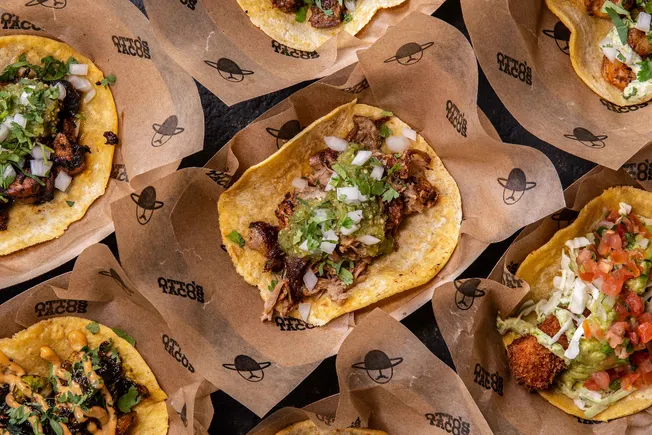
When Otto's Tacos in Manhattan was forced to permanently close its four locations due to the pandemic, Micha Magid, co-CEO of neighboring restaurant Mighty Quinn's, came up with a way to keep it alive. The barbecue chain brought the taco brand, which had built a loyal customer base over the past nine years, into its own kitchen and transformed it into a delivery-only brand in December 2020.
Magid, who had been friendly with Otto's Tacos owner Otto Cedeno for years—the two restaurants are just two blocks apart—said the partnership was mutually beneficial.
Magid said Mighty Quinn's added a new business with minimal capital investment—just installing a flat-top grill to meet Otto's Tacos' needs—and began generating revenue from the concept from day one. Cedeno and his culinary team trained Mighty Quinn's staff to ensure the menu of tacos, bowls, and salads met customer expectations. Magid said Otto's Tacos, in turn, receives a licensing fee.
Magid noted that Mighty Quinn's didn't need to invest much in marketing to promote Otto's Tacos because the restaurant had previously served thousands of people weekly across its locations and had an established social media presence.
"Otto's Tacos didn't exist out of thin air. It's something people have genuinely experienced across the city," Magid said. "I think that's why our monthly sales exceed those of typical digital ghost brands, because they have such a deeply rooted fan base."
Since fall 2020, Mighty Quinn's has been operating Otto's Tacos at one of its locations, and Magid said the company plans to expand Otto's to other Mighty Quinn's locations in the future.

Mighty Quinn's is capitalizing on a growing phenomenon in the restaurant industry: restaurants of all sizes are partnering with external food brands to use existing kitchen space to prepare delivery menus for these concepts. Experts say that unlike ghost kitchen providers—which typically offer off-site shared kitchen space involving multiple operators and requiring rent—host kitchen arrangements usually involve low capital investment, require little to no additional labor, and no extra rent.
"Over the past 18 months, every independent restaurant has found itself with significant idle capacity," said Michael Schaefer, global head of food and beverage at Euromonitor International. "This provides a lot of room to experiment with approaches like this."
While Mighty Quinn's and Otto's Tacos reached their host kitchen arrangement on their own, other restaurants are turning to third-party companies—such as Franklin Junction, Nextbite, Epic Kitchens, Acelerate, and C3—to help them execute a second brand's delivery business in their kitchens.
Schaefer said restaurant operators can earn an additional $5,000 to $20,000 per month by partnering with host kitchen facilitators.
"This is real money," Schaefer said. "It's not the whole business, but it's significant."
This opportunity will shape the future of restaurant operations, said Rishi Nigam, CEO of Franklin Junction.
"I'd venture to say that by 2025, more than 50% of restaurants in the U.S. will sell multiple brands. By the end of this decade, that number will reach 90%," Nigam said.
Host virtual brands: incremental revenue amid market uncertainty
Nigam said the strategy behind host kitchens isn't new. Co-branded restaurants have long existed, but they often struggled to succeed because customers were confused by locations marketing two different restaurants simultaneously. Advances in products and technology—such as integrated online ordering platforms, the growth of delivery marketplaces, and consumer acceptance of delivery—have paved the way for host kitchens in the market, Nigam said.
"All these factors had to come together to create an opportunity where a given kitchen can operate as multiple brands online without impacting the in-store experience," Nigam said.
Franklin Junction, founded in 2019 and holding the trademark for the term "host kitchen," connects restaurants with independent operators or chains that have space to prepare external brand menus and coordinate delivery orders.
"In the U.S., including restaurants, hotels, convenience stores, and more, we have over a million kitchens," Nigam said. "We have the second-highest number of restaurants per capita after Japan, so we really don't need more restaurants. What we need are ways to make these kitchens more profitable."
While profit margins in the restaurant industry typically range from 3% to 5%, joining the Franklin Junction platform can boost a host kitchen's combined margins to over 10%, Nigam said.
"We really don't need more restaurants. What we need are ways to make these kitchens more profitable."

Rishi Nigam
CEO of Franklin Junction
Darrin White, chief operating officer of Frisch's Restaurants—which owns and operates nearly 100 Big Boy restaurants in Indiana, Kentucky, and Ohio, and franchises 25 locations—has been a longtime supporter of host kitchen partnerships. White said the pandemic made Frisch's partnership with Franklin Junction, which began in 2019, even more valuable.
"It's one thing to say, 'Hey, we're going to focus on delivery orders, online orders, and third-party delivery orders for our existing brand,'" White said. "But when you add incremental brands and see them start to take off and gain momentum, it really helps us stay focused on innovation and agility."
White's goal is to achieve $3,000 per week per store in sales through Franklin Junction's partner brands at its Frisch's-owned locations. To reach that financial target, some Frisch's locations have had to add more virtual brands, but that can introduce complexity that's difficult for employees to manage, he said.
"For me, this is a very cost-effective revenue stream. There's little to no incremental labor. Food costs and royalties are the real expenses," White said.
White hopes to eventually have a portfolio of eight concepts that the company can deploy flexibly across its restaurants while keeping complexity low and marketing and training simple.
"You can find a combination. Each restaurant might execute two or three concepts in the back of house, but those concepts could be completely different from a restaurant five miles away," White said. "Having that flexibility to work with multiple concepts will be crucial."

Labor pressures, facilitator fees, and infrastructure: the challenges of host kitchens
Experts say host kitchens don't require additional labor, but operators need to ensure staff support the changes that come with adding a second restaurant concept to the kitchen. Nigam said the extra revenue can actually help improve the employee experience.
"You're generating incremental revenue that can be used to incentivize employees, pay higher wages, and keep up with payroll," Nigam said. "I think we actually help many host kitchen partners better navigate the labor challenges that exist in the current market."
Buck Sleeper, head of retail experience consulting at EPAM Continuum, said restaurants also need to be wary of the percentage that host kitchen facilitators take from sales. While large platforms like Nextbite can provide convenience by managing employee training, menu development, and marketing, they typically charge around 45% commission. However, Nextbite charges a 15% commission fee.
"This isn't a cheap endeavor, even though the startup costs appear low," Sleeper said.
Still, some restaurants have earned substantial revenue by adding virtual brands to their store networks, said Daniel Fleischmann, vice president at Kitchen Fund, a growth equity investor.
"When you roll out a virtual brand to 50 locations, even with a small base, it generates meaningful cash flow that you can reinvest in the business," Fleischmann said.
Alex Canter, co-founder of Nextbite and CEO of Ordermark, believes virtual brands can create a more sustainable business model for restaurants. Nextbite has 15 virtual brands at hundreds of locations across the U.S. and in every major city, partnering with restaurants ranging from fast-food spots to steakhouses.
Sleeper said to succeed, host restaurants need to ensure the virtual brand is compatible with existing infrastructure. For example, a donut shop would struggle to operate a grilled cheese concept in its kitchen.
Some restaurants are hesitant to add virtual brands for fear of disrupting existing operations, so Nextbite carefully develops virtual brands with simple menus and few required ingredients, Canter said. For example, its Fire Belly Wings brand only requires host restaurants to cook chicken wings and prepare a few sauces.
Nextbite uses a detailed pre-qualification checklist to assess a restaurant's potential for partnership success, including reviewing the restaurant's performance, online ratings, kitchen equipment, kitchen capacity at specific times of day, and geographic location.
Geographic location is especially important, particularly when selling a brand to a specific demographic. One Nextbite partner insisted on operating Wiz Khalifa's Hotbox brand, which tends to appeal to a younger crowd, but the host kitchen was located near a retirement community and ultimately underperformed due to the demographic mismatch.
Franklin Junction takes a more consultative, case-by-case approach when evaluating potential host kitchen partners. Nigam said evaluating a hotel is different from evaluating a full-service restaurant, which is different from evaluating a fast-food restaurant or convenience store.
Franklin Junction uses an algorithm to assist its matching efforts. Nigam said its algorithm is similar to those used by dating sites like eHarmony, considering dozens of factors between the two businesses to create a compatibility score. In the process, Franklin Junction examines menus, ingredients, equipment, market conditions, target customers, pricing, demographics, labor, and more, he said.
Nigam said there's also a human element in finding qualitative matches. While Franklin Junction presents multiple brand recommendations to potential host kitchens, it ultimately decides which host kitchens will be paired with which restaurant brands.
Successful pairings will help ensure host kitchens generate incremental revenue, which Nigam said can reach margins as high as 30%.
"This is the norm," Nigam said. "It's the only way that investing in restaurants and opening physical locations makes sense."
Nigam said the industry's understanding of the potential of host partnerships is still in its early stages. Meanwhile, host kitchens and virtual brands can use these partnerships to help navigate the ongoing economic uncertainty in the restaurant industry and ensure sufficient revenue, Sleeper said. That way, these businesses can truly focus on scaling operations rather than constantly worrying about the bottom line, Sleeper said.
"Everyone is very worried that they may need multiple options to stay open and weather whatever comes next," Sleeper said.
Correction: In a previous version of this article, EPAM Continuum was incorrectly referred to as EPAM Consortium.