
How Host Kitchens Drive Virtual Brands Forward
This article is the third in a series on host kitchens and virtual brands, focusing on how virtual brands leverage the host kitchen model for rapid expansion. Using MrBeast Burger as an example, it analyzes the strategies behind its success and operational challenges, and interviews multiple industry experts to discuss the sustainability, transparency issues, and future evolution of virtual brands.
This article is the third in a series on host kitchens and virtual brands. The first article in the series discussed how restaurants can become host kitchens, while the second focused on how brands can expand through host kitchens.
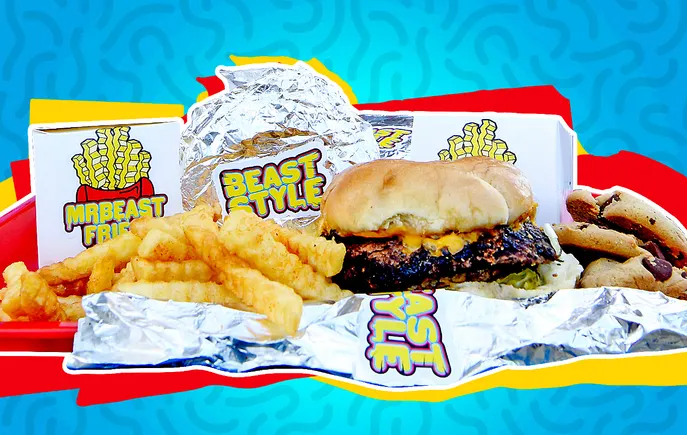
In November of last year, 22-year-old YouTube celebrity MrBeast (real name Jimmy Donaldson) opened a restaurant and paid customers to try his burgers. Before the restaurant even opened, a line of 1,000 cars had formed, and police had to block off a mile-long stretch of road to maintain order. Giving away free cash to drive-thru customers is certainly an unusual business strategy, but it did bring the food concept widespread attention.
The delivery-only brand initially launched in December through a partnership with Virtual Dining Concepts across 300 existing restaurants. Within three months, MrBeast Burger sold 1 million burgers, generating at least $32 million in sales. He leveraged his success as a social media influencer and nearly 50 million followers into a viral food brand. Since then, its network has expanded to over 1,000 locations nationwide.
Although this online phenomenon may seem like an overnight success, experts say that launching a purely virtual brand requires a great deal of strategy. Meanwhile, numerous celebrities, including George Lopez, Mariah Carey, Mario Lopez, and Wiz Khalifa, as well as traditional chain brands, are jumping on the virtual restaurant trend. Some analysts question whether virtual brands can sustain growth in an already saturated industry.
"I think some of these (virtual restaurant brands) are very interesting, and they attract the attention of investors and operators because of the speed of their expansion," said Daniel Fleischmann, vice president of growth equity investor Kitchen Fund.
Fleischmann noted that although MrBeast Burger initially generated buzz, its Yelp rating is only between 2 and 3 stars, which is not ideal for a restaurant. Many reviewers complained about food quality and small portions.
"I think this highlights the complexity of training, supply chain, and broader operational aspects—to consistently deliver quality products to consumers at scale while maintaining reasonable price points," Fleischmann said.

Celebrity partnerships and strategic marketing help virtual brands gain attention
Geoff Alexander, CEO and president of Wow Bao, said that any operator looking to launch a virtual brand or become a host kitchen should not expect immediate million-dollar sales and success. Wow Bao is aggressively expanding through partnerships with other restaurants that use their existing kitchens to sell Wow Bao's buns, potstickers, and bowl meals.
"Anyone can start a project tomorrow and get it listed on third-party platforms. But the troubles that come with it, I don't think everyone considers—such as brand positioning, packaging, company name, recipes, R&D," Alexander said.
For example, Nextbite has carefully researched and created more than 15 brands over the past few years, designing marketing and food packaging that support a delivery-only business.
The company also leverages celebrity power to boost its platform. Nextbite partnered with George Lopez this year to develop George Lopez Tacos, tapping into the actor's influential audience, said Alex Canter, CEO of Ordermark and co-founder of Nextbite. Concepts backed by celebrities and influencers help generate consumer enthusiasm to try the brand, thereby maximizing revenue for host kitchens.
Canter pointed out that the popularity of virtual brands is leading to crowding on third-party apps. He estimates that the number of restaurants on third-party delivery platforms is double what it was a few years ago, but restaurants should be wary of the challenges of developing a purely online customer base.
"It's very important to dig deep into how to market these brands directly to reach audiences, maximize exposure and SEO on various platforms, and promote outside of the apps," Canter said.
Nextbite spent years figuring out what works and what doesn't, which promotions get people to try for the first time, and how often to launch. In September, George Lopez Tacos used a taco truck to give away free tacos at four locations in Denver, along with a $10,000 cash giveaway, to promote the brand in Nextbite's hometown. Over the four days the truck operated, the campaign gained strong social media traction, with 2,000 customers sampling the menu items.
Nextbite helps its host kitchen partners prepare and market their brand food and monitors host restaurant performance to ensure food consistency. The company aggregates reviews across different platforms to provide real-time feedback to facility partners, ensuring they meet certain standards, Canter said. For example, the company has a mystery shopper program where it pays consumers to try its restaurants. Mystery shoppers fill out detailed questionnaires and upload food photos to ensure everything arrives as expected.
"I think there are a lot of people just casually launching brands without really considering the importance of food quality," Canter said. "And a large amount of consumer behavior data and data usage can determine what kind of brand we should build first."
Canter said companies that invest in the right packaging, figure out which foods are suitable for delivery, and carefully design the experience will stand out.
For example, when Nextbite launched George Lopez Tacos in multiple markets, it designed a deconstructed, DIY taco kit with a stack of tortillas, a pile of meat, and sides and sauces. This not only provided an interactive experience but also a higher-quality meal, Canter said. Even if the kit sits in the car for 20 to 30 minutes, it will be in better condition than pre-made tacos.
"I think this is the 'Wild West' period for virtual brands. Before trying, we don't know what will succeed and what won't," Canter said. "So we will continue to experiment, launching different types of collaborations and partnerships to truly find the key factors that drive our restaurants forward. This includes more celebrity partnerships in the future."
Can virtual brands survive long-term?
Experts agree that not all virtual brands will achieve long-term success. These concepts lack the long history of success, proven recipes, or consumer recognition that traditional chain restaurants can rely on. Therefore, virtual restaurant brands may be less sustainable than traditional brands, said Rishi Nigam, CEO of Franklin Junction. This host kitchen coordination company is partnering with a growing number of existing food brands, such as Nathan's Famous, that want to expand their digital presence.
Nigam said many virtual brands only last about six months because they initially generate a lot of sales but often have no repeat customers, and then they die out.
"When it comes to sustainability and the ability to create new revenue or incremental profit, I think the jury is still out," Nigam said.
"I think this is the 'Wild West' period for virtual brands. Before trying, we don't know what will succeed and what won't."

Alex Canter
CEO of Ordermark and co-founder of Nextbite
Buck Sleeper, head of retail experience consulting at EPAM Continuum, said he believes virtual brands are not meant to last long-term.
"I think that's exactly their role," Sleeper said. "This may require us to change our view of physical stores. ... The cycle for virtual brands is much faster because there is minimal physical infrastructure."
Experts say existing restaurants that launch their own brands in their own kitchens may also run into trouble.
"If your new virtual brand uses the same ingredients already in the kitchen, just highlighting them under a different name, then you're likely cannibalizing some of the revenue of your existing brand in that delivery market," Nigam said.
Maintaining the same level of marketing for virtual brands as traditional brands can also be costly.
"You have to understand that these brands need to be supported from a marketing perspective. Not only is the launch expensive, but so is the ongoing maintenance," said Darrin White, COO of Frisch's Restaurants. Frisch's has partnered with Franklin Junction as a host kitchen for several virtual brands.
Nevertheless, there are success stories among virtual brands. Brinker International's It's Just Wings exceeded $170 million in sales in its first year and built a strong brand image, White said. But as incremental business declines, Brinker will need to plan future marketing strategies for the brand, White noted.
"Standing out on DoorDash won't get easier. Getting customers to use your app won't get easier either," said Michael Schaefer, global head of food and beverages at Euromonitor International. "I wouldn't use an app for every restaurant I like."
Fleischmann said it may take several years to see which virtual brands can succeed, especially those with the best value proposition for consumers.
"I'm not very optimistic about the idea that 'let's keep launching virtual brands, and they'll all succeed,'" Fleischmann said.

How delivery-only brands will evolve in the future
Analysts say the most successful virtual brands may be those that are most transparent with customers, especially since most diners were unaware these concepts existed before the pandemic. According to a consumer survey by Datassential, 55% of people think it's dishonest for restaurants to sell the same food under a different name, while 60% said they want virtual brands to share their location and disclose their digital-only nature. Yelp added tags in September for operators to indicate they are delivery-only brands, which may help improve transparency. Nextbite also notes on its virtual brand websites, including George Lopez Tacos, that the concept is a virtual restaurant.
Chuck E. Cheese learned firsthand when it launched its delivery-only brand Pasqually's Pizza & Wings in 2020 that transparency is a key element in marketing virtual brands. The entertainment restaurant chain used the brand to expand delivery during the pandemic, but many customers who thought they were supporting a local pizza chain were angry when they discovered the food actually came from Chuck E. Cheese, feeling deceived.
Chuck E. Cheese denied trying to deceive customers, previously telling Food & Wine that launching Pasqually's was to increase delivery business and offer a higher-quality option with thicker crust and more sauce.
"I think this is actually an opportunity to let customers take control and participate in deciding Pasqually's future, just as they seek customer input for the core brand," Sleeper said. "If you don't show or seek that transparency, you miss the chance to customize the experience."
There are other collaboration opportunities between virtual brands and host kitchens. Sleeper said he would like to see brand incubators where host restaurants can help fine-tune brand offerings and provide more feedback. This model could lead to more strategic profit-sharing relationships than standard host kitchen arrangements.
"I think learning from hosts about what works, what doesn't, what's necessary, and what isn't is a great way for brands occupying this space to understand how to adjust their business models and how to bring those lessons back to other properties they own or brands in their own kitchens," Sleeper said.

Schaefer said virtual brands can also offer a degree of experimentation and serve as a way to introduce new brands, and he expects more food and beverage companies to try virtual brands in the future. For example, Wingstop launched the purely virtual brand Thighstop in the summer to test a chicken thigh menu. The brand received excellent feedback from customers, and Wingstop subsequently added the products to its core menu and gradually phased out the brand.
"I don't think (virtual brands) will disappear, but I also don't think we'll see a future dominated by virtual brands," Schaefer said.
Schaefer said the evolution of direct-to-consumer retail brands may indicate where the virtual brand market is headed. Many direct-to-consumer retail brands that made an initial splash five years ago have shut down, such as Brandless and Shoes of Prey, because online concepts are costly to advertise. Other brands like AdoreMe and Casper have adopted hybrid models, offering both physical retail stores and online shops.
"I suspect we might see the lines blur between host kitchen coordinators, third-party ghost kitchen operators, and restaurants," Schaefer said. "If a virtual brand gets big enough, I think ghost kitchen operators will eventually say to them, 'We have a lot of space, maybe we can get involved too.'"
The post-pandemic environment will also make restaurants more diversified.
"Many restaurants did this out of desperation. They were just trying to stay operational. So, as business starts to recover, there are more options. We'll see more models and more combinations to make it successful," Schaefer said.