
How can fast food franchise systems balance new brand marketing requirements with franchisee interests?
In the restaurant franchise system, there is often tension between headquarters and franchisees regarding marketing demands: the former pursues brand building, while the latter focuses on store sales. The pandemic and the digital wave have intensified this contradiction. This article, drawing on insights from industry figures such as Fransmart CEO Dan Rowe and Five Guys CMO Molly Catalano, analyzes the impact of national marketing campaigns on franchisees and introduces practical cases such as Five Guys' use of tools like Local Hero to empower franchisees and balance the interests of both parties.
In the restaurant franchise system, the corporate headquarters and franchisees can usually reach agreement on many matters, but marketing is often an exception. The reason is that the franchisor, which hopes to build a regional or national brand, may have needs that conflict with local franchisees who just want to drive store sales. This opposition has long existed, and has been amplified by the dramatic upheaval in the commercial and consumer environment over the past 18 months.
In essence, the franchise model leverages advantages at different levels. Franchisees are store operators, not marketing experts. Both sides have different priorities and financial demands, so a certain degree of tension is inevitable. But as the pandemic continues to impact restaurant sales while accelerating the shift to digital marketing, franchisors and franchisees are both seeking a path that satisfies both parties' needs without alienating consumers—who themselves have a new set of priorities.
"A lot of times, marketing requirements can ruin relationships or create ill will that manifests in other ways," said Dan Rowe, CEO of Fransmart, a franchise development company.
Typically, franchisees contribute funds to support national advertising, while headquarters, in order to compete for market share, focuses on creating marketing campaigns that generate brand buzz in a competitive environment. But if national campaigns fail to effectively drive consumers to franchisee stores, it can lead to franchisee dissatisfaction.
"Franchisees are struggling, and the company, in its 'wisdom,' spends money to launch a big campaign," Rowe said. "Not only is it a non-profitable campaign, but they're also spending franchisees' money to do it."
According to Rowe, brands like Domino's have done a good job balancing different needs, while brands like Burger King have not. Domino's often uses marketing funds to make it easier for customers to spend at their stores in the digital world—reflecting its often-cited philosophy of being a "tech company that sells pizza." In contrast, Burger King often relies on marketing that generatescontroversyor promotions like "10 chicken nuggets for $1," which often leaves franchisees at a loss.
National Marketing, Local Challenges
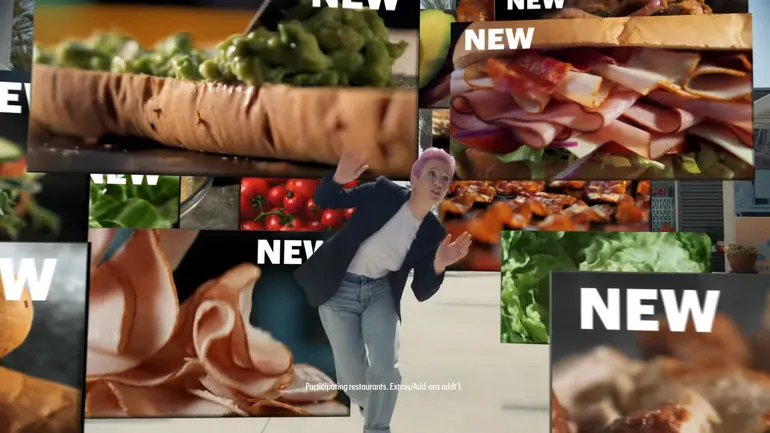
When corporate-level marketing campaigns hit turbulence, it's often the franchisees who bear the brunt. For example, Subway recently launched its "Eat Fresh Refresh" brand overhaul in July, featuring a massive promotion that enlisted four top American athletes—Serena Williams, Tom Brady, Steph Curry, and Megan Rapinoe. However, later in the summer, Rapinoe sparked controversy by kneeling in protest against racism during the Tokyo Olympics, and Subway faced criticism as a result. According toBusiness Insider reports, some Subway franchisees and customers complained to the company about Rapinoe appearing in ads, with franchisees saying the campaign did not bring in additional foot traffic.
However, not all franchisees performed the same: Subway's total U.S. store sales in August were up4%compared to the same period in 2019, with the top-performing quarter of stores seeing transaction volume up 33% from two years earlier. Despite sales growth, the controversy did affect some franchisees.
As many brands have seen in recent years, purpose-driven marketing campaigns and politically positioned endorsers have made it extremely difficult to communicate with an increasingly polarized consumer base. In Subway's case, an AugustPiplsay surveyshowed that 45% of U.S. consumers believed Subway should respect public sentiment and drop Rapinoe's brand ambassador role, while 36% thought the brand should respect her views.
For marketers, these are difficult waters to navigate, especially given the long lead times of national campaigns. The decision to bring in Rapinoe was likely made months before the campaign launched, but that may not matter to franchisees.
"Franchisees' hard-earned money is being put into things that backfire," Rowe said. "When a franchisee joins a system and pays marketing fees to headquarters, the headquarters must deliver on its promises."
If the entire system reaches consensus on how the company uses national advertising funds, the unintended consequences of national campaigns on local franchisees can be mitigated. This is often achieved through a committee of franchisees that participates in marketing decisions. Take the burger chain Five Guys, for example, whose Chief Marketing Officer Molly Catalano relies on a task force to oversee brand advertising.
"In terms of franchisee marketing, we've always said they can do local marketing, but it needs approval," Catalano explained. "Overall, our franchisees are supportive. They consistently invest in their own stores. When we decide to run an advertising campaign, we make decisions together with franchisees."
Empowering Franchisees
Five Guys might be an exception in the restaurant industry because it didn't invest in external marketing until the end of 2017, and most of its marketing budget still goes to its mystery shopper program. For local advertising, the only hard rules are no coupons or discounts, and no TV ads; franchisees occasionally place newspaper or radio ads.
The chain has about 400 company-owned stores and 1,000 franchise locations, uses shared funds, and works with agency MRY on national advertising, social media, and some programmatic advertising. Although franchisees can have their own Facebook pages, setting up ad campaigns on the platform is not their core competency.
"If you don't have experience with Facebook Business, it's a bit difficult to set up. Some franchisees can do it, some are interested in learning, but it's not their main job," Catalano said.
The demand for franchisee-oriented digital advertising led Five Guys to partner with marketing group Boulder Heavy Industries to use its self-service digital local marketing app, Local Hero. Local Hero automates functions that corporate leaders would otherwise have to handle manually (including creative ad and channel approvals to prevent duplication or misuse), enabling franchisees to launch campaigns across multiple platforms.
"When franchisees are picking up their kids or between shifts, they can pull out their phone and run a campaign without having to be a marketing expert," said Adam Edelman, founder and executive chairman of Boulder Heavy Industries.
"When a franchisee joins a system and pays marketing fees to headquarters, the headquarters must deliver on its promises."

Dan Rowe
CEO, Fransmart
Instead of having to create creative, get approvals, and decide targeting strategies for various ad platforms, marketers can use Local Hero to launch channels—including Facebook, Google Display Network, Instagram, and Waze—that deliver real results for franchisees. The company works with businesses to build and test creative templates.
"When franchisees log in, they see what we think the campaign will deliver. They don't have to choose a channel; instead, they can choose a likely outcome," Edelman said.
Local Hero aims to address the inequality between franchisors and franchisees. Edelman explained that franchisors focus mainly on national advertising, but a significant amount of their time and money goes to supporting the bottom-performing quarter of stores. This leaves mid-tier franchisees who want to grow and expand often struggling to get the resources they need. This approach may also alleviate franchisee concerns about national campaigns—such as Subway's "Eat Fresh Refresh"—which spend money on endorsers but can have unforeseen consequences.
"This hopefully reduces franchisees' concerns that headquarters doesn't focus on the local level, only the national level," Edelman said. "Within the scope of headquarters' authority, they can leverage those national endorsements and spokespeople, thereby telling franchisees: 'We're delegating some of this work down so you can benefit at the local level.'"
Five Guys and its franchisees currently primarily use Local Hero for recruiting purposes, as the chain faces the same widespread labor issues as the industry. This alignment from marketing to other aspects has helped Five Guys continue to grow even during the pandemic: According to theTechnomic Top 500 Chain Restaurant Report, the chain's 2020 sales grew 3%, surpassing McDonald's and Burger King.
"We have a very good relationship with our franchisees," Catalano said. "We all know them very well, and we built this business together."