
Why Are Franchisees Accelerating into the Fast Casual Track? The Logic Behind It
Over the past 22 months, the U.S. restaurant franchising sector has seen a surge in expansion. The fast casual segment, driven by digital capabilities, product quality, and real estate dividends, is attracting a wave of both new and existing franchisees to increase their presence. This article is the second in a four-part series, analyzing the appeal of this segment.
This article is the second in a four-part series exploring the restaurant franchise boom over the past 22 months. Next week, Restaurant Dive will look at why franchisees are adding locations in Texas and Florida. A follow-up article willbe published here。
Six years ago, Jersey Mike's franchisee Kelsey Irvine, CEO of Carpo Restaurant Enterprises, had to plead with customers to visit his sandwich shops. Irvine said that at the time, Jersey Mike's was not a well-known brand, and the corporate headquarters invested little in advertising. During the store openings, Irvine gave away $7,500 worth of sandwiches because he believed that once customers tasted the product, they would return.
Today, thanks to the strong demand for takeout and delivery meals fueled by the pandemic, sales at Irvine's locations through May of this year were up 50% compared to the same period in 2020. Jersey Mike's marketing investments around in-app digital ordering and delivery incentives have also aligned with this consumer trend.
This sales performance reflects the broader opportunities that the fast-casual segment presents to franchisees eager to expand.
"Now is... a good time to determine which brand we want to franchise next, commit fully, and keep moving forward," Irvine said.
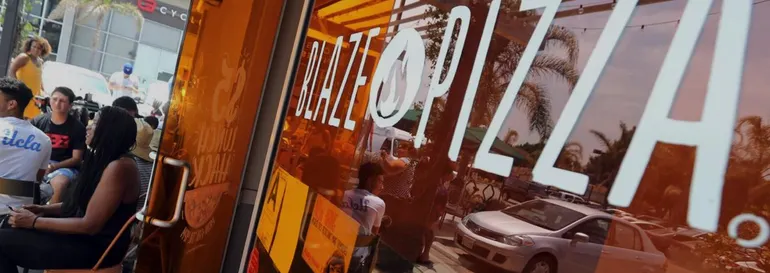
Irvine hopes to leverage the financial momentum of his nearly dozen Jersey Mike's locations to add another fast-casual brand, Blaze Pizza, to his portfolio. He has signed an agreement to open 10 Blaze Pizza locations in Austin, Texas, with the first restaurant expected to open this year.
Irvine is just one of many restaurant franchisees seeking to add more limited-service brand locations. New and existing franchisees across the country have signed agreements to add locations for franchise brands such as Curry Up Now, Hoots Wings, and Slim Chickens. According to The NPD Group, although fast-casual chains struggled early in the pandemic due to a lack of drive-thru channels, their performance has improved after strengthening takeout and delivery services and easing dine-in restrictions. In August, online and in-store traffic for the segment grew 8% compared to August 2020, roughly flat compared to August 2019. The NPD Group stated this in an email sent to Restaurant Dive.
In contrast, in the quarter ending June 2020, traffic fell 23% compared to the same period in 2019, according to The NPD Group data. In August, takeout and delivery orders in the fast-casual segment increased 30% year over year, with takeout and delivery traffic accounting for more than 80% of total traffic, compared to just over half of total traffic before the pandemic.
Carty Davis, founder and partner of independent investment bank C Squared Advisors, said many franchisees are also increasing their "refranchising" efforts, especially because franchised locations typically operate more efficiently and with better profit margins than company-owned locations. Franchisees often believe they can improve the performance of these locations because operations are closer to the store owners rather than the corporate headquarters.
"The health of franchisees, especially in the QSR space, is quite solid," Davis said. "They performed well during the pandemic and have capital on hand. Lenders are also supporting these brands and franchisees, so there is no capital problem."

Digital assets and high-quality products boost fast-casual appeal
The pandemic has highlighted the resilience of the fast-casual segment. Dan Rowe, CEO and founder of Fransmart, noted that the customer mix at these restaurants was already roughly one-third dine-in, one-third takeout, and one-third delivery and catering. Fransmart is a franchise development company that has sold more than 5,000 franchises globally, working with brands such as Five Guys, Qdoba, and The Halal Guys.
In contrast, the full-service dining segment relies on dine-in for 90% of its customers, and these restaurants are not well-suited to adapting to pure takeout and delivery services, Rowe said. Fast-casual chains like Panera, with their takeout and delivery experience, have also done well in packaging and ensuring food quality during transport.
Fast-casual restaurants also appeal to diners because they often offer higher-quality ingredients than fast-food chains—whether farm-raised, healthy, or organic—while fast-food chains rely on low prices to attract customers.
"[Fast-casual restaurants] are drawing attention to a high-quality experience," Rowe said. "There is a segment of people willing to upgrade from fast food and spend a few more dollars for a better experience."
Sweetgreen, for example, generates two to three times the average unit volume of a drive-thru concept, Rowe said.
When Irvine opened new Jersey Mike's locations in Texas, he initially worried about pricing and whether the company's sandwiches were too expensive. But customers have responded well to the quality of its sandwiches, which average around $10. He hopes Blaze Pizza will receive the same response—the brand makes fresh dough every morning.
"Fast casual is great because it's the next new thing," Rowe said. "Customers are always willing to try the next new thing."
Rowe also noted that because the pandemic reduced the number of U.S. restaurant locations by 30% to 40%, surviving restaurants are busier. One-third of restaurants have closed, and another 20% are barely hanging on, exhausted and behind on bills.
"The other half that are still open are doing booming business," Rowe said.
Tropical Smoothie Cafe reported that its year-to-date same-store sales are up 29% compared to 2019, and franchise agreement signings have increased alongside sales growth. So far this year, the company has signed 270 new agreements and opened 32 locations in the third quarter, reaching its 1,000th location milestone in September,according to a press release. More than 85% of its new cafe agreements come from existing franchisees.
"At the end of the day, the fast-casual and QSR segments have shown true vitality through this pandemic, proving we can weather both good times and bad," said Charles Watson, CEO of Tropical Smoothie Cafe.
Watson said brands with strong digital business growth are particularly attractive to new franchisees. For example, Tropical Smoothie launched smoothie customization features for online and mobile orders, and these efforts helped digital sales contribute 75% of the company's third-quarter 2021 sales growth.
Fransmart is directly feeling the significant increase in franchising activity through its partnerships with franchisees. The company began working with Brooklyn Dumpling Shop in 2020, and the brand now adds an average of two new franchisees per month, Rowe said.
"Now is the time to expand," Rowe said.

Real estate oversupply brings new opportunities
Rowe said much of the fast-casual growth is coming from existing franchisees who know what it's like to be in a landlord's market—where finding a reasonably priced location has been extremely difficult over the past five to seven years. While prime locations—such as end-cap spaces that can accommodate a drive-thru—have become more competitive as brands expand, there is still room to negotiate on other locations.
"All of our site selections are going after those cheap conversion deals, or spaces where landlords are eager to find tenants," Rowe said, adding that many landlords are offering generous tenant improvement allowances. One landlord in New Jersey offered an allowance of up to $400,000.
Togo's, a sandwich chain with about 180 locations in California, Washington, and Arizona, has seized this opportunity, said John Dyer, Togo's director of franchise sales and real estate. Thanks to the large number of Subway locations that have closed over the past few years, there is a supply of second-generation retail spaces fully built out for restaurant use. Landlords are also willing to negotiate attractive terms to fill these spaces. For franchisees, the cost savings of leasing a second-generation space can be up to 50% of the initial investment. These savings help shorten the restaurant opening timeline from six to nine months to just three months, Dyer said.
"When you have a fully built-out restaurant, you basically just need to convert it for the new brand or concept," Dyer said. "It's more of a renovation cost than a build-from-scratch cost."
Earlier this year, the sandwich chain reached out to major landlords on the West Coast, including large mall owners, to assess which properties would be suitable for the Togo's brand. The search identified about five viable locations, and the chain has shared this information with its franchisees.
In 2020, Togo's signed 14 new location agreements, including multi-unit deals to enter the Reno/Las Vegas market. The company also plans to sign 21 agreements corresponding to 21 new store openings over the next few years, Dyer said.
"We are very optimistic about franchise growth in 2021," Dyer said. "I think there are a lot of people who may have been affected in their current careers by the pandemic, and they want more control over their own future and destiny."

What potential franchisees should consider
Although many brands are positioned for near-immediate returns, new franchisees should keep in mind that restaurants like Blaze Pizza, which lack national marketing campaigns and extensive reach, will need to fend for themselves, said Ed Yancey, vice president of franchise development at Blaze Pizza.
"You have to be the brand marketer and the brand standard in your community," Yancey said. "So you have to be proactive, attracting and bringing in customers through fundraising events. When customers come in, provide them with an excellent experience and serve them a great product... That's how you gain word-of-mouth and traction in that market."
This means the ideal Blaze Pizza franchisee candidate needs to be fully committed to building the brand in their local market. If they already have other businesses, those need to be self-sustaining and not distracting, Yancey said.
Focused franchisees will help Blaze Pizza reach its goal of 800 locations by 2025, but Yancey said the brand still has plenty of room to grow. The company currently has more than 340 locations.
"[Our segment's] competitors have underperformed, like Pieology and Pizza Rev," Yancey said. "Some of the other competitors in the category... they're either gone or not doing well."
The company is currently focused on opening in regions with more brand white space, including Texas, the Carolinas, and other southern areas, as well as New Jersey, Philadelphia, Virginia, and parts of the Northeast.
Davis advised franchisees to also carefully review development agreements, especially given that some terms may be aggressive and difficult to fulfill if an economic downturn occurs in the coming years.
Because the upfront costs of developing new restaurants are high, these locations typically need to perform above the franchise average to achieve a return on investment. And it may take time to see results—especially if initial consumer acceptance is low.
"Be mindful of the brand's ramp-up period in your market, which differs from brands in established markets," Davis said.
He noted that despite these potential challenges, quality brands will continue to attract more franchisee interest and be better prepared for expansion.
"I think we will see the top brands perform better and gain market share," Davis said. "Smaller independent brands and strong regional brands... will do very well. But I also think you'll see weak brands... struggle to survive, and the strong will get stronger."