
Drive-Thru Restaurant Development Hits Roadblocks: Extended Timelines and Rising Costs Slow Expansion
Drive-thru restaurant development is encountering multiple obstacles, including supply chain disruptions, labor shortages, and soaring construction costs, leading to extended project timelines and significantly increased expenses. Chain brands are adjusting development plans, exploring smaller-format stores, optimizing site selection strategies, and strengthening communication with municipal authorities to maintain expansion momentum in a competitive market.
This article is the first in a series exploring the strategies that chain restaurant companies are adopting to overcome various challenges as they expand their drive-thru channels.
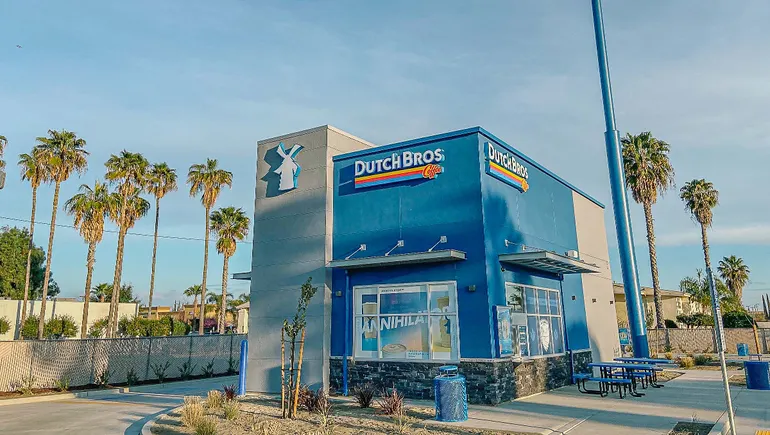
When Dutch Bros, a drive-thru-only coffee chain, went public in 2021, it had more than 470 locations across 11 U.S. states. But its development pace has accelerated significantly since then—CEO Joth Ricci said on a November 2022 earnings call that the company expected to open a record 130 new locations in its first full year as a public company.
Ricci revealed that Dutch Bros opened 38 new locations in the third quarter, a quarterly record and nearly as many as it opened in all of 2019. Since the third quarter of 2021, the chain has opened at least 30 company-operated cafes each quarter.
However, Dutch Bros has also encountered obstacles in its development process. "The challenge now can come from surprises in the supply chain that really disrupt the predictability of the project," said Brian Maxwell, the company's Chief Operating Officer. Even the smallest delays—such as waiting for internet service installation or delivery of small hardware—can derail an entire project. Maxwell said Dutch Bros' procurement and construction teams are maintaining close relationships with suppliers to ensure the company is seen as a good partner and remains a priority for them.
Maxwell said Dutch Bros currently has 61 projects under construction nationwide. Its locations are relatively small, around 865 to 900 square feet, so construction for a single location takes only about four months. That is quite fast, given that drive-thru restaurant construction typically takes more than 12 months, according to other restaurant sources interviewed by Restaurant Dive.
Lengthening construction and development timelines are prompting many chains not only to adjust development expectations but also to design smaller prototype locations that save space. As consumer demand for off-premise meals rises, large dining areas are no longer necessary—and in some cases, impractical.
Taco Bell franchisee Diversified Restaurant Group opened its first Go Mobile location in July 2022. Co-Chief Operating Officer Todd Kelly said they are using the location to test whether they can build restaurants on a smaller footprint. These locations are 40% smaller than traditional Taco Bell restaurants.
"Unfortunately, everything costs more time and money to build these days," Kelly said, citing labor shortages as well as supply delays and shortages. "That's why the whole industry is looking for innovative ways to save on construction costs, which are generally 40% or 50% higher than they were a few months ago."

Operators need to be selective about site selection
One of the biggest challenges chains face when expanding their drive-thru business is site selection.
"Drive-thru locations are very scarce because everyone is fighting for them. Every QSR, every fast-casual brand is looking for these locations," said Zak Omar, CEO of Atomic Wings, which currently has more than 12 locations and plans to open its first drive-thru location this year.
"We're all competing for the same drive-thru real estate, and it's really hard to find. Rents are higher, and construction costs are much higher too... Our research shows that drive-thru locations generate about 30% more sales than traditional locations," Omar said.
But there are still plenty of opportunities in the market, especially for chains with a discerning eye. Dutch Bros' Maxwell said the company does not deliberately pursue locations that would generate the highest average unit volumes (AUVs), but rather strategically penetrates markets where it can gradually build market share. "That allows us to sometimes be on the fringes outside the primary trade areas of those big brands," he said.
As a newer brand with strong sales performance, Hawaiian Bros has lost out to larger brands in site deals and sometimes had to pay higher rents to secure desirable locations if landlords were unfamiliar with the brand, said co-founder Cameron McNie. Now that Hawaiian Bros has 35 locations and can show a track record of operations, site selection has become somewhat easier. As a smaller company, the chain can also respond to landlords and sign leases faster than larger brands, which often require more leadership approvals for deal terms.
Hawaiian Bros examines the sales performance of other QSRs in target markets and compares those specific sales figures with the chain's national average sales levels. McNie said ideal locations should have ample parking and be anchored by large retailers such as Home Depot, Walmart, or Costco.
Hawaiian Bros is expanding its search beyond its current Midwestern markets to ensure it finds A-grade properties. McNie said the company has secured locations in Oklahoma City and San Antonio, Texas, and is considering other Texas markets, including Austin and Houston.
For Schlotzsky's, the site selection for testing its new off-premise prototype, which features a double-lane drive-thru and a pickup window, was relatively straightforward. The company chose Oklahoma City because the area has multiple company-owned restaurants, said Shelley Harris, Schlotzsky's former interim Chief Brand Officer and current President of the Restaurant Category at Focus Brands. The company has strong brand recognition in the city, and consumers are willing to provide feedback on the new prototype experience.

Precise permitting and construction strategies are crucial
Although many municipalities have increased scrutiny of drive-thru locations in recent years due to traffic concerns, indoor dining lockdowns during the pandemic have made many cities more lenient. However, restaurant brands still need to justify their drive-thru proposals to cities.
To navigate the permitting process with local municipalities, Dutch Bros' Maxwell said the company explains how its locations will benefit the community and local businesses, and tries to work with like-minded developers and suppliers.
For Hawaiian Bros, the permitting process varies in each jurisdiction where it has locations. In one market, the company heard that local government was phasing out drive-thrus. But when Hawaiian Bros management met with a committee of city officials and presented the restaurant's benefits, they successfully persuaded the city to allow the drive-thru because the site's parking lot had ample space for an additional lane. McNie said the company also argued that drive-thrus are faster and allow for better traffic flow than restaurants without them, and mentioned that the restaurant would create 100 local jobs.
For Smokey Bones, the process of opening its first drive-thru location in Bowling Green, Kentucky, went relatively smoothly because the city was open to its permitting and construction needs. Smokey Bones also has an experienced management team in that market, which is an important consideration when adding a new channel to an existing business, said CEO James O'Reilly. O'Reilly said the drive-thru construction had minimal negative impact on the Bowling Green restaurant because most of the construction took place outside the building.

Schlotzsky's argues that its new double-lane design will not increase traffic but rather improve traffic flow and reduce queuing vehicles. Harris said the city responded positively to the proposal. "We needed to have some conversations with the city to explain that this isn't necessarily doubling drive-thru capacity, but actually increasing efficiency so vehicles move through faster, which is also a better experience for consumers who don't intend to use our lane," she said. "They won't be as obstructed as they would be with a single lane."
In terms of reducing construction costs, Schlotzsky's 1,000-square-foot location requires only about 60% to 70% of an acre of land. Harris said the smaller location also does not require furniture or fixtures, and requires fewer staff for cleaning, allowing those employees to be redeployed to the kitchen to speed up drive-thru order fulfillment.
"I think it will take some time, but we do expect that as franchisees move into these smaller locations, they will see significant cost savings," Harris said.
Correction:An earlier version of this article misspelled Shelley Harris's name and incorrectly stated her title. She is currently President of the Restaurant Category at Focus Brands.