
Starbucks Welcomes Transformer Brian Niccol, but How Far Can the Path of Change Go?
Former Chipotle CEO Brian Niccol has officially taken the helm at Starbucks. Facing multiple challenges including brand positioning, consumer perception, operational efficiency, and international markets, can he replicate his success at Chipotle and lead the world's largest coffee chain back onto a growth trajectory?
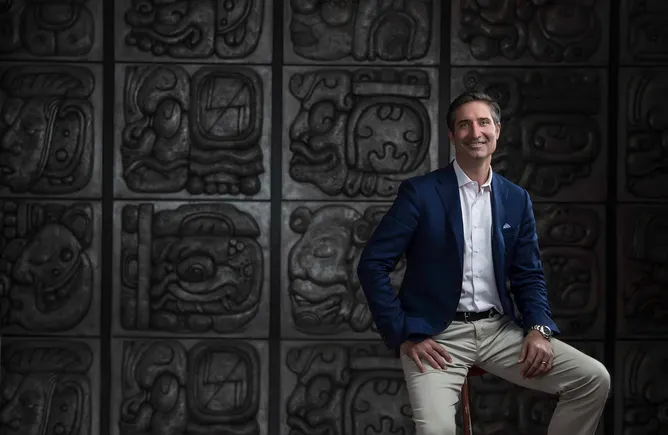
Today may mark the beginning of a new era for Starbucks—former Chipotle CEO Brian Niccol officially takes over the struggling coffee chain.
Niccol is no stranger to brands in crisis. When he took the top job at Chipotle, the company was still reeling from repeated foodborne illness outbreaks, and in the last full quarter before Niccol took over, same-store sales growth was driven entirely by pricing while foot traffic declined. Under Niccol's leadership, Chipotle achieved "nearly doubled sales, nearly sevenfold profit growth, and a nearly 800% rise in stock price," wrote William Blair analyst Sharon Zackfia in a report shared with Restaurant Dive.
Niccol guided the chain through a period of sustained success, focusing on digital orders and developing Chipotlane—a mobile pickup lane that boosted store sales. Now, Starbucks hopes he can transform a brand struggling in the eyes of consumers and investors. But can he do it?
Starbucks is far larger than the 2,400 U.S. stores and 37 international locations Niccol inherited at Chipotle. With 39,000 stores, it is the world's largest coffee chain, and its many challenges would be difficult for even the best executives to solve at such a scale.
"Growth is really hard to achieve for a company of this size," said Christopher Kayes, chair of the Department of Management at George Washington University's School of Business.
As the brand prepared for Niccol to take over as CEO, Restaurant Dive spoke with several experts about the major challenges Starbucks faces in brand, consumer attitudes, operations, and growth, and what Niccol can actually do about them.
The conflict between the "third place" positioning and mobile speed
Some of Starbucks' current problems stem from its past success. The company was an early adopter of Mobile Order and Pay, but Chris Hydock, a professor at Tulane University's Freeman School of Business, said the technology may have weakened its overall value proposition, making it harder to avoid consumer backlash when raising prices.

"Historically, they've been very focused on being the 'third place,'" Hydock said. "You pay $7 or $8 for coffee, but you can also sit down, hang out, and relax in a more comfortable environment. As they've shifted toward a more mobile and convenience-oriented company, the value consumers get from the company has decreased."
R.J. Hottovy, head of analytical research at Placer.ai, said the brand needs to balance traditional hospitality with speed of service—especially for digital orders—which has created significant issues for customers.
"Serving both 'third place' customers and convenience customers in the same location is difficult," Hottovy said.
Hydock noted that this tension also creates strategic obstacles. Stores optimized for mobile ordering, drive-thru, and convenience require different locations, different layouts, and different staffing strategies than stores built around the "third place" café experience.
Niccol has experience in repairing brand reputation and attracting cautious customers back, which may position him well at Starbucks. When he joined Chipotle in 2018, the company was still working to improve its image after food-related norovirus and E. coli outbreaks between 2015 and 2018. Niccol's focus on menu innovation and updated kitchen operations helped the chain move past its tarnished history.
Starbucks may make similar adjustments to its strategy. The company has hinted that food could become a more important part of its sales mix. But Hydock said consumers who view the brand as a premium coffee company will expect food of equally high quality.
"As you move into later dayparts, this becomes increasingly difficult and may exceed the logistics and resources of their current business model," Hydock said.
A greater emphasis on afternoon food offerings would also mean moving away from the company's coffee-centric positioning, putting it in more direct competition with QSR chains that serve coffee, such as Dunkin' and McDonald's.
Kayes said the growing focus on non-coffee drinks and food has already diluted Starbucks' brand, and a further shift toward more products could make Starbucks lose its distinctiveness and weaken its cultural identity.
Under Niccol, Chipotle was able to balance its core offerings with limited-time offers (LTOs), especially in proteins. Most of the chain's menu changes were consumer-driven—such as the fajita quesadilla added in 2023. But these new menu items were often variations on its core products like bowls, tacos, and burritos, rather than entirely new categories. In contrast, Starbucks has tried to launch entirely new beverage platforms to win back consumers. Some of Starbucks' recent drinks seem far removed from its traditional offerings, such as the Oleato line, which mixes olive oil with coffee and was rolled out on a large scale in 2023.
New marketing campaigns may not solve brand identity issues
When Niccol's appointment was first announced, analysts and experts predicted his marketing acumen would greatly benefit the brand and that he would focus on advertising early on.
Niccol began his executive career in marketing, with stints at Procter & Gamble, Taco Bell, and Pizza Hut. A few months after joining Chipotle, the brand launched its "For Real" marketing campaign, attempting to counteract the brand damage from foodborne illness by highlighting the simplicity of Chipotle's ingredients. At the time, the chain had only 51 ingredients.
But Kayes said messaging changes alone cannot solve the chain's consumer perception and brand identity problems.
"They can do whatever gimmicks they want on the brand side," Kayes said. "But what people want is high quality in core beverages, and they want it at a certain price."

Hottovy predicts that once Niccol settles into the CEO role, the company will launch a major marketing push to reintroduce the Starbucks brand to consumers. Hottovy said this push will likely re-emphasize coffee.
"The traditional café feel is what many people associate with the Starbucks brand," Hottovy said. "Returning to that brand vision will be very important in TV advertising campaigns."
Hydock said even a powerful marketing campaign aimed at re-establishing coffee's dominance in Starbucks' brand identity may not win over consumers, for a simple reason: there aren't many U.S. consumers left who lack an opinion about Starbucks. Its success and ubiquity may actually work against it.
"They're running out of new customers in the U.S.," Hydock said.
Kayes said Starbucks' reputation as a progressive employer and forward-thinking brand has also eroded, partly due to its response to the Starbucks Workers United union campaign.
"What they need to do is treat collective bargaining as part of their staffing and store deployment mix," Kayes said. "If they continue to view unions as villains rather than as a source of information about issues at the local level, they will continue to face labor problems."
Since the union campaign began, SBWU has positioned its movement as an effort to ensure workers—whom Starbucks euphemistically calls "partners"—truly become partners in the brand. When Starbucks and the union announced a settlement in February, Michelle Eisen, one of the first union members at the first unionized store, said she felt the company and organized labor were moving toward a genuine partnership.
International challenges
Many restaurant brands facing market problems in the U.S. have turned to international growth. But Starbucks' international performance has also begun to decline. In 2022, the coffee giant said it planned to open a store in China every nine hours by 2025, expanding on its existing 6,000 locations in that market. Now, the brand's same-store sales in China are down 14% year over year, according to its latest earnings, due to smaller ticket sizes and lower foot traffic.
"Competition there is getting more intense. I think that's the biggest issue," Kayes said of Starbucks' second-largest market. "I'm not sure there's that much growth potential left in China."
Chinese brand Luckin Coffee has taken a significant share of China's booming coffee market in recent years at Starbucks' expense, according to CNN. Meanwhile, structural factors in China's economy, such as its focus on fixed capital investment and high savings rates, limit opportunities for consumer-facing brands.
Then-CEO Laxman Narasimhan hinted on the brand's Q3 earnings call that the company might seek a different ownership structure for its China business.
"We are in the early stages of exploring strategic partnerships to further enhance our competitive position, accelerate growth, and win in China over the long term through innovation," Narasimhan said.
What is possible?
Given the constraints facing the chain, Niccol may find it difficult to significantly change Starbucks or return the brand to rapid growth.
"The media, and possibly Starbucks' board, have a real misunderstanding of how much influence a CEO can have over the long term," Kayes said. "A CEO can come in and do some financial engineering and efficiency improvements, and they can have a short-term impact on the organization, but trying to change culture and change a brand—that's a long-term project."
Hydock said major changes are likely to face skepticism.
"There's always hesitation about making any major changes to what a company does, because those changes come with a lot of risk," Hydock said.
Still, he said, one could envision the brand shifting toward a Chipotle-like model—fewer ingredients and lower operational complexity. Such a move might alleviate the operational issues that have driven up wait times at the brand in recent years. But it would run counter to the trends of customization, novelty, and social media display that have shaped how food and beverage brands cater to younger consumers.
Ultimately, Hydock said, Niccol may not have a clear path to achieving the kind of sales growth that looks good on quarterly earnings.
"Coffee and tea will never decline; people will always need these things," Hydock said. "But once you've captured the market in terms of customers and the product mix you can actually offer, the growth path becomes very, very narrow."
Kayes echoed that sentiment.
"The best-case scenario is a return to slow growth," Kayes said.
Kayes said Niccol may not have a long enough tenure to truly shape the brand, especially given the influence of activist investors and former CEO Howard Schultz, who remains a major shareholder.
"I think we can see from history that he has about 18 months," Kayes said.
Both Johnson and Narasimhan were chosen to succeed Schultz, tasked with ensuring long-term, productive change for the brand. While Johnson's tenure lasted about five years, his final quarters at the chain saw the rise of Starbucks Workers United and its expansion beyond Buffalo, New York. Shortly after Johnson left, the chain experienced further executive reshuffling when Howard Schultz called for a different type of leadership.
"Expectations for these things are so high and unrealistic that they force you into these short-term decisions, which may not be sustainable or good for the company's long-term health," Kayes said.