
Starbucks Store Renovation and Service Optimization Results Become Evident
Starbucks' U.S. same-store sales grew 7.9% year-over-year in Q3 of fiscal year 2026, with transactions up 4.2%, marking the third consecutive quarter of growth. CEO Brian Niccol stated that the Green Apron service model, store renovations, and product innovation were key drivers. The company raised its full-year outlook to approximately 6% growth and plans to complete 1,500 store renovations by the end of September.
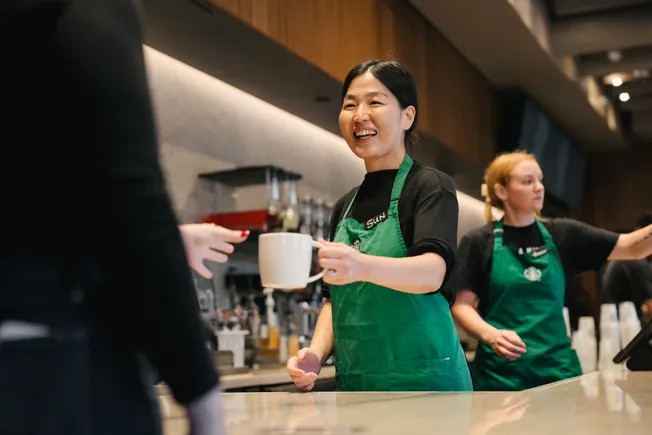
Starbucks reported results for the third quarter of fiscal 2026 (ending June 2026) showing its U.S. same-store sales grew for the third consecutive quarter, up 7.9%, with transactions up 4.2%. The data comes from the company's earnings release. The company also raised its full-year outlook, expecting U.S. comparable store sales to grow about 6% in fiscal 2026, up 1 percentage point from its forecast in the second-quarter report.
The continued growth in same-store sales indicates the coffee giant's turnaround plan is working. CEO Brian Niccol highlighted the role of the Green Apron service model during Wednesday's earnings call, saying it "provides a platform to fix the operational issues we face" and "resets expectations and refocuses on the customer."
Lower employee turnover drives operational and sales improvements
Niccol said slower turnover in store management has created conditions for service improvements. "The percentage of North American coffee shop leaders with two or more years in their roles increased about 7 percentage points year over year," Niccol said, adding that management tenure is closely correlated with sales.
Starbucks is currently aggressively hiring thousands of assistant managers to support the ongoing transformation. Niccol noted that internal promotions into management roles, including assistant managers, provide career paths for store employees, which helps reduce hourly turnover. These changes may lead to improved store operations and ultimately drive sales growth.
Location analytics firm Placer.ai's data supports Starbucks' claims that its transformation is working. The firm tracked 12 consecutive months of foot traffic growth at Starbucks locations, with same-store visits up 5.7% in April, 0.5% in May, and 2.1% in June. Placer.ai also found modest growth in repeat visits in the first half of 2026, indicating improved customer loyalty.
"Starbucks' operational improvements are beginning to translate into stronger customer retention," Placer.ai content director Shira Petrack wrote in a blog post.
Starbucks is also boosting consumer engagement and retention through its loyalty program. The program has 35.8 million active 90-day members in the U.S., representing more than 10% of the U.S. population. In March, Starbucks added tiers to the loyalty program, allowing high-spending members to accumulate points faster.
Niccol said some of the new engagement tactics have been particularly effective. For example, "Free Mod Mondays"—a monthly free customization benefit—has driven higher demand for personalization. "Of the members who tried a new modification through this benefit, one-third placed another order in the following weeks," Niccol said. This frequency of repeat customization may help increase average ticket size. Additionally, the brand is giving rewards members early access to new products, such as the S'mores beverage line.
Niccol's multi-year revitalization efforts include premium brand positioning, investment in store operations and labor, store remodels, and product innovation, all of which continued during the quarter.
Starbucks accelerates store remodels
During the quarter, Starbucks completed remodels of 1,000 stores in North America, exceeding its fiscal 2026 target. Niccol said the company plans to complete 1,500 store remodels by the end of September. "Early data shows that remodeled coffee shops have seen transaction increases across visit channels, dayparts, formats, and customer segments," Niccol said. The remodels include more comfortable seating, warmer tones, visual design elements like wainscoting, and more power outlets.
Starbucks is also increasing infrastructure investment in other areas. Its upcoming Nashville headquarters could cost up to $100 million and accommodate 2,000 corporate employees. However, at the same time, the company cut 300 corporate positions in the U.S. this year and closed four support centers as part of cost-saving measures. Additionally, after poor employee feedback on the technology, Starbucks abandoned a custom computer vision inventory tracking system after about nine months.
New products drive consumer excitement
Niccol said menu innovation and limited-time offerings remain key strategies for driving sales. "We're ending the summer with a strong menu lineup, including blended smoothies, the Legendary Unicorn Frappuccino, and new orange cream beverages," Niccol said. "We will keep fan excitement high through a steady cadence of popular product launches and ongoing seasonal innovation."
Earlier this year, Starbucks added a higher-caffeine version to its Refreshers line, giving consumers more options. Niccol revealed that the Refreshers platform saw double-digit revenue growth year over year in the U.S. "Customizable energy Refreshers, new coconut and mango flavors keep customers engaged, expand the platform into new consumption occasions, and give them more reasons to visit throughout the day," Niccol told investors.
On July 28, Starbucks began testing carbonated versions of several of its energy Refreshers, as well as a new platform called Spritz, which combines "real fruit with coffee, tea, or lemonade" into sparkling beverages. According to a press release, the drinks are being market-tested at about 100 stores in San Antonio, Austin, and St. Louis, potentially signaling the direction of Starbucks' future menu innovation.