
How Brands Can Make Inclusive Holiday Marketing More Than Just 'Inspirational Consumption'
After the socially distanced holiday season of 2020, brands are re-centering their marketing around gift-giving and togetherness. Starbucks, Target, and others are putting diversity and inclusion (D&I) at the forefront, responding to growing consumer demand. Industry experts caution that marketing must achieve genuine inclusion across dimensions like race, religion, family composition, age, and disability, and must align internal diversity practices with external advertising to avoid superficial gestures like 'inspirational consumption.'
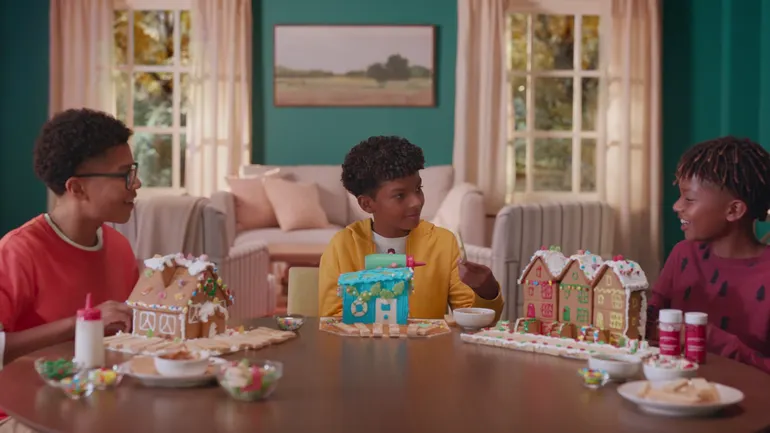
As the holiday season returns after a year of social distancing in 2020, marketers are relaunching campaigns centered on gift-giving and togetherness. Brands such as Starbucks and Target are also placing diversity and inclusion (D&I) at the core of their efforts, highlighting brand purpose during a key marketing season where reunion takes center stage.
Multiple industry experts told Marketing Dive that these campaigns are driven by shifting consumer demands, but marketers must be careful that their work is truly inclusive across multiple dimensions as they seek to authentically reach consumers and avoid potential pitfalls.
"Brands are really starting to respond to this expectation from consumers: if you want me to belong to this brand, if you want to compete for my share of wallet, then I need you as a brand to not only represent me in your actions, but also acknowledge my individuality, and how I want to show up, engage, and spend my money with your brand," said Kyla Jones, U.S. multicultural strategist at agency Rapp.
Diversity and inclusion are increasingly emphasized in marketing and are often simplified into two main representation types: race or ethnicity, and gender or sexual orientation. But to reach consumers who view D&I as a priority, brands must craft holiday campaigns that resonate across multiple relevant dimensions, encompassing different identities including religion, family composition, age, and disability.
"If you only show race and ethnicity, you're not actually diverse: you're just showing race and ethnicity. You have to show that intersectionality, how people present themselves beyond skin color or identification with a particular culture," Jones said.
Brands winning the holidays
Target earned praise from several experts for itsholiday campaign— its largest annual initiative. The campaign was developed in collaboration with the retailer's in-house team, creative agency Mother, and women-owned production companies Little Minx and Merman. Target also partnered with media agency Essence to increase investment in diverse media partners, expanding the reach of a 30-second ad. The ad features a diverse cast celebrating various holidays from Thanksgiving and Friendsgiving to Christmas, Hanukkah, and Diwali.
"They touched on so many different intersectional touchpoints... to further amplify the message that everyone can find belonging at Target," Jones said.
Karthik Easwar, associate professor at Georgetown University's McDonough School of Business, explained that the ad's intersectionality integrates with the brand's overall campaign "the things we value most shouldn't cost more," connecting with a broad range of consumers focused on budgets during another holiday season affected by the pandemic through its emphasis on price and value.
"You can tap into that commonality, especially when it comes to consumers' functional and emotional needs," Easwar said. "All these holidays—regardless of their religious and cultural origins—are about community, love, togetherness, sharing, and kindness, and these are things we as marketers can talk about."
Several experts emphasized that when crafting diverse holiday campaigns, brands need to include people with disabilities—a group that has been severely marginalized throughout the advertising industry. Particular consideration should be given to red-green color blindness, a condition affecting about 1 in 12 men and 1 in 200 women, which can make ads created in the most common Christmas colors unrecognizable.
"As marketers, our brains are wired to prioritize the mass-market audience, which subconsciously marginalizes people with disabilities," Jones said. "Disability inclusion cannot be an afterthought; it must be a strategic priority for every brand campaign, not just during the holiday season or cultural festivals."
Similar to Target, Starbucks this year is also focusing on commonality, throughembracing the more secular theme of "gifting", continuing its gradual shift of Christmas away from the core of its holiday marketing. In addition to the usual red and green cups, the chain will also introduce cups in a winter lilac purple color, with all cups featuring blank spaces resembling gift tags.
Combining internal and external efforts
While making its holiday marketing more inclusive, Starbucks has also strengthened its internal diversity efforts. Matt Voda, CEO of marketing analytics and optimization company OptiMine, explained that as part of its corporate strategy, the coffee chain has built a framework of goals and commitments, ways to measure progress, and transparency about progress achieved or not achieved.
For other marketers, Starbucks demonstrates the necessity of embedding D&I priorities not only in advertising but throughout the entire company. Such efforts should encompass a range of activities, including recruitment and employee engagement practices; developing, promoting, and retaining diverse talent; and discussing D&I internally. Internal D&I also acts like a flywheel driving better marketing campaigns: diverse workplaces and marketing teams bring different perspectives and experiences, resulting in more authentic, nuanced, accurate, and sensitive campaigns that resonate with broader audiences.
"Consumers are much savvier at discerning what is authentic and what is inauthentic and more like a token gesture. So when you act, they also want to see that diversity, not only in your ads but also in your office," Easwar said.
To ensure that inclusive campaigns from diverse companies resonate with consumers this holiday season, brands must take concrete actions to connect with the people they are trying to reach.
"If you're going to talk to these communities and invite them in to spend money with your brand, then you have to have a regenerative effort that actually shows up in that community during the holiday season."
— Kyla Jones, U.S. multicultural strategist at Rapp
"If you're going to talk to these communities and invite them in to spend money with your brand, then you have to have a regenerative effort that actually shows up in that community during the holiday season," Jones of Rapp said.
These on-the-ground actions can include food and clothing drives, or experiential activities that educate consumers about financial literacy and saving during the holidays. But perhaps no effort connects campaign to action better thanOld Navy. As part of its "Happy ALL-idays" promotion, Old Navy is offering free "training camps" to increase the number of diverse Santas.
By helping broaden the pool of people who can portray Santa Claus, Old Navy is addressing a gap in representation: according to data cited by the brand, less than 5% of professional Santas in the U.S. identify as people of color, while nearly half of U.S. children under 15 identify as non-white. Jones said actions like Old Navy's transform cheerful holiday ads into more than just "aspirational consumption."
"How do you actually realize that social impact—not just through advertising and very beautiful visuals—but bring the action to the streets, to the people, and truly put it in their hands or in their spaces? That's the equity and accessibility part that many brands forget when doing D&I work," she said.
Facing controversy with courage
While brands work to ensure their ads and actions resonate, they must also navigate the challenges of a polarized political and social climate. In this climate, almost every brand action can be seen as divisive; the heightened emotional connection during the holidays only makes this trickier. For example, since Starbucks began downplaying Christmas in its holiday marketing, the chain has faced controversy nearly every year over itscup designs.
Experts emphasized that brands making serious commitments to D&I can and should launch inclusive holiday campaigns, ensuring marketing teams align with corporate goals, can take risks, and do not shy away from more impactful practices. OptiMine's Voda explained.
"Good and well-managed companies make this a strategy, set real goals and metrics, and marketing teams can then align with that and have more courage in taking these initiatives because they know they won't be left hanging even if there is backlash or market reaction," Voda said.
Even without marketing around D&I, companies find it hard to avoid difficult discussions about D&I, especially when consumers want to know where brands stand. But for marketers, the key is to stand by their campaigns as long as they align with the brand's values, mission, vision, or purpose.
"You may lose some consumers, and you may gain some. But I think that's okay because as long as you are honest and authentic about your intentions and ensure it aligns with the rest of your company, you will find those consumers with whom you want to build long-term relationships," Easwar said.
Despite controversy, consumers may find products and value propositions too attractive to avoid, even if ads show families or holidays different from how they celebrate. He noted that historically, few ads accurately reflected diverse consumer groups—yet those consumers still purchased products.
"Now we see different segments might say, 'Hey, I don't like how you portray me,' but if you still have effective products with good value, those consumers may still come to market and do business with you," Easwar said. "That's what many different segments in the U.S. market have been doing for decades."