
Food delivery platforms' sustained profitability may depend on businesses beyond food delivery
Uber Eats and DoorDash achieved or maintained profitability in 2021, but regulatory pressure, rising marketing costs, and increased driver costs may threaten sustainability. Platforms are seeking growth by expanding into new verticals such as retail, groceries, alcohol, and advertising businesses.
This article is the second in the "2022 Restaurant Industry Trends" series. For the first article in the series, seehere。
In 2021, Uber Eats achieved positive adjusted EBITDA for the first time in its U.S. restaurant delivery business, and DoorDash has also maintained positive adjusted EBITDA margins since the quarter ending June 30, 2020. Both platforms have benefited from growing consumer and restaurant demand for delivery.
"The pandemic clearly provided delivery platforms with a golden opportunity to pull years of future customer acquisition forward," said Tom White, senior research analyst at D.A. Davidson & Co. "They were able to acquire customers efficiently without spending on marketing, because users were stuck at home and actively seeking these platforms." However, maintaining profitability may be challenging as dine-in recovers, marketing spending rebounds, and regulatory measures such as commission caps are introduced in various places.
Analysts point out that the surge in demand over the past two years allowed delivery companies to avoid heavy spending on marketing and customer acquisition, which was a key factor in achieving profitability. But this could change in 2022. Lyle Margolis (CFA), senior director at Fitch Ratings, believes that as dine-in traffic returns to normal, third-party platforms and restaurants may resume traditional advertising to attract delivery customers, which will put pressure on margins for both.
Raj Joshi, vice president and senior credit officer at Moody's, said the delivery industry has long been in an unstable and highly competitive environment, and "it's hard to say the industry has reached or is close to permanent profitability; I don't think that's the case right now." He predicts further consolidation among delivery companies to improve profitability, but increased regulatory scrutiny makes large deals like Uber's acquisition of Postmates and DoorDash's acquisition of Caviar harder to complete, so major players are turning to overseas mergers and acquisitions, such as DoorDash's $8 billion acquisition of European delivery company Wolt in 2021, adding 27 new markets.
Regulatory pressure squeezes delivery platforms
Experts say delivery companies will also face stricter regulation, especially regarding commission caps. While many temporary commission caps introduced during the pandemic have been phased out, cities such as San Francisco and New York City have made them permanent. In addition, some cities are pushing for laws to protect delivery workers, such as setting minimum wages, allowing access to restaurant restrooms, and requiring platforms to share customer data with restaurants.
Sharing customer data could pose risks, as restaurants may discover that the proportion of customers actually using delivery is very small and then steer those customers to order directly. DoorDash, Grubhub, and Uber Eats have all filed lawsuits against New York City's data-sharing law, and the city suspended enforcement after DoorDash sued.
White said: "The pandemic prompted the restaurant industry to more critically evaluate the value of delivery platforms, but after the pandemic subsides, restaurant organizations will not stop fighting for their own interests." Since commission caps may be contested in court for a long time, their full impact on profitability may take time to materialize. All three major delivery platforms have filed lawsuits against commission caps.
Yadavan Mahendraraj, head of merchant operations for Uber in the U.S. and Canada, said that in the post-pandemic era, Uber Eats will focus on communicating with regulators to ensure regulations preserve market flexibility, such as allowing merchants to choose different pricing structures. Ryan Parietti, senior director of merchant strategy and operations at DoorDash, said: "We believe these controls set a dangerous precedent and may actually harm the merchants they are intended to protect. We understand the intent behind price controls, but we see them as counterproductive tools." DoorDash is offering a variety of options for restaurants to choose from rather than a one-size-fits-all approach.
Grubhub is most affected by commission caps in New York City, one of its largest markets and the city with the strictest delivery commission limits in the U.S. Grubhub CEO Adam Dewitt said at Just Eat Takeaway's Capital Markets Day in October 2021 that although most caps have expired, its New York operations remain significantly impacted. He said: "We believe all commission caps—essentially price controls—are illegal. We complied with emergency orders during the pandemic to help restaurants, but we will firmly oppose any permanent caps, which are arbitrary government interference in private contracts." A Grubhub spokesperson said the company will continue to support restaurants and that the caps harm independent restaurants' ability to market themselves; the company is focusing on its strongest markets and expanding into new verticals.
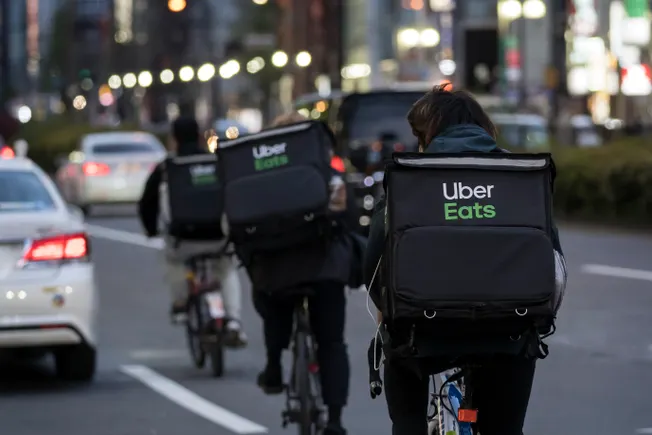
In addition, some cities are considering classifying delivery drivers as full-time employees, which would change compensation structures and increase platform costs for insurance and benefits. White noted: "Until drone or autonomous delivery emerges, driver-related costs are likely to keep rising." Although California's Proposition 22 keeps drivers as independent contractors with some benefits, it was overturned by a judge in August 2021, and a coalition backed by DoorDash and Uber is appealing. Washington, D.C., is also discussing legislation to clarify the status of independent contractor drivers. Joshi said: "As long as the regulatory environment remains supportive, delivery companies have room to grow and will expand into delivering more categories."
Expanding beyond restaurant delivery
While navigating regulation, delivery platforms are expanding into new verticals and revenue streams. DoorDash, Uber Eats, and Grubhub have all entered convenience stores, alcohol, and retail. DoorDash launched an advertising suite in October 2021, and Uber Eats introduced sponsored restaurant listings in 2020. Margolis said: "As the restaurant delivery business matures, we expect platforms to continue pulling these levers."
New verticals not only improve profitability but also attract new customers. Over the past year, Uber Eats partnered with Bed Bath & Beyond for baby product delivery, with Him & Hers, acquired alcohol platform Drizly, and launched grocery delivery in 2020. Mahendraraj said: "We've found that customers who order in new verticals order twice as much overall on the platform—this not only adds incremental spend but also increases overall engagement." Uber Eats' new verticals team acts like a business incubator, observing changes in consumer behavior to ensure no disruption. Uber CEO Dara Khosrowshahi said on the Q3 earnings call that total delivery bookings grew 8% from September to early November despite restaurants reopening globally, and CFO Nelson Chai said Uber Eats' profitability that quarter enabled reinvestment in new verticals. Khosrowshahi said: "Consumers' continued engagement with delivery supports our belief that demand for fast delivery of various items is structural and will continue to grow for the foreseeable future."
DoorDash recently expanded its grocery business and entered the convenience store space, launching DashMart ultra-fast delivery in Chelsea, New York in December 2021, adding grocery partners such as Albertsons, Schnucks, and Farmstead, and expanding alcohol delivery to 20 states. Parietti said: "This is an opportunity to serve multiple consumption occasions and provide multi-purpose ordering capabilities." DoorDash can now support different merchant types such as florists. These channels also bring more customers to core restaurant partners and increase order volume on the platform. Uber Eats launched "Pickup and Go" in spring 2021, allowing riders to pick up meals and groceries during their trips.
Grubhub has added approximately 6,000 convenience stores to its platform and is testing its own convenience store offering (with limited inventory) in Brooklyn. Dewitt expects to gradually increase inventory and marketing. College campus delivery has also become a growth area for Grubhub, now covering 3 million students who can use meal plans to order campus dining through the Grubhub app. Dewitt said: "These students are also prime marketing targets for Grubhub after graduation." Grubhub is also applying its campus strategy to hotels and sports venues, partnering with Resorts World Las Vegas and FedEx Field in 2021, with early results showing promise. Dewitt said: "This could be a significant source of new diners—after ordering at a hotel or stadium, they install the Grubhub app and can use it anytime afterward."
New verticals can also attract more drivers. White summarized: "The more products you can offer consumers, the greater the marketplace appeal; as consumers and order volume increase, drivers have more opportunities, and the platform has more profit and revenue to attract drivers."


