
How New Verticals Are Driving DoorDash's Growth Momentum
DoorDash started with restaurant delivery and is now actively expanding into new verticals like convenience stores and groceries. Through partnerships with retailers such as Walgreens and Sephora, DoorDash leverages its density advantages and platform scale to drive growth in non-restaurant orders, and is expected to achieve positive variable profit in its convenience store business by 2022.
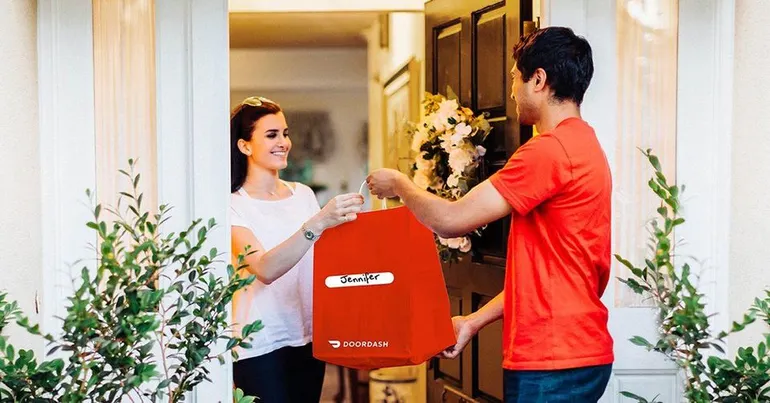
During the peak of the COVID-19 pandemic, with many stores closed and people stuck at home, Walgreens wanted to serve customers in the safest, most convenient way possible. In July 2020, the company partnered with DoorDash to offer on-demand delivery of health care, household essentials, groceries, beauty products, and personal care items, said Stefanie Kruse, vice president of Walgreens' digital commerce group.
"DoorDash has a very solid history in on-demand delivery and can quickly deliver on the promised times to customers," Kruse said. "Seeing their work in restaurant delivery, we believed they could achieve similar results in retail and convenience."
The launch of Walgreens' delivery with DoorDash took only a few months. After contracts were signed and terms negotiated, the service was operational within weeks, Kruse said. Walgreens already had the application programming interfaces and services in place to integrate quickly with DoorDash for on-demand delivery.
DoorDash's mobile app, technology, and scale matched Walgreens' size and needs. Because the delivery aggregator covers nearly all U.S. markets, extending delivery services to Walgreens' 8,000 stores was relatively easy, Kruse said.
"Being able to have a national presence and offer national delivery to our customers is very important," Kruse said.
Walgreens is just one of many retailers that have joined DoorDash's platform as it expands into new verticals. Although DoorDash started in 2013 in Palo Alto, California, as a small restaurant delivery company, it has since expanded into multiple categories, including convenience, grocery, and other retail verticals. In recent months, the company has partnered with retailers such as Sephora, Tractor Supply, Dick's Sporting Goods, Raley's, Grocery Outlet, Sprouts, Giant Eagle, and Weis Markets.
"While we started with restaurants, the goal from the beginning was to get every purchasable item to your doorstep in minutes, not hours or days," said Shanna Prevé, DoorDash's vice president of enterprise sales and business development.

Density drives profitability
Since launching the convenience store marketplace as its first non-restaurant category about three years ago, DoorDash has seen significant growth. In the third quarter, this category improved variable profit and is expected to achieve positive variable profit this year, executives said in the company's Q3 2022 shareholder letter. Variable profit is calculated as revenue minus order management and support costs. Gross order value in the grocery marketplace grew 100% year-over-year in the third quarter, and DoorDash's profitability improved both sequentially and year-over-year.
"By expanding beyond restaurants, we believe we can provide existing consumers with more ways to use our service and new consumers with more ways to try us for the first time," the letter said.
The share of first-time orders coming from consumers who ordered from non-restaurant categories has grown, executives said.
"The key to profitability in this business is density," said Michael Schaefer, head of beverages and food service research at Euromonitor International.
The more orders available in a specific area, the shorter the distance drivers need to travel to deliver those orders, and the easier it is to maximize profit on larger orders, he said. DoorDash is undoubtedly the largest player in U.S. restaurant delivery, which means it has a larger fleet of couriers and can more easily attract other partners like grocery and convenience stores.
DoorDash has a dense network of drivers not only in urban areas but also in the suburbs, which have been a strength for the company due to less competition, Schaefer said.
But that doesn't mean growth in these categories will be smooth sailing. Nicholas Cauley, an analyst at Third Bridge, said that while DoorDash has one of the best restaurant selections among third-party delivery providers, it still lags behind competitors in non-restaurant categories.
"Retail and grocery partnerships will be a growth driver for DashPass, which will also create opportunities for higher average order values," Cauley said.

Deepening focus on grocery and convenience
Although grocery delivery is just as competitive as restaurant delivery, Prevé said DoorDash's advantage lies in building a platform with millions of monthly active users and 10 million DashPass members. DashPass, DoorDash's $9.99-per-month subscription plan, reduces delivery friction by waiving delivery fees, making customers more likely to try grocery delivery, she said. Another reason grocery has grown rapidly is DoorDash's ability to offer a variety of products to different types of customers.
DoorDash launched Express Grocery in February with Albertsons, offering delivery in 30 minutes or less, Prevé said. The company also offers ultra-fast delivery in 10 to 15 minutes in New York City, particularly in Manhattan and Brooklyn.
Prevé said she is most excited about the DoubleDash feature, which allows customers to order from a restaurant or other merchant and then add another item from a nearby store, delivered by the same courier.
DoubleDash originated from the company's search for ways to expose its 25 million monthly active users to more choices, she said. The product started small, launching in 2021 with a select group of merchants including 7-Eleven, Walgreens, and Wawa. Earlier this year, DoubleDash expanded to allow consumers to add alcohol orders from nearby liquor stores.
"Even in categories like convenience, where we have long-term partners like Walgreens, we are still innovating," Prevé said. "We are still launching new product types that attract new customers, and then we can bring those new customers to merchant partners in that vertical."

How DoorDash helps retailers build delivery channels
Prevé said DoorDash only seeks to enter businesses that can be profitable. When considering a new vertical, the segment must be viable for drivers and allow them to earn money. It must also help attract new customers for existing merchants, such as grocery stores, and meet the needs of its consumer base, Prevé said.
On that basis, DoorDash focuses on how to make the experience meet the needs of all three parties, she said. For DoorDash's grocery and convenience partners, 70% to 90% of customers who shop on the DoorDash platform are net new customers for these partners.
"When we see that, we really want to focus on it and see how we can continue to grow. We know we will eventually be profitable," Prevé said.
Ensuring customer retention depends on the customer experience, including product selection and quality.
"Did you receive what you ordered? It sounds simple, but it's very important. Then did we deliver within the promised time? At a high level, these sound simple, but in reality, it takes a lot of work, persistence, and iteration to get it right," Prevé said.
"I think what you'll see in the future is continued collaboration, continued innovation, and continued iteration based on what works across all our other verticals: selection, quality, speed, and customer satisfaction," Prevé said.
For convenience retailers like Walgreens, delivery has become an important way to reach more customers and increase awareness of private-label products, Kruse said. Walgreens also participates in DoorDash's DoubleDash service, which helps drive incremental sales and customer growth, Kruse said.
DoorDash's ability to go to market quickly also helped Walgreens launch alcohol delivery from 4,000 stores, she said.
"This is another great example of our ability to move quickly and collaborate, because from a regulatory standpoint, it's obviously very complex," Kruse said. "When we think about holidays and last-minute entertainment needs, this is a great advantage for us."
DoorDash also enables Walgreens to fulfill its one-hour delivery promise. While Walgreens has other delivery partners, DoorDash is its largest strategic partner for one-hour delivery, she said.
"(Our relationship) is very much about how we build something meaningful for the customer. How do we invest together and learn from each other? So, we've shared a lot of valuable insights with DoorDash on our respective platforms about what works and what doesn't," Kruse said.