
DoorDash's overseas expansion faces multiple challenges
DoorDash entered the European market through the acquisition of Wolt, but international expansion is not a smooth path, requiring it to address competition, costs, and economic uncertainty.
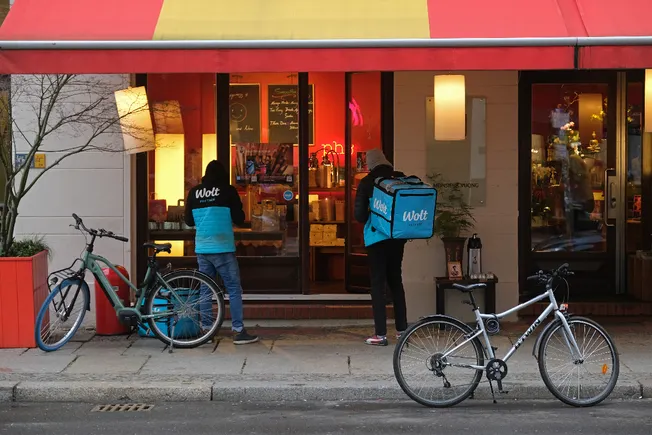
Earlier this year, DoorDash completed its largest acquisition to date: the $8 billion purchase of Finnish food delivery company Wolt. The deal not only expanded its footprint into Europe through Wolt's existing 27 markets but also provided opportunities to enter additional countries.
"We are very excited about the opportunity for growth outside the United States," said Andy Fang, DoorDash's Chief Technology Officer and co-founder. "We are thrilled about our partnership with Wolt."
Although DoorDash has entered a few countries such as Canada, New Zealand, and Australia in recent years, its international market penetration remains relatively low. Company executives noted in the Q3 2022 shareholder letter that the infrastructure supporting omnichannel operations is less developed than in the United States. DoorDash's future focus will be on expanding into new cities, increasing selection, and building new services. The shareholder letter showed that new customer acquisition in countries where Wolt operates and others recently reached record highs.
DoorDash was founded about a decade ago in Palo Alto, California, initially as a restaurant delivery company. It has since expanded into new verticals and is planning international growth. However, expansion outside the United States will face competitive pressures. As the company seeks growth domestically, it will also continue to face economic challenges and competition.

International success is not guaranteed
Michael Schaefer, head of foodservice research at Euromonitor International, said international expansion can be very difficult. Aggregators are fighting for market share in specific regions, which is an expensive endeavor. Entering a mature market with established competitors requires significant promotions and advertising to build awareness.
In 2020, Uber Eats exited several markets, including India, because it could not achieve a leading position in places like India.
"International expansion is critical to DoorDash's growth over the next 1-3 years," wrote Nicholas Cauley, an analyst at Third Bridge, in an email to Restaurant Dive. "But it will be difficult without strong brand recognition and international experience outside North America."
Schaefer noted that Wolt has a strong presence in Scandinavia, parts of the Baltic states, and high-income markets where delivery services are frequently used. The company also has the potential to expand into grocery and convenience.
"There will be a lot to learn about how to operate internationally, how to operate in markets with strong labor protections and high unionization. Costs will be higher," Schaefer said. But he added that Wolt has successfully operated its model in Finland and other Scandinavian regions with robust labor protections.
According to DoorDash's shareholder letter, in the third quarter, total marketplace order volume for DoorDash's international business grew 50% year-over-year on a pro forma basis. Wolt's GOV alone grew 37% year-over-year in dollar terms.
Cauley said that due to DoorDash's growth in the Asia-Pacific region and the acquisition of Wolt, it is becoming a strong contender for global market share against Uber Eats. But this does not mean competition in the U.S. market has eased.

Competitive pressures are hard to ease
Although DoorDash holds a dominant market share in U.S. food delivery, competition remains a headwind. Just as DoorDash has expanded into grocery and convenience, Uber Eats has taken similar steps. The competitor platform revamped its grocery platform earlier this year to make it more user-friendly for customers, workers, and retailers. Grubhub is also pushing for greater brand awareness, partnering with Amazon Prime in July to offer Prime members a free year of Grubhub+ membership.
"Customers can easily switch between most food delivery platforms," Cauley said. "DoorDash can differentiate by expanding restaurant selection and exclusivity, which will ultimately make its loyalty program more successful. Our experts believe DoorDash is using this time to build and deepen partnerships, positioning for accelerated growth once the downturn passes."
DoorDash Chief Revenue Officer Tom Pickett said the company will continue to advance the DashPass program. The platform has about 10 million DashPass customers, and DoorDash overall has 25 million monthly active users.
Pickett said DashPass users are high-frequency, convenience-oriented consumers, which is a very attractive customer type for restaurants. The company will continue to add value to the program. In July, DoorDash launched the "Summer of DashPass" campaign, offering special deals including 25,000 member-exclusive offers worth a total of about $40 million.
All major delivery platforms offer some form of subscription service. Uber's differentiation lies in its ride-hailing service and Uber One, but that service is relatively new. Uber One is a monthly subscription similar to DashPass, where members enjoy $0 delivery fees, 5% off rides, and 10% off delivery orders for $9.99 per month. As of the end of the third quarter, Uber One had over 10 million members globally, Uber executives said on the November earnings call.
"Uber One is a key differentiator and an important profit driver, and Uber Eats needs to leverage more strategic partnerships to win in the competitive subscription landscape," Cauley said.
Schaefer said that even with this new program, Uber Eats is unlikely to expand market share beyond major cities like New York and Los Angeles, although it has a strong presence in those cities. Grubhub also has a strong presence in Chicago. While DoorDash leads in some cities, the gap between national and regional presence indicates DoorDash has broader coverage across the U.S.
Schaefer said that if ride-hailing hasn't already helped Uber Eats grow share in specific markets, he doubts Uber Eats has much more room to take 10% or more share from DoorDash.
"Beyond ride-hailing, many features other platforms can add, DoorDash can also add," Schaefer said. "Everyone is exploring selling groceries and convenience items, as well as offering white-label delivery. Everyone has tried some form of exclusive deal with the largest players, with varying degrees of success and profitability."
"I'm not sure what levers Uber can pull right now to truly gain significant share (in the U.S.) relative to DoorDash," Schaefer said.

Impact of economic conditions
DoorDash's rapid growth has not come without costs. This week, the company cut 1,250 people from its 20,000 global corporate employees. In a letter to employees on the company's website, Tony Xu said the company hired too quickly due to rapid growth driven by surging demand during the pandemic.
"Our business is more resilient than other e-commerce companies, but we are not immune to external challenges, and growth has slowed compared to pandemic times," Xu said in the letter. "While our business is still growing quickly, given the pace of our hiring, operating expenses would continue to outpace revenue if left unchecked."
Although inflation is easing, rising costs are still pressuring consumers. Schaefer said the number of items per order may decrease, or people may become more cautious, but overall order volumes have remained relatively strong so far.
"I think that's why we're seeing so many moves into the grocery space, with the idea that this could be more resilient in a severe recession or persistent inflation accompanied by recession," Schaefer said.
In the U.S., delivery is relatively expensive, which is another challenge, especially as other costs continue to rise. While Schaefer doesn't expect people to reduce order frequency by 25% per week, order sizes may shrink.
"Our experts expect customer order rates and average order values in the food delivery industry to steadily decline over the next 12 months as customers cut discretionary spending and view dining out as an affordable family experience," Cauley said. "Meanwhile, widespread dissatisfaction around per-delivery pay in the gig economy is increasing operating costs."
For drivers, one of the biggest complaints is expenses, especially high gas prices, Schaefer said. Delivery apps have tried to alleviate this cost through fuel purchase programs where drivers can use company credit cards for discounts, but with mixed results.
As the largest delivery company in the U.S., this also helps with driver retention. Schaefer said adding more merchants not only helps DoorDash but also helps delivery drivers because they have more nearby destinations, reducing time between orders. More pickups per hour means drivers can earn more.

Restaurants may shift focus
Even as DoorDash expands its driver fleet and merchant partners, labor shortages could prompt restaurants to prioritize dine-in over delivery, which could lead to longer delivery times and lower delivery quality, Cauley said.
"In the era we're in now, everyone is trying to be everything to everyone, which clearly shows a lot of strain," Schaefer said. "I think inflation could drive more differentiation efforts."
Schaefer said that while some restaurants focus on the dine-in experience, others may pivot to optimizing their delivery-centric business and how to best handle delivery surcharges.
Schaefer expects more delivery- and pickup-focused operators on DoorDash, similar to the Domino's Pizza model, but dine-in-focused restaurants may partner with DoorDash for takeout orders.
Third-party platforms will also get more involved in advertising, including paid promotions that rank paying restaurants higher in search results, Schaefer said.
Dine-in restaurants can use platforms like DoorDash for restaurant discovery. In the U.S., consumers have many digital restaurant discovery platforms, such as Yelp or Eater. In other countries like Germany and Nordic nations, delivery apps are used as a channel to discover new restaurants, not just for specific types of items like chicken wings, Schaefer said.
"Competing for a larger share of restaurant marketing spend will become an increasingly important priority for many delivery apps," Schaefer said.
In restaurants, servers try to upsell wine or cocktails because they are high-margin items, but this is harder to do in delivery. Encouraging customers to add drinks to their orders is another early-stage but potentially promising area, Schaefer said.
One way to boost orders and restaurant spend could be creating a method for restaurants to upsell items. Mistie Boulton, CEO of Oren's Hummus, one of DoorDash's original restaurant partners (which still partners with it today), said upselling in restaurants would be helpful. Through Double Dash, consumers can add items from other merchants like 7-Eleven. Platforms could recommend wines, desserts, or drinks that customers haven't ordered from the restaurant.
In the past, delivery platforms focused mainly on how to attract partners to the platform rather than optimizing average order value growth, Schaefer said.
"I think that's changing. All apps are under immense pressure to show profitability, show more paths to profitability, and grow profits, not just revenue," Schaefer said.