
Experts: Ghost Kitchens Must Shift to Omnichannel Models to Survive
After attracting significant investment in 2020-2021, ghost kitchens have encountered setbacks due to low order volumes, operational issues, and licensing problems. Cases such as Chili's, Reef, and Cloud Kitchens illustrate the model's difficulties. Experts believe that omnichannel strategies, such as adding pickup and group catering, may improve survival chances, but U.S. consumer preferences and cost structures continue to constrain development.
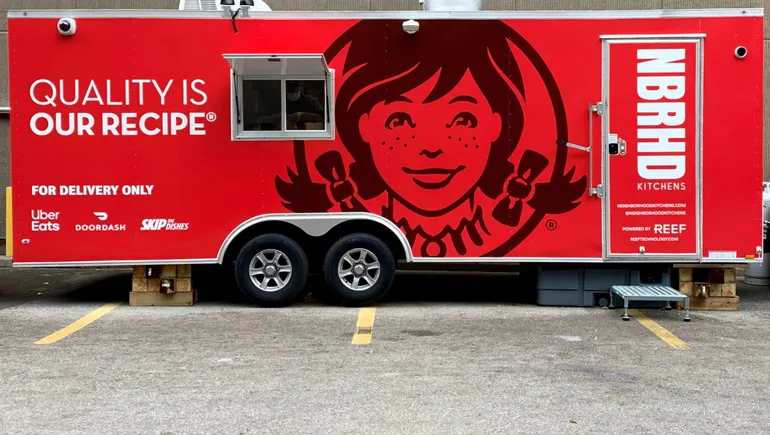
Between 2020 and 2021, the ghost kitchen concept attracted significant investment, with numerous companies rushing to test the waters. However, this once-trendy model quickly began to show cracks: low unit volumes, operational challenges, and permitting issues continued to plague the industry, leading many experts to now question its viability.
Several large restaurant chains and platform providers are slowing their investment in delivery-only ventures. Chili's closed its delivery-only location after two months of operation. Reef Technology faced Wendy's cutting its expected number of openings by more than 500. Reef subsequently exited the Houston market and laid off 5% of its workforce amid sluggish sales and a series of permitting and safety violations.
Butler, a company that combined hotel food service with ghost kitchens, went out of business last spring. The five-year-old company shut down overnight after a series of new store openings, suddenly leaving hotel partners without food service and suppliers unpaid. Cloud Kitchens experienced a wave of restaurant partner departures in 2022, ultimately leading to company layoffs. C3 closed its Miami food hall, while Wonder, a van-based ghost kitchen company, completely abandoned its initial model.
These high-profile failures and strategic pivots signal a rocky road ahead for the ghost kitchen model. But restaurant executives and experts say success stories may still exist if companies can navigate several persistent challenges.
The model has problems driving sales
Restaurant executives who have tried ghost kitchens, such as Fat Brands, are now more hesitant about the concept, believing ghost kitchens cannot generate sufficient sales. Some of the company's brands operate as virtual concepts based in existing locations, delivery-only. Fat Brands has tried several ghost kitchen locations in the U.S., but CEO Andrew Wiederhorn said the company has paused most of these locations, while international ghost kitchen locations are performing well.
"I don't believe in ghost kitchens, I never have. I like virtual restaurants, but not ghost kitchens," Wiederhorn said at the ICR conference in Orlando. "I don't see ghost kitchens generating enough delivery volume per location."
Wiederhorn noted that in the fast-food sector, delivery has not contributed enough share to the sales mix, making it difficult for ghost kitchens to gain a foothold in that segment. Despite savings on labor, real estate, and development, the delivery-only model still cannot generate sufficient revenue.
But Atul Sood, chief commercial officer at Kitchen United, said ghost kitchens that focus on multiple channels—rather than delivery alone—tend to perform better.
"I think pickup has been undervalued or underappreciated in the ghost kitchen model," Sood said. "Pickup is critical to the success of ghost kitchens."
Sood said that adding catering and takeout pickup options beyond delivery could be key to the future of ghost kitchens, especially as office occupancy recovers from pandemic lows and catering is once again attracting operators. Early in the pandemic, investors and ghost kitchen platforms were optimistic about the sector, but that sentiment has faded.
"There was a lot of hype, everyone thought it was a given, especially since the pandemic increased customer acceptance of the model, but you have to put in the work," Sood said.
During a presentation at the ICR conference, Kitchen United CEO Michael Montagano told investors that the company looks for locations that can serve as hubs for delivery, walk-up pickup, and catering. Montagano said this omnichannel approach is critical to the company's continued growth.
Sood noted that in the U.S., two factors may make it difficult for ghost kitchens to generate sufficient sales through delivery. First, American consumers tend to prefer drive-thru and pickup. Second, U.S. market conditions make delivery less competitive. Markets like South Korea or the UAE have higher delivery rates, thanks to fast motorcycle delivery and lower labor costs. Labor costs in both countries are politically constrained: the South Korean government recently raided the headquarters of a major union, while the UAE is a monarchical federation where strikes and unions are illegal.
The delivery-only ghost kitchen model does not fit the U.S. market, said Rishi Nigam, CEO of Franklin Junction. The company connects virtual brands with host kitchens.
"That's not a good business model, at least in our country," Nigam said. "Maybe ghost kitchens can work elsewhere globally, but in the U.S., it's not a successful model."
Nigam said fees, wait times, and cold food all contribute to delivery problems. Many customers may choose pickup over delivery, especially as macroeconomic issues reduce disposable income, because pickup costs less or nothing.
James Walker, CEO of Frisch's Restaurants, said part of the problem with delivery quality is that restaurants hand over control of the customer experience to third-party services.
"A delivery-only experience executed by another party makes it harder to create an excellent customer experience," Walker said. "I think brands have to be mindful of that."
Data collected by Tattle, a company that gathers and analyzes customer feedback specifically for the hospitality industry, shows that ghost kitchen customer satisfaction is lower across several categories. Based on thousands of Tattle reviews, traditional restaurant customers were 20%, 23%, and 16% more satisfied than ghost kitchen customers in order accuracy, food quality, and value, respectively. Tattle noted that when considering only restaurant delivery—rather than cross-channel occasions—these gaps narrowed. However, in Q4 2022, ghost kitchen customer satisfaction declined while restaurant scores remained largely stable.

Another negative constraint—though unevenly distributed across the industry—is real estate costs, said Zhong Xu, CEO of Deliverect. Some ghost kitchen companies, such as Cloud Kitchens, do not operate restaurant brands using their spaces but instead act as high-tech commercial kitchen landlords. As interest rates push up borrowing costs, such real estate investments may become less profitable for ghost kitchen providers.
"The era of free money is over," Xu said. "Your mortgage payments have increased, which means pressure on your overall profit and loss." He said this makes high occupancy rates critical for such ghost kitchen companies.
As dine-in traffic returns to normal, Xu said independent or smaller brands no longer feel pressured to focus on delivery-only operations, and operators are less willing to experiment with ghost kitchens.
Walker told Restaurant Dive that another factor that could hurt delivery-only kitchens is customers' lack of familiarity with the brand. Wiederhorn echoed a similar view, suggesting that physical presence boosts brand awareness. "Customers like to see physical restaurants around them and then order from them, rather than ordering from a black box."
But high brand awareness may be a major draw for traditional brands entering the ghost kitchen or virtual brand space, as accumulated consumer trust makes these brands more attractive.
But success stories still exist
Walker said traditional restaurant brands can still operate successfully in a delivery-only environment.
"I think it's a way for brands with history—Frisch's has been around for 75 years, Nathan's Famous for over 100 years—ghost kitchens or delivery-only kitchens create an opportunity for these brands to get their products to customers in an efficient way," Walker said.
For some growing brands, ghost kitchens have also proven profitable. Hawaiian Bros, a rapidly growing fast-casual brand, operated a ghost kitchen at Kitchen United Mix in Austin, Texas. At the ICR conference, Hawaiian Bros CEO Scott Ford told investors that by prioritizing speed of service, the 350-square-foot location achieved annual sales of $3.5 million.
Walker said brands designed for low capital costs, low labor requirements, easy food execution, and high-quality delivery—including new brands—may grow or make delivery-only offerings work well.
Xu also emphasized the demands delivery places on operational excellence. "If you're a pure virtual or ghost kitchen operator, the key is to truly own and successfully achieve operational excellence."
Xu said the current environment will favor ghost kitchen operators that can combine a full technology stack, a portfolio of well-known or easily marketable brands, and operational excellence.

Sood said public events where traditional brands severed ties with ghost kitchen companies or reduced development commitments have hurt the industry's perception. "When a brand like Wendy's decides to scale back from 700 locations to fewer than 150, that kind of news permeates the industry," he said. "Other large restaurant brands take notice."
Sood said companies that can prove they have mastered all the fundamentals—such as permitting and inspections, benchmarks some ghost kitchen companies have struggled to meet—remain attractive to brands looking to enter the delivery-only model. He cited Kitchen United as an example, which provides brands with marketing and technology stack support but leaves operational aspects largely to the brands themselves.
Companies like Reef and Wonder are pivoting toward more traditional restaurant development plans. Reef is focusing on single-brand locations, hotel kitchens, airports, and stadiums. Wonder, once one of the flashiest and most distinctive business models among ghost kitchen operators, has abandoned its idle vans and pivoted to locations combining pickup and delivery, supported by central kitchens.
As the restaurant industry moves toward multi-channel operations or expansion through existing foodservice locations, ghost kitchens may ultimately adopt a similar omnichannel model to maximize profitability.