
Breakfast chains usher in a golden age: demand growth drives store expansion and model innovation
The breakfast chain industry is experiencing significant growth, with brands like First Watch seeing increases in both sales and store counts, driven primarily by remote work and changing consumption habits. Brands are responding to competition by optimizing site selection, adjusting store formats, and expanding franchising, while all-day concepts also seek differentiation.
This article is the first in a three-part series focusing on the growth of the breakfast concept.
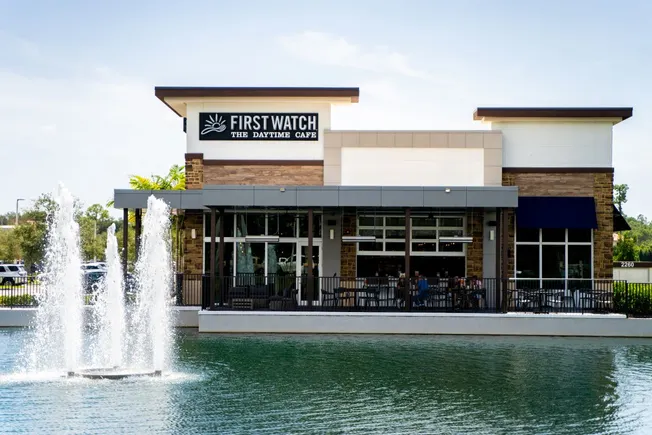
When First Watch opened its first location in Pacific Grove, California, forty years ago, only a few brands in the market specialized in the breakfast daypart. Today, the company has expanded to 29 states with over 470 restaurants, becoming one of the fastest-growing full-service restaurant companies in the U.S., with system sales of $914 million last year.
The breakfast category has grown steadily over the past five years, and the pandemic further attracted remote-working diners to suburban breakfast locations, said First Watch CEO Christopher Tomasso.
"Remote work is not going back to pre-pandemic levels, and I think we will continue to benefit," he said.
Tomasso noted during the company's March earnings call that same-store sales rose 14.5% year-over-year in 2022 and were up 29.6% compared to 2019.
These financial results reflect the recent trajectory of the entire breakfast category. Another Broken Egg Cafe CEO Paul Macaluso revealed at the January ICR conference that its average annual unit volume rose to $1.9 million last year from $1.45 million in 2018.
NPD Group data shows that restaurant traffic during the breakfast and morning dayparts increased 13% year-over-year in January and was up 3% compared to January 2020.
"We are seeing growth in working breakfasts and weekday dayparts," Tomasso said.
Snooze Eatery CFO Bill Long said remote work policies have boosted demand from Monday through Friday. With no commute or more flexible work hours, people have more opportunities to dine out on weekdays.
"The brunch category is essentially an affordable luxury," Long said. "I think it fits with people's life trends in an inflationary environment. Under time constraints, brunch can be an easy, fun experience, distinct from dinner outings."
Compared to other dayparts, breakfast is more family-friendly and price-advantaged, said Eggs Up Grill CEO Ricky Richardson. The brand's average check is under $12.
"Breakfast is a more relaxed occasion compared to dinner, which can sometimes feel formal or structured," Richardson said. "Breakfast is more casual and laid-back."

Daypart growth drives unit expansion
Sustained breakfast demand is fueling rapid expansion in the segment. First Watch is growing its footprint at a rate of 10% annually, Tomasso said. CFO Mel Hope said on the March call that the company plans to open 38 to 42 company-owned locations and 10 to 12 franchise locations this year.
Famous Toastery President Michael Sebazco said the company has four company-owned locations under construction, expected to open before 2024, which will be used to remodel the brand's prototype. The new prototype averages about 3,000 square feet and features dedicated delivery and takeout areas, while older locations range from 2,800 to 3,800 square feet.
Another Broken Egg expects to approach 100 locations by the end of this year and will enter Maryland for the first time, marking its 16th state, Macaluso said.
Snooze plans to achieve 15% to 20% new unit growth annually, but does not franchise to protect the brand image, Long said. In 2023, it plans to open 10 to 13 locations and enter new markets such as Atlanta, Nashville, and Las Vegas, while densifying existing markets including Arizona, Southern California, Colorado, Georgia, North Carolina, and Texas.
The success of new breakfast locations largely stems from careful site selection. Snooze typically leases 3,800 to 4,200 square feet of space, accompanied by about 700 square feet of patio. The company favors adaptive reuse projects and creative spaces in urban markets. For example, a location in Tempe, Arizona, near Arizona State University, is housed in a former brick school building dating to the 1950s. Long said Snooze will supplement such sites with suburban locations to reach more families.
First Watch is building larger locations in better positions, which helps lift average unit volumes, distinguishing them from past locations in lower-end strip centers, Tomasso said. About five years ago, it had only one or two freestanding locations; now it has nearly 20. New locations are about 4,200 to 4,500 square feet, compared to about 3,500 square feet for older ones, and are often on end caps or outparcels.
First Watch is particularly well-suited to take over second-generation spaces, especially bars and grill concepts that did not survive pandemic restrictions. These sites typically come with dedicated parking, pickup windows, large patios, and more open indoor-outdoor bars, Tomasso said.
Last year First Watch opened 43 restaurants, 29 of which were company-owned. Average unit volume at new company-owned locations is 7% higher than the system average of $2 million, Tomasso said on the March call.
For example, a new location that opened in Virginia in November posted first-week sales of $75,000, rising to $110,000 in the fifth week. The location is averaging $90,000 per week year-to-date, surpassing the previous record of $70,000, Tomasso said, and he expects one of its newest locations to become the first restaurant to hit $4 million in annual sales.
Other chains are leaning on franchise expansion. Eggs Up Grill, with about 60 locations in the Southeast, signed its largest franchise development agreement ever to develop 30 locations in Dallas-Fort Worth, and had about 15 open or signed by the end of 2022, Richardson said. Another Broken Egg Cafe, with over 80 locations in 15 states, currently has over 70 franchise commitments and added eight new multi-unit franchise operators last year, Macaluso said.

By the end of this year, Another Broken Egg Cafe expects to have 100 locations in the pipeline. Of its 30 franchisees, 20 have commitments for future growth, with the largest being a six-unit agreement, he said. The company had previously been gradually adding to its management team to support growth, and this year it only needs to add one more member to support the opening of 16 new locations.
Currently, Another Broken Egg Cafe's franchise locations account for 60% and company-owned for 40%, but that ratio is expected to shift to 70% franchise and 30% company-owned by 2024, Macaluso said. In March, the brand opened three new restaurants. The company and franchisees have signed 20 leases. Another 13 locations are expected to open this year, for a total of 16 in the year, with the rest expected in 2024. The company is already preparing openings for 2025.
"We expect the brand has the potential to eventually exceed 1,000 locations in the U.S.," Macaluso said.
To support a network of about 12 franchisees, Famous Toastery added a franchise operations manager position on February 1 and added a franchise marketing role last year, Sebazco said. Next, the company will adjust its scale based on future development progress and the number of franchisees.

How all-day concepts compete
All-day breakfast concepts are also benefiting from sustained demand in the breakfast daypart and are developing differentiators to compete.
Denny's last year acquired A.M. brand Keke's Breakfast Cafe to diversify its portfolio. IHOP is expanding its off-premise channel through virtual brands, aligning with the breakfast daypart. Black Bear Diner, meanwhile, leans on its in-store atmosphere as a competitive advantage: each location features a carved wooden bear out front, mountain murals and a jukebox inside, CEO Anita Adams said.
"Compared to A.M. concepts, we cover three dayparts. Our average unit volume is $2.8 million, thanks in part to the dinner portion," she said.
Black Bear Diner has over 150 locations and maintained a steady pace of 15 to 20 new openings per year before the pandemic, split evenly between franchise and company-owned, Adams said. During the pandemic, the chain did not permanently close any locations except one unrelated to pandemic economic impacts. Development restarted in mid-2021, with 10 openings in 2022. This year it expects 15 openings, potentially reaching 20 to 25 in 2024.
Black Bear's company-owned locations are concentrated mainly in Texas—its first Dallas restaurant opened in 2022—and it continues to expand in Houston, with about 10 locations currently, Adams said. Franchisees are mainly concentrated on the West Coast, especially California, while the company-owned business is expanding eastward. The company also has locations in Oklahoma and Arkansas.
The company will continue to target small metropolitan areas with populations of about 100,000, markets that perform well due to flexible prototypes and broad guest appeal.
The segment remains healthy, as evidenced by the many entrants, including quick-service brands, she said. For example, Wendy's entered the breakfast daypart in 2019 and averaged over $3,000 in weekly sales in the fourth quarter of 2022.
"Frankly, I'm glad there are many competitors in the breakfast space," Adams said. "The more attention breakfast gets, the more likely we are to be on customers' radar."