
Juice Chain Brands Accelerate Expansion: Market Opportunities Amid the Health-Consumption Wave
This article is the first in a series on juice chain brands, analyzing how regional brands like Nekter Juice Bar and Main Squeeze Juice Co. are achieving aggressive growth driven by the demand for healthy eating through franchising, mergers and acquisitions, and new market expansion, while also looking ahead to 2024 expansion plans.
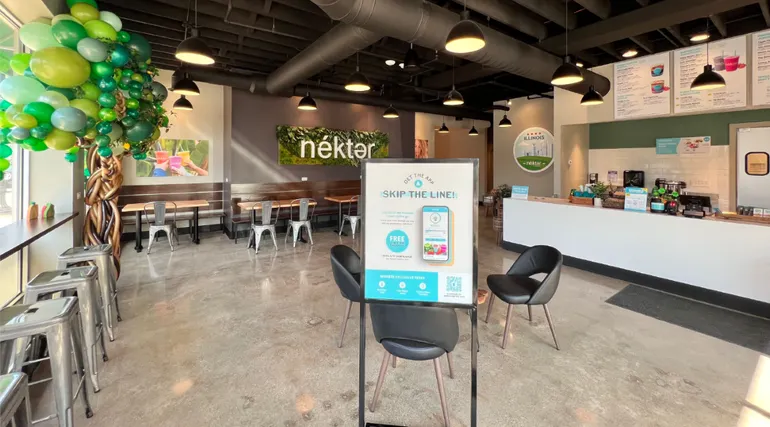
Editor's Note:This article is the first in a series on juice chain brands. The second article will focus on how juice chain brands can improvestore profitability。
In 2010, Steve Schulze, co-founder, CEO, and President of Nekter Juice Bar, worked out at the gym for 45 minutes daily to lose weight, rewarding himself afterward with a trip to Jamba Juice. But after six months, he hadn't lost a single pound. When he checked the nutritional information for Jamba Juice smoothies, he discovered he was consumingnearly 100 grams of carbohydratesand a significant amount of sugar per cup. This experience sparked an idea for him and his wife.
"What if we completely overhauled the juice industry the way Starbucks reinvented the coffee experience?" Schulze said. "We removed all processed ingredients and kept only a simple menu."
The couple opened their first store in a former Starbucks location in Irvine, California, offering six juices, six smoothies, and six bowl items made with ingredients like organic acai, house-made cashew milk, and coconut water. First-year sales reached $50,000; today, the company's annual sales exceed $130 million,with over 200 stores open and another 150 in development。
"We hit the ground running from the start and have continued to grow ever since," Schulze said.
Schulze noted that during and after the COVID-19 pandemic, people's focus on health and wellness increased significantly, and consumers are more mindful than ever about what they consume. This trend has benefited the juice category, which has attracted a broader range of age groups in recent years—from high school students to people in their seventies and eighties.
Nekter's growth is not an isolated case. Regional juice chains such as Beyond Juicery + Eatery, Juice It Up, Main Squeeze Juice Co., and Joe & The Juice are entering new markets and expanding through franchising as demand for healthy, convenient food continues to rise.

Strong market demand, supply still insufficient
Thomas Nieto, CEO of Main Squeeze Juice Co., said consumer interest in healthy eating has not waned, but many convenience-focused consumers still struggle to find healthy dining options that are both convenient and delicious.
"Demand for all-natural, healthy, clean food continues to rise," Nieto said. "Existing supply cannot meet demand... Our competitors are growing, and so are we."
Main Squeeze's growth relies primarily on organic expansion. Many franchisees are loyal fans of the brand who want to become part of it, Nieto said. Existing franchisees are also expanding their store counts. As of the third quarter, the company had 28 stores, with another 61 in various stages of development.
Main Squeeze has also grown through acquisitions. In spring 2023, the companyacquired I Love Juice Bar, which had 23 stores. Nieto said they plan to retain eight or nine of those locations and convert them into Main Squeeze stores. Several conversions have already been completed, including staff training, new equipment installation, and integration of cold-pressed juice operations.
"Acquiring during a market downturn is good timing," Nieto said. "We are seizing the opportunity to create upside during the downturn."
Beyond Juicery + Eatery currently operates more than 40 stores, most of them in Michigan, where the company is headquartered, according to William Parsons, the company's integration lead. The brand has opened 10 stores in the Cleveland market and will add more in the future. The company opened its first store in Naples, Florida, on February 24.
"We are strategically entering new markets with a clear expansion roadmap, ensuring we can give franchisees 100% support. Every market deserves equal treatment," Parsons said.
Joe & The Juice has more than 300 stores globally and opened over 60 new locations worldwide in 2023 (both franchise and company-owned), said Kasper Garnell, global brand director. Of those, five were in the U.S., primarily in New York and Miami—markets where existing stores have shown growth. The brand will focus on U.S. expansion in 2024, with an estimated 15 to 20 new U.S. stores. Most will be company-owned, but franchisees may also open stores in new cities.
"We offer customers a combination of quality experience and healthy products," Garnell said. "I believe that is the key to our current success."
For Joe & The Juice, a memorable experience includes playing the right music at the right time and choosing interior designs that reflect the character of each city. In residential-area stores, the brand incorporates more casual furniture and social spaces; in high-traffic urban locations like Spring Street or Wall Street in New York, it features more high-top tables and bar seating for customers who want to grab their order and go quickly.
The brand has not aggressively pursued franchising in the U.S., but it launched a franchise model in the Middle East late last year. Garnell said the company is considering using franchising to open new territories in suitable U.S. markets.

Juice It Up has more than 100 stores open or in development in the western United States, with a goal of reaching 200 by 2027.
"As a franchise-focused brand with 28 years of history, choosing the right partners during expansion is critical. We need to help them succeed from day one," said Susan Taylor, President and CEO of Juice It Up.
Juice It Up's growth strategy is deliberate, focusing on whether the supply chain can support franchisees' markets. The company is headquartered in Newport Beach, California, and has a strong presence in the Inland Empire region of Southern California, Taylor said. It is currently expanding into California markets such as San Diego, the Central Valley, and Sacramento. The brand also has franchisees in New Mexico, Texas, and Oregon, opened a store on the California-Arizona border in 2023, and has signed agreements for additional stores in Arizona, Nevada, New Mexico, and Utah.
"Our brand's strength lies in its ability to reach people across various levels of health needs," said Noah Burgess, R&D Director at Juice It Up.
The brand attracts raw juice consumers seeking extreme health, fitness enthusiasts needing protein smoothies, and customers looking for healthy alternatives to breakfast or dessert, Burgess said. Juice It Up also offers kids' smoothies, such as the best-selling Strawberry Wave. This broad customer base makes it easier for the brand to select markets where stores can succeed.
Nekter has also been highly successful in franchising. The company launched franchising in 2012, and the co-founders signed six franchise agreements that year. Schulze said five of the original six franchisees are still with the brand today.
In 2014 and 2015, the company accelerated its franchise business. Schulze expects to open 50 to 60 new stores in 2024 and approximately 75 in 2025.
Rapid franchisee store openings have driven Nekter's growth. One franchisee signed an agreement in 2017 to open five stores over five years but completed all of them within two years. That franchisee now has an agreement for 31 stores, with about 20 already open. Nekter works with both multi-unit operators with fast-food experience and individual owner-operators.
Nekter initially focused on the U.S. Southwest, with multiple stores in Southern California, Phoenix, Denver, Dallas, and Houston, and has since expanded to markets like Philadelphia and Chicago, with additional stores planned in Montana.
"I think the future of this industry is bright," Schulze said. "The tailwinds are strong. The health and wellness trend won't go out of style anytime soon."