
Juice chain brands restructure operating models to improve profitability
Since 2022, multiple juice chain brands have faced pressure from rising food and labor costs, making it difficult to sustain profit growth through price increases alone. Brands such as Beyond Juicery + Eatery, Main Squeeze Juice Co., Clean Juice, and Joe & The Juice are exploring more sustainable profit models through strategies including cost analysis, store design optimization, product process adjustments, and delivery channel expansion.
Editor's note:This article is the second in a series on juice chain brands. The first focused on the brands'aggressive expansion plans。
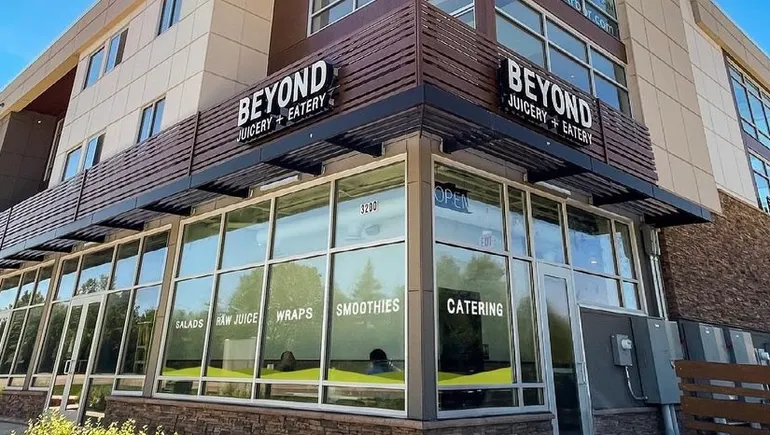
In 2022, Beyond Juicery + Eatery identified a problem: rising food and labor costs were squeezing franchisee profit margins, while simply raising prices had limited impact on profitability. The 40-unit chain therefore paused rapid expansion and instead took a more systematic look at its operations. William Parsons, the brand's head of integration, said the company still plans to add locations, but will do so in a more strategic and profitable way.
"Many brands raised prices multiple times; we only did so a few times, but we don't want to price ourselves out of the market by raising them too much," Parsons said. "We also don't want to reduce customer visit frequency through price increases. Consumers will eventually tell you 'enough is enough,' and we don't want to be affected by that mindset."
The company spent months analyzing food and commodity costs to find more affordable ingredient sources. Parsons said headquarters reviewed each item one by one, exploring cross-usage possibilities, both to increase customer visit frequency and to gain greater price advantages through bulk purchasing.
Beyond Juicery is not the only brand rethinking unit-level economics. Main Squeeze Juice Co. conducted a comprehensive analysis of its real estate, construction, and development processes over the past year to seek cost savings and shorten pre-opening timelines. Clean Juice, meanwhile, shifted to bottled juices in 2022 to reduce in-store preparation time and labor.
The growth trend in delivery orders is influencing Joe & The Juice's development plans. Kasper Garnell, the brand's global brand director, said third-party delivery orders continue to rise in the U.S. and globally. Joe & The Juice may need to create separate entrances for delivery drivers in the future to avoid crowding stores with couriers waiting for orders. He also anticipates the brand will open more ghost kitchens (i.e., locations offering only takeout and pickup). Currently, the brand has just one ghost kitchen in Paris, Garnell revealed.
Garnell expects that within the next five to ten years, Joe & The Juice will offer a more immersive experience, potentially including larger locations. These stores could offer dine-in menus and even bar areas to encourage customers to stay longer.
"I think our in-store experience is something competitors can't match, and we need to double down on that, truly creating a differentiated experience people want to visit," Garnell said.
Improving franchisee profitability
Since July 2022, Beyond Juicery has carefully analyzed each franchisee's financial performance on a monthly basis. Parsons, the operations team, training team, and store owners review each location's profit and loss side by side to identify food, labor, and other cost trends. If a store performs well, headquarters pairs it with underperforming locations to share best practices. This allows franchisees to share frontline experiences and financial data (which headquarters cannot share on their behalf), along with other operational details, to help each other.
"To maintain rapid growth, we must ensure franchisees remain profitable," Parsons said.
This philosophy is crucial to the brand's goal of reaching 300 to 500 or more locations over the next five to ten years.
"Our vision is to grow into a super brand," Parsons said.
Main Squeeze partnered with a consulting firm to comprehensively review its development process, from real estate to design and construction, to identify ways to complete each phase faster and more economically, benefiting franchisees. The process began in August 2022 and ended in July 2023. The company examined every material and component used in construction to determine which could be replaced to reduce time, material, and labor costs.
The brand initially applied this process to a non-traditional location that opened in the summer. The construction cost for that location was about half of Main Squeeze's typical construction cost (usually $200,000 to $300,000). The company also re-bid a location under construction in Jacksonville, Florida, using the new design, and the new bid came in 20% lower than the old design, Nieto said.
Main Squeeze's first traditional location under this strategy is scheduled to open in March in Goodyear, Arizona. With assistance from real estate partner Red Sea, the franchisee signed a lease within six months of signing the franchise agreement, whereas this process typically takes 12 months.
The location will be smaller at 1,200 square feet, compared to the standard 1,500 to 2,000 square feet. The company found that most customers come in, order, and leave, so a large lobby area is unnecessary. Main Squeeze also optimized the back-of-house and smoothie preparation areas for efficiency. If construction follows the new 90-day build strategy, this will be the brand's fastest construction timeline, totaling nine months, Nieto said.

To achieve leaner operations, Clean Juice abandoned having store employees make juice in the back of house using cold-press machines, as the process was labor-intensive and time-consuming. Now, juices come from a farm in California that cold-presses produce into juice and ships it to stores, where employees simply order and store it, said CEO and co-founder Landon Eckles.
This shiftwas not embraced by some franchisees, who said the move to bottled juices led to ongoing profitability issues. Franchisees said the change resulted in lower customer satisfaction, supply chain problems, higher costs, and declining store profits and sales. Some franchisees have sought legal avenues to exit the Clean Juice system,according to the Charlotte Business Journal. Eckles told the publication that profitability issues were more related to the economic environment, including high wages, rising oil prices, and higher interest rates, which led to declining sales from mid-2022 to 2023.
Successful franchisees told the publication that underperforming operators were not working alongside employees in their stores and lacked a deep understanding of the business. These franchisees noted that their locations were profitable from the start. One operator said she pushed for the switch to bottled juices for safety reasons, even though it would impact sales in the short term.
For new Clean Juice franchisee Mendi Bartell, operations have gotten off to a strong start. Her store in Dana Point, California, opened in the summer, with customers lining up around the building on opening day. Bartell left her job at Verizon in May 2022 to pursue her dream of opening a Clean Juice. She plans to open five more locations in the future.
"Anyone thinking about getting into franchising... don't think you can buy it and have someone else run it for you, because that's not the case," she said. "Otherwise, you'll end up flushing your money down the toilet."
She said operators must be personally involved in store operations, including interacting with customers, ensuring employees accurately complete orders, and keeping the store clean.
"This is not just an investment," she said. "It's a business you have to put effort into."