
How do coffee chains design, market, and evaluate seasonal limited-time new products?
Behind seasonal limited-time coffee beverages lies months of research and development, testing, and marketing planning. Based on interviews with Peet's Coffee, Dutch Bros, and supplier Westrock Coffee, this article reveals the full-chain operational logic from flavor conception, recipe adjustment, production training, to launch evaluation.
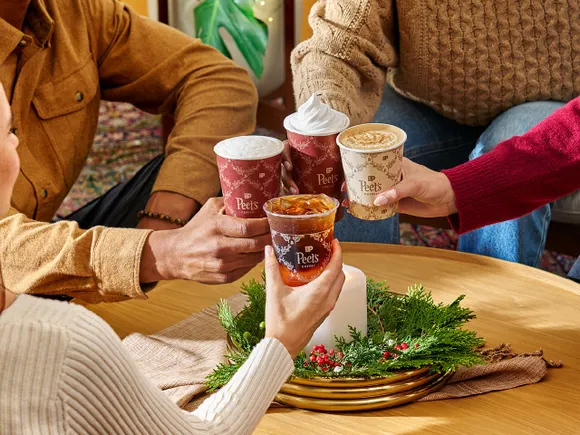
When leaves change color and the intense summer heat drops to a pleasant level, people walk into coffee shops and order a drink that evokes the holiday spirit—family gatherings, home warmth, autumn chill—the magic of these seasonal coffee drinks stems from a carefully designed process of development, refinement, and analysis.
At Peet's Coffee, customers can find caffeinated non-alcoholic cocktails inspired by winter flavors. The brand's 2024 winter collection includes: Derby (an Irish coffee imitation), Bestie (with bitter orange essence, blood orange puree, and chai tea), and Tiger's Eye (mixing blood orange puree, cold brew coffee, bitter orange essence, and soda water).
Meanwhile, Dutch Bros has launched several limited-time drinks. This coffee chain with 950 locations has added a Candy Cane Mocha, Hazelnut Truffle Mocha, and a blueberry sweet cream-flavored Rebel energy drink to its menu. These offerings are enough to make even Scrooge look forward to future winters, as if seeing a caffeinated Tiny Tim excited by a modern pellet stove.
The appeal of seasonal coffee drinks relies on a rigorous process of development, optimization, and analysis. Before consumers first taste orange peel puree or peppermint syrup, these ingredients must be designed, tested, produced, and distributed; employees need training, marketing campaigns need preparation, and consumers need to be warmed up—until the first drink is handed out the drive-thru window.
Dutch Bros, Peet's, and Westrock Coffee, which supplies coffee products to many fast-food and convenience store chains, plan and test seasonal drinks months or even years in advance. Restaurant Dive spoke with these companies in depth about the long process from planning, design, and testing to production.
Flavor planning and ideation
Mike Mastio, Senior Vice President of Technology and R&D at Westrock Coffee, said coffee companies are already preparing flavors for 2026 and 2027. This is because the development process for complex flavors is arduous, requiring careful balancing of chemistry, nutrition, sensory qualities, shelf stability, and ingredient characteristics.
However, success in the lab does not always translate to success in production. Mastio said, "The R&D cycle is longer than one might think. Much of the work isn't visible at the time, and there may not even be a business case yet. There could be 100 different flavors being tested." He emphasized that the development of coffee LTOs often needs to start years in advance.
Kyle Newkirk, Executive Vice President of Global Sales and Innovation at Westrock Coffee, noted that the design of coffee LTOs can begin as early as two years in advance. It starts with discussions with clients about flavor priorities, LTO cadence, and menu innovation strategy. Newkirk said, "The final version of the flavor and drink formula typically needs to be locked in about a year before the actual launch." This leaves time for testing and marketing.
Tana Davila, Chief Marketing Officer at Dutch Bros, said the company closely monitors flavor trends, aiming to launch products when flavors reach ideal acceptance, and uses various tools to track emerging flavors. From concept to launch, Dutch Bros typically takes about six months.
Filipa Aguiar Loureiro, Head of Retail Product Marketing at Peet's, revealed that the brand also monitors flavor trends and tries to capitalize on them through seasonal LTOs. Peet's marketing team reserves about eight months of development time for the product team. This year, this led to the non-alcoholic cocktail line.
Aguiar Loureiro said, "We see the 'sober' movement growing among younger demographics, and that's exactly the audience we want to reach at the coffee bar." She added that Peet's launched unconventional holiday coffee LTOs partly to expand the consumption occasions and scenarios for its drinks. For example, sweet hot drinks like peppermint mochas suit breakfast, while fruity, coffee-forward cold drinks cater to consumers' need for caffeine throughout the day.
"We want to bring more options for different times of day, like afternoon inspiration, different occasions, and more sophisticated, complex flavors," Aguiar Loureiro said. "This is truly an extension into more areas and more moments of need."
Bitter orange essence and blood orange puree are at the core of two of Peet's holiday drinks, leveraging the association between citrus and the holidays. Tiger's Eye is a sparkling drink designed to capture consumer demand for 'refresher'-type beverages; Bestie combines fruit flavors with chai tea, which features warm aromatic spices.
Patrick Main, Senior Manager of R&D at Peet's, described it: "This evokes mulled wine or German Glühwein, very festive, like hot apple cider."
Testing, production, and training
Identifying trends and consumption occasions is only the first step. Main noted that flavors in complex drinks, such as Peet's layered LTOs, must coexist harmoniously, which depends on characteristics like the density of ingredients.
Main said, "We have to think deeply about the specific gravity of different ingredients. How do they react with each other? How do they layer in the cup? Is it easy for consumers to mix everything together if they want? Or is it convenient if they want to experience different layers?"
Most drinks involve complex chemical processes that affect flavor. Coffee, syrups, milk, and fruit purees all have some instability, and even the chemical composition of tap water varies by region. This requires different formulations: packaged goods need to remain stable over their shelf life, while drinks made on-site need to maintain consistent texture and flavor.
Mastio said that once Westrock locks in a flavor base, the company activates a professional tasting panel specialized in analyzing caffeinated beverages, capable of detecting everything from over-roasting to poor creaminess. Further adjustments are then made, followed by blind testing with regular consumers.
Once the flavor combination is set, the company must ensure the formula can be scaled for production. Mastio said this requires understanding how liquids behave in the production process, especially in large plants. "From the heat exchanger to the storage tank, the liquid is still changing. When pipes stretch hundreds of yards with varying temperatures, the impact is evident."

Modular drinks are relatively easy to design. Davila said that at Dutch Bros, flavors that work in one menu category often translate across drinks. Syrups or add-ons for coffee-based drinks often pair well with other coffee drinks, while flavors for energy drinks and refreshers interchange across those platforms.
Dutch Bros often tests new drinks in stores to ensure consumers love them and that the production process fits the cafe's existing workflow.
Peet's also prioritizes operations at this stage, with the brand striving to balance flavor innovation with simplicity and familiarity for employees, Aguiar Loureiro said. For simple variations, like switching from a pumpkin latte to a holiday latte, the operational difference is minimal because both use a standard latte structure and flavored syrup. To support training, the brand distributes recipe cards to stores and provides training videos for complex new drinks.
Main, who initially joined Peet's as a barista, said the brand's innovation team includes many former hourly workers familiar with store layouts and operations, which makes it easier for the company to design new drinks and integrate them into store operations. "I don't have to imagine what it's like to recreate a recipe on the spot in a busy coffee bar because I've lived it," Main said. "It's very direct for me."
But integrating recipes with store operations requires Peet's to deliver drinks to stores before launch, leaving enough time to train baristas.
Marketing and launch preparation
LTOs like Peet's fruity coffee non-alcoholic cocktails require more marketing effort than typical limited-time drinks to attract consumers. The brand promotes through multiple channels including PR and paid media, with a particular focus on consumer engagement and its own app. These efforts include teasing drinks, detailing flavor combinations and recipes, and encouraging trial.
But Aguiar Loureiro said the most important marketing channel for Peet's new drinks might be frontline employees. "There's no better ambassador than a happy barista," she said. "We also do proactive in-store sampling at the start of the season to raise awareness and drive adoption of new flavors."
Westrock aims to lock in drinks a year in advance so clients can "do all their shoots, marketing, and consumer testing," Newkirk said. Actual production typically begins about three months before launch.
Davila said Dutch Bros has a strong presence on social media, which allows the brand to easily introduce new menus and LTOs. "Our customers look forward to our new products," Davila said. "People sometimes even look for clues about new items and often send lots of ideas and suggestions, hoping to see more from a product perspective."
Measuring LTO success
After months of design, testing, and refinement, Peet's announced its holiday non-alcoholic cocktail drinks in October and launched them in early November; Dutch Bros also rolled out its holiday menu around the same time. How do you know if a drink is popular? Davila said simple metrics can provide a strong answer.
"I definitely look at absolute sales volume, per-store weekly or daily sales," Davila said. "We have a large and robust loyalty program, so I also look at the percentage of loyalty members trying the LTO. I think that's a good indicator of appeal."
Davila noted that Dutch Bros' protein coffee (launched last January) is a prime example of a breakthrough product. These drinks contain about 20 grams of protein and created a new menu category for the company due to their nutritional profile. The protein coffee was so successful that Dutch Bros added it to the permanent menu.
At Westrock, success is equally easy to judge. Mastio said if clients place reorders or the company needs to expand production, it knows the product is performing well. "The biggest indicator is whether clients keep ordering," Mastio said.
Once a product is confirmed successful, Newkirk said future planning often becomes simple. "We'll slot it back into the same planning window for the next year," Newkirk said. "If it doesn't hit sales targets, we'll adjust the formula or launch another flavor."
In addition to analyzing sales data, Peet's also looks at qualitative feedback and brand buzz, because total sales may not fully capture a drink's deeper connection with specific consumers. A Peet's spokesperson wrote in an email statement: "Even if an LTO doesn't reach the highest sales, we consider it a success if it leaves a lasting impression and connects with the target audience as intended."