
From Restaurants to Retail: How Michelin-Starred Brands Are Penetrating Supermarket Shelves
During the pandemic, high-end restaurants turned signature dishes into retail products, and this trend continues to heat up. Brands like Momofuku and Carbone are expanding revenue through supermarket channels, capturing market share in premium foods.
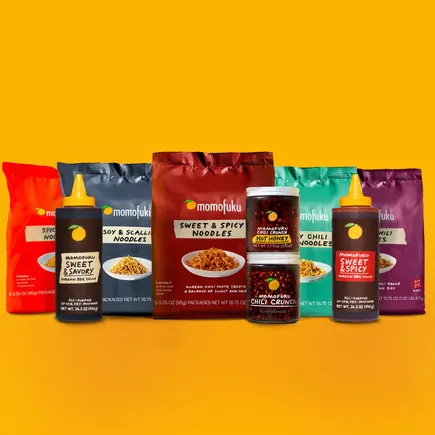
Supermarket chains are bringing gourmet restaurant dishes to store shelves, turning popular menu items into profitable products to meet consumer demand for high-quality home cooking.
During the pandemic, restaurants had to innovate to survive. Some food companies decided to turn their dishes into products, allowing home consumers to make them themselves.
Joan Driggs, vice president of thought leadership at IRI (Information Resources, Inc.), told Food Dive that premium entrees and quality sauces allowed restaurants to enter the retail space and provided a new sales channel while many competitors were shutting down.
"It may not be the same experience, but it breathes new life into the dining-out experience in a home setting," Driggs said.
Nearly five years later, the momentum of the shift from restaurant to retail shows no signs of slowing. Several high-end restaurants, such as Carbone and Momofuku, are taking up more space in stores, generating millions of dollars in additional revenue and expanding their customer base in the process.
Marguerite Mariscal, CEO of New York City-based Momofuku, said the company saw an opportunity to diversify by selling dried ramen noodles, sauces, and seasoned salts through supermarkets.
The company launched its first products in 2020 to capitalize on the surge in home cooking during the COVID-19 pandemic, and expanded to major retail channels such as Target and Whole Foods two years later. Currently, the company prioritizes both its restaurant and retail businesses, with plans to reach 10,000 stores by the end of this year.
Mariscal said that having a presence in consumer packaged goods (CPG) stores is a way to "future-proof" a business that previously competed only in the fiercely competitive restaurant industry.
"The grocery aisle has remained the same for the past 20 years," Mariscal said. "We believe the most untapped areas are the biggest opportunities for us to explore."
She added that the pandemic significantly boosted the global flavors section in stores. This created opportunities for Momofuku in the retail space—but not everyone embraced this opportunity.
"We've talked to people at PepsiCo and Campbell's, and they all advised us to look elsewhere, saying the grocery aisle is the most boring place," Mariscal said. "But hearing that, we saw opportunity."
Momofuku developed retail products such as sweet and spicy noodles and black truffle chili crunch by leveraging its 20 years of collected consumer data. It also capitalizes on the fame of its founder, David Chang—who rose to prominence with the Netflix series "Dinner Time Live" and has 1.8 million followers on Instagram.
The company found that 80% of people who follow Momofuku and Chang on social media do not live in cities where its restaurants are located. The retail business allows the company to connect with these people and generate sales it otherwise would not have achieved.
Mariscal said Momofuku faces challenges in translating restaurant flavors into shelf-stable products. For example, the company has not yet found a way to preserve the flavor of its popular scallion ginger sauce. Other innovations were abandoned for failing to find the ideal texture or price point.
"Finding the balance between ensuring we produce a quality product without making it prohibitive is truly a challenge," she said.
The increase in high-end restaurant products in stores correlates with a rise in the market share of premium foods, as many consumers seek higher-end home experiences.
Jeff Turnas, senior vice president of culinary at Whole Foods, told Food Dive earlier this year that despite the high prices, shoppers are still buying products they perceive as higher quality, such as sauces and bread.
IRI's Driggs said restaurant brands are still expected to benefit even as budget-conscious consumers cut spending, because demand for premium products continues to grow. The Circana executive said that to succeed in stores, restaurants must secure prime placement both on shelves and online, while leveraging the power of social media influencers.

Carbone's pasta sauce pursuit
Two New York City restaurants, Carbone and Rao's, have successfully entered the grocery market with premium tomato sauces. Both restaurants have hired food industry veteran Eric Skae to serve as CEO of their retail divisions.
Rao's—the "crown jewel" in Campbell's recent $2.7 billion acquisition of its parent company Sovos Brands—first launched its sauces in retail in 1992. Rao's has since expanded into soups, pasta, pizza, and lasagna. Rao's annual sales approach $1 billion and are achieving double-digit growth. Last year, its products were purchased by half of American households.
Carbone Fine Foods launched its sauces in 2021, bringing popular dishes to shelves with premium ingredients and prices higher than most competitors.
Skae, who joined before Carbone Fine Foods launched, told Food Dive that the goal was to replicate the restaurant's recipes in jarred products. To that end, the CPG brand enlisted those who best understood the success of the restaurant's recipes to chart its path.
Restaurant founder Mario Carbone and his business partner Rich Torrisi are deeply involved in the development of retail products.
"Both of them are very, very actively involved in the process to the point where they'll leave Manhattan at 3 a.m. and arrive at our production facility in central Pennsylvania at 6 a.m.," Skae said.
Carbone achieved 80% year-over-year sales growth earlier this year and expanded its product line to include Alfredo sauce and pizza sauce.
Skae said Carbone Fine Foods is seeking more innovation in the sauce category. But like Momofuku, he said the company is still working to bring certain flavors from the menu to shelves without sacrificing quality. Skae mentioned pesto, which he can make "amazing" in his own kitchen, but scaling it up is challenging.
"If you've noticed, pesto on the shelves turns brown. The leaves oxidize immediately, and those that aren't as brown contain ingredients I wouldn't consider food. Pesto isn't a huge category, just one that fits our brand," Skae said.
Skae attributes his success at Rao's and Carbone to recognizing that consumers are willing to pay higher prices for higher-quality pasta sauces.
"There's been a major shift from value and mid-tier to the premium category," he said. "If I look at other categories, I'd look for similar dynamics: where are the opportunities, where are the gaps?"