
Choosing the Right CEO: The Key Variable for Turning Around a Restaurant Brand
The CEO selection is one of the decisive factors in turning around a restaurant brand. From Starbucks' Brian Niccol to Potbelly's Bob Wright, successful transformation cases show that boards need to find leaders who can formulate clear strategies, possess industry experience or transferable skills, and are adept at listening. Outsiders to the industry face a steep learning curve, while internal promotions may be constrained by old culture. This article outlines the common traits of successful CEOs, the path to formulating turnaround strategies, and the key roles in management team restructuring.
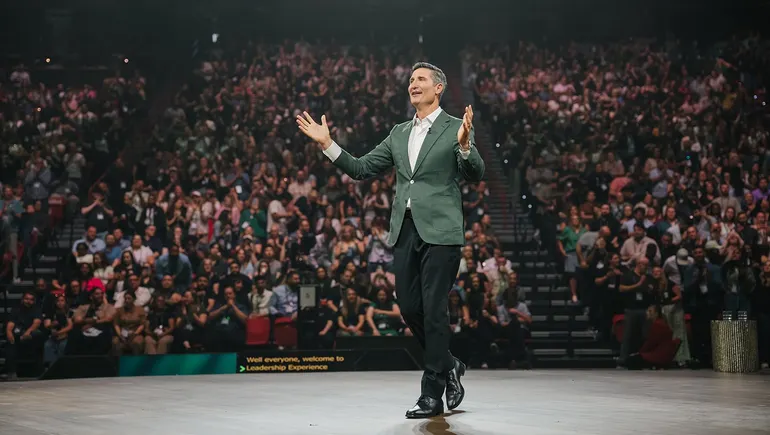
When Brian Niccol became CEO of Starbucks in September 2024, the coffee chain was struggling with significant declines in traffic and sales. Niccol moved quickly, launching the "Back to Starbucks" plan aimed at winning back lost customers and optimizing store operations.
This is not the first time Niccol has turned around a struggling restaurant brand. In 2018, he honed his turnaround skills at Chipotle, which was suffering from a sharp drop in traffic due to several high-profile food safety incidents. Within a year of taking over, Niccol promoted stores equipped with "Chipotlane" drive-thru pickup lanes, which now account for about 80% of new development and generate 15% higher sales than traditional Chipotle locations.
Can Niccol's "golden touch" work the same magic for Starbucks? Perhaps. Experts say the success of a brand turnaround largely depends on finding the ideal CEO. Boards should look for leaders who can set a clear strategy and bring order to a chaotic situation, says Chad Hesters, CEO of global executive search firm Boyden.
"Turnarounds are difficult because CEOs usually have to paint the plane while flying it," Hesters said. "This is an extremely stressful situation for the board, the CEO, and the management team."
Recently, several restaurant chains such as Potbelly and Chili's have successfully transformed their brands, and BJ's Restaurants is also seeing early results from its own strategic adjustments. More brands like Red Robin, Papa Johns, and El Pollo Loco are in various stages of strategic transformation.
There are no identical turnaround cases, but successful brand transformations follow some core principles to better meet the expectations of diners and even shareholders.
Avoid the pitfall of bringing in outsiders from outside the industry
Some companies bring in outsiders during a turnaround to provide fresh perspectives, but executives lacking industry experience face a steep learning curve that can undermine the transformation strategy.
For example, Laxman Narasimhan had no restaurant experience when he became CEO of Starbucks in 2023, having previously worked at consumer health company Reckitt Benckiser. He lasted only about a year and a half before being replaced by Niccol due to investor dissatisfaction.
"In a 'street fight' environment like a turnaround, you also have to climb the learning curve... that curve is too steep," Hesters said. "That's why many CEOs from outside the industry may not succeed. If you stray too far, the learning curve can be too steep to succeed."
Hesters advises boards seeking CEOs from outside the restaurant industry to focus on executives from adjacent industries with transferable experience. Boards should also consider complementary segments within the restaurant industry, as well as other industries highly similar to restaurant operating models.
A CEO who succeeds in one context may not necessarily succeed in another. Boards of global restaurant groups should look for executives with experience not only in the U.S. but also internationally. If the company needs to strengthen operations, the CEO should have operational experience, experts point out.
"Operations in the restaurant industry are very unique and intense," said Sharon Zackfia, an analyst at William Blair. "If the focus is on strengthening operations, it's hard to look outside the restaurant industry for candidates."
Boards can also promote from within, as internal candidates typically have a better understanding of the company's culture, decision-making processes, and operational mechanisms. But internally developed CEOs may not necessarily possess the capabilities needed for brand transformation.
"Generally speaking, during a turnaround I more often see companies looking externally for an 'outside perspective,'" Zackfia said. "There are cases of founders returning to lead turnarounds, but I can't think of one off the top of my head where an internal promotion led a turnaround."
If the internal candidate is themselves a product of the current ineffective corporate culture or management style, adjusting strategy during a turnaround can be difficult, Hesters said.
"The vast majority of turnaround CEOs come from outside the organization, usually because the board recognizes there are real challenges within the internal organization," Hesters said.
Traits of successful turnaround CEOs
Hesters points out that regardless of industry, successful CEOs typically share similar traits: high emotional intelligence, low ego, and a willingness to listen to concerns about the company's problems in a leadership role.
"They are able and willing to listen to the voice of the market, the voice of the leadership team, and they don't get stuck on a concept," Hesters said.
CEOs must also be willing to innovate and understand that "what worked in the past doesn't necessarily work now," Hesters added.
"The hallmark of any good CEO is listening," Zackfia said. "Listening itself is an underrated skill."
CEOs must have a clear understanding of what internal capabilities the organization needs to achieve its goals, and have "absolute clarity" on this, Hesters said.
Many fast-food companies struggle to maintain adequate staffing levels, so CEOs in this space need to build a strong workforce, Hesters said.
Today's restaurant CEOs must also navigate emerging technologies like automation and artificial intelligence, and build teams that can quickly integrate technology at the enterprise level. The restaurant industry has been exploring fully digitizing fleet management, ordering, payments, and customer communication, Hesters said.
"You need a CEO who understands the consumer, so the decision-making process is more intuitive for them," said Jeff Pielusko, managing director at Carl Marks Advisors.
Many companies are hiring millennials as CEOs, such as Red Lobster's CEO Damola Adamolekun, to better understand younger consumers, Pielusko said. Millennial CEOs can provide feedback on menus and dining environments that reflect the preferences of target consumers. Leaders in this age group also tend to be more tech-savvy and have good judgment about a brand's mobile app presence, Pielusko added.
CEOs with operational experience tend to be more successful because they have first-hand knowledge of common restaurant problems, Pielusko said.
"You need someone who can communicate with general managers—not just looking at spreadsheets, PowerPoints, and Bloomberg terminals, but making decisions by talking to frontline staff and getting real-time feedback," Pielusko said.
5 traits of successful restaurant CEOs
- High emotional intelligence
- Good listener
- Strong communicator
- Operational experience in restaurants or related industries
- Willingness to understand consumer and employee needs
Developing a turnaround strategy
The board of a struggling company must determine the best path: sell the company or pursue a brand overhaul with a new CEO, Pielusko said. Changing consumer perceptions with a new leader can be difficult, but selling may not save the brand either.
"Selling the brand to someone else doesn't change the brand itself. Maybe they can implement some new menu strategies, like simplifying the menu," Pielusko said, but even new owners may face an uphill battle winning back consumers.
One of the biggest initial challenges a CEO faces in a turnaround is figuring out what the brand's problems are and how best to solve them, Pielusko said.
"A fresh perspective always brings inspiration," Pielusko said. "Sometimes the same people look at the same information and try to make incremental decisions, but they may be biased based on brand history, and what the brand really needs might be a complete overhaul."
CEOs should avoid "strategic whiplash" and, if the company is not in an emergency state, should not make major changes on day one, because that's not the best way to win the trust of the board and employees, Hesters said.
"Unless it's an extreme distress or emergency situation, a CEO shouldn't make any major decisions in the first 3 to 6 months on the job, because understanding the needs of franchisees, customers, and investors takes time, and it needs to be thoughtful, intentional, and committed," Hesters said.
CEOs need to understand the organization's strengths and areas for improvement by talking to many people within the organization, Zackfia added. Spending three months listening and learning before implementing major changes is a reasonable timeframe, she said.
Most "back to basics" plans share the same root: restaurants need to refocus on customers and determine how best to meet their needs, Hesters said. Niccol implemented the "Back to Starbucks" plan shortly after arriving at Starbucks, while Todd Pennegor focused on making better pizzas at Papa Johns.

Potbelly began its turnaround five years ago when Bob Wright became CEO. The leadership team improved business fundamentals, resulting in higher profits and per-store revenue than before Wright's tenure, Zackfia said.
"They built a franchise pipeline for a business that was historically primarily company-operated," Zackfia said. "Among those management teams that have been there a long time, they really executed that turnaround."
But it doesn't always take five years to turn things around. BJ's Restaurants hired Lyle Tick as chief concept officer last year and promoted him to CEO this June. Within months, Tick introduced menu adjustments, employee tools, and other operational changes that have already produced positive results, Zackfia said.
Brand overhauls can range from streamlining menus to allow for menu innovation closer to guests, to conducting time-and-motion studies to determine whether kitchen layouts are conducive to the business, she said.
CEOs typically need to focus on four pillars of operations: customer satisfaction, speed of service, order accuracy, and portion accuracy, Zackfia said.
"If same-store sales are under pressure or new stores are underperforming, you have to go back to these four pillars... to diagnose where the problem is," Zackfia said.
Turnarounds involving renovations can also take longer if the changes are more than cosmetic. Most restaurants need maintenance every 10 years to keep their decor fresh, she said.
Once the strategy is set, the CEO's next major challenge is managing expectations, Pielusko said. While some initiatives, such as investing in computerized scheduling or redesigning kitchen layouts, can be implemented relatively quickly, comprehensive overhauls take time. CEOs should clearly communicate their vision, timeline, and expectations so no one is surprised.
"Developing an effective strategy is one thing; gaining the support of the management team and investors is another challenge," Pielusko said. "People want high returns in a short period of time."
Restructuring the management team to support the turnaround
Experts say turnaround CEOs also update the company's structure and management, in addition to adjusting operations.
"Many times, a CEO has to come in and change the culture, the management team, and the company's management culture," Hesters said. Sometimes this requires rebuilding a more agile executive team and breaking down internal departmental silos.
Teams that can collaborate cross-functionally across finance, marketing, and supply chain mean the company can make decisions faster, which is critical in the restaurant and consumer goods space, Hesters said.
Turnaround CEOs typically build their own senior management teams. One of the most common changes after a new CEO takes over is the CFO position, followed by the COO, Hesters said. Niccol hired former Nordstrom CFO and treasurer Cathy Smith as CFO earlier this year and promoted Mike Grams, who joined the company in February, to chief operating officer in June—a position that had been eliminated in 2022.
Boards typically give new CEOs the autonomy to hire who they want, but CEOs will explain personnel changes and the reasons to the board, he added.
"Many CEOs entering a turnaround situation choose to bring in a new CFO as a key execution partner because the situation is urgent and time-sensitive," Hesters said.
The CFO may be a former colleague, but often has a restructuring background and can provide a competent perspective and financial leadership skills for a company facing cash flow issues and time pressure.
The chief operating officer typically comes on board after strategic initiatives are defined, Hesters said. The COO usually executes various aspects of the strategy, depending on the specific skills required by the situation, Hesters said.
"Ensuring the selected executives have the right capability fit can only be achieved after the overall direction is set," Hesters said.
When the strategy and management team are aligned, a turnaround CEO is typically well-positioned for success. While Niccol's strategy has not yet produced same-store sales growth, the decline has slowed, and Starbucks appears to have built a solid foundation.
"If a CEO does an excellent job at a turnaround, they may put themselves out of a job," Hesters said. "Because if they're very good at turnarounds, they may not be the optimal leader in a growth environment."
Correction: An earlier version of this article incorrectly identified the name of Jeff Pielusko, managing director at Carl Marks Advisors. The article has been updated with the correct name.