
The restaurant industry is poised for recovery: How CFOs prepare for the consumption boom
The U.S. restaurant industry lost $270 billion during the pandemic. Now, as the economy recovers, surviving businesses are actively preparing. CFOs are strengthening inventory, optimizing scenario planning, expanding financing channels, and exploring M&A and technological innovation to cope with surging demand and potential risks.
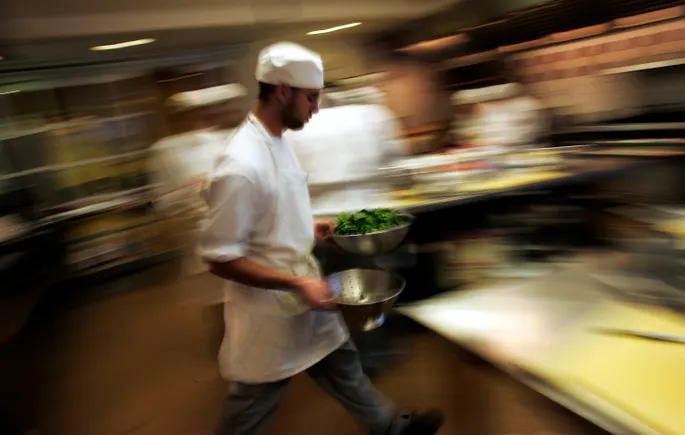
Last year, closures due to the COVID-19 pandemic cost the U.S. restaurant industry $270 billion, and many businesses that survived the crisis did so by fighting for survival in a life-or-death melee.
Now, as the economy begins a strong rebound, surviving restaurants are preparing to ride the wave of rising customer demand.
According to U.S. Commerce Department data, the economy grew at an annualized rate of 6.4% in the first quarter of this year, and restaurant and bar sales in March were up from Februaryby a soaring 13.4%. The consumer confidence index in April rose toits highest level since February 2020, boosted by $1,400 federal stimulus checks and pent-up consumer demand accumulated from months of frugal living at home.
As vaccinations become widespread and businesses reopen, CFOs in the restaurant industry are preparing for a wave of customers during the warmer months. They are strengthening inventory, improving scenario planning, contacting backup suppliers, exploring merger and acquisition opportunities, and ensuring access to capital in case of setbacks such as a new wave of infections.
CFOs are also testing the durability of business model changes triggered by the pandemic, including restaurant layouts, the adoption of new automation technologies, and a greater reliance on takeout and delivery operations.
John Mootz, a culinary consultant and third-generation restaurant operator, said their preparations offer lessons for CFOs in less pressured industries, helping them seize opportunities amid the economic boom.
Mootz said, "The restaurant industry has shown the ability to adapt and adjust in response to situations far beyond the control of operators. I hope people in other industries can draw inspiration from what restaurant owners have done."

The restaurant industry was hit harder by the pandemic than most industries. According tothe National Restaurant Association(NRA) data, 110,000 U.S. restaurants closed permanently or for the long term last year, and nearly 2 million employees lost their jobs.
Lockdowns hit "casual dining" particularly hard. Unable to quickly pivot to takeout or delivery, Sizzler and Ruby Tuesday filed for bankruptcy last year.
New customer preferences and concerns have forced restaurants to completely overhaul their business models.
The NRA said 68% of adults said they are more likely to order takeout from restaurants than before the pandemic; 70% of customers said they are willing to dine outdoors in a climate-controlled environment.
A permanent shift or a passing phenomenon?
Industry experts say that as the pandemic eases, restaurant CFOs need to determine whether these attitudes will fade or take root. They also face other major challenges.
Many restaurants that borrowed billions of dollars from the U.S. Small Business Administration may need to repayPaycheck Protection Programloans if they fail to meet loan forgiveness conditions. Rising borrowing costs could slow their efforts to control debt and improve balance sheets.
Restaurants are struggling to rehire staff, facing labor shortages across positions from servers to chefs to managers.
Industry experts say employees are staying home due to fears of the virus and the $300 per week federal supplemental unemployment benefits. In response, from fast food to upscale dining, restaurants are offering incentives such as signing bonuses or higher pay.
Experts also note that restaurants need to prove to customers that dining out is both safe and more satisfying than takeout or delivery. Those that can attract diners back will need to find a balance between human contact and cost-cutting automation such as QR code menus.
The mother of innovation
Some restaurants overcame the immense challenges of the pandemic and discovered opportunities through innovation.
In addition to electronic menus, restaurants have installed other tabletop technology that can integrate beverage and food orders, allowing customers to pay without a server.
Many restaurants have strengthened loyalty programs, while others have invested in technology to streamline drive-thru ordering. Fast-food outlets have expanded the use of self-order kiosks.
At some locations, cashiers use electronic tablets to take orders outdoors, and servers deliver food to expanded outdoor seating areas.
According to NRA data, since 2020, 62% of upscale restaurants, 56% of casual dining restaurants, and 37% of fast-casual restaurants have increased investment in outdoor seating.
Industry experts say "ghost" or virtual kitchens will also become increasingly popular with support from private equity and other capital. Successful kitchens will maintain food quality while benefiting from stronger preferences for online ordering, delivery, and eating at home.
Consolidation among franchise operators and large chain holding companies has also improved the prospects of many restaurants, and experts say consolidation may accelerate in the coming months.
In March, Flynn Restaurant Group acquired NPC International—the largest franchisee of Pizza Hut and Wendy's, which filed for bankruptcy in July. Inspire Brands (which owns chains such as Jimmy John's and Sonic Drive-In) completed its acquisition of Dunkin' in December.
Adapt or die
Dartcor rebounded during the pandemic, highlighting the rewards of flexibility and innovation. The privately held company had provided on-site catering services to corporate clients in the New York City area for years, a market that is fiercely competitive and was hit hard early by COVID-19.
When clients closed offices in March 2020, Dartcor shut down its buffet-style cafeterias and laid off 70% of its staff.
For clients allowing limited employee access to offices, Dartcor launched an app that lets employees order meals and have them delivered to "outpost stations" near their desks. According to Jason Leeds, vice president of business development, the company consolidated orders from multiple office buildings at "central kitchens" that had provided meals for its catering side business for years.
He said, "We were operating ghost kitchens before people knew what they were. It was a huge asset."
Leeds said that by taking orders through the app and centralizing meal preparation, Dartcor reduced food waste, improved efficiency, and lowered costs, giving it an advantage over larger competitors.
He said, "We saw a huge opportunity to go on the offensive and become more agile," noting that Dartcor added a record number of new client accounts over the past year.
Pandemic-proof
Checkers & Rally's also contained pandemic losses and emerged in some ways stronger and more agile.
According to CFO Bob Baker, same-store sales fell for about four consecutive weeks starting in mid-March 2020, then rebounded 7.8% for the year.
Baker said Checkers & Rally's cut capital expenditures, negotiated rent adjustments with landlords, improved supplier terms, launched a loyalty app linked to e-commerce platforms, and promoted third-party delivery. E-commerce channels now account for 12% of sales, up from 6% before the pandemic.
The chain also adjusted its menu and promotional strategies to meet growing demand during dinner hours for bundles featuring the Big Buford burger and the Mother Cruncher chicken sandwich.
Baker said in an interview that last summer, when pandemic-affected beef suppliers slowed production, Checkers & Rally's increased its reserve supply of key products. It now maintains a 90-day inventory of beef.
Baker said the chain's menu eased pandemic pressure. "People are just looking for comfort food—burgers and fries—and we hit the mark."
Moreover, its drive-thru-only layout with no dine-in area happened to fit lockdown measures, giving it an edge over fast-food competitors.
Baker said, "If you were going into a pandemic and said, 'Gosh, I need a restaurant concept that might be considered pandemic-proof,' that would be Checkers & Rally's."
Baker said the chain increased liquidity on its balance sheet during the pandemic and prepared for stronger demand. He added that he is satisfied with the company's capital structure and has no plans to add debt.
Despite the pandemic, Checkers & Rally's added 40 new franchise locations last year and 10 so far in 2021, bringing the total to 850.
Regarding future growth, Baker said, "In the markets where we currently operate, I could build 30% more restaurants, so we'll achieve it through same-store sales and unit expansion."
Meanwhile, some competitors are mimicking Checkers & Rally's by shrinking or eliminating dine-in areas and shifting more toward off-premise models. "It's interesting to watch," Baker said.
Baker said that no matter how much pressure a company faces, today's restaurant CFOs should maintain larger cash reserves, ensure reliable credit lines, and "always have a list of options ready that can generate liquidity in a short period of time."
Leeds said they should also strengthen scenario planning and have a firm grasp on downside risks.
Leeds said that before the pandemic, during the record expansion that lasted more than a decade, restaurants and other businesses focused only on "continuous growth, continuous capital investment, without really considering a recession."
He said, "It can't always be roses and growth. Everything can collapse at any time."