
Yum Brands Accelerates Digital Transformation: How Will New Tech Acquisitions Reshape Its Marketing Landscape?
Yum Brands is accelerating its digital transformation by acquiring Kvantum's AI business and Tictuk Technologies, strengthening its e-commerce and data analytics capabilities. Digital sales reached $17 billion in 2020, up 45% year-over-year. Meanwhile, the chief marketing officers of KFC and Pizza Hut in the U.S. market have successively departed, sparking speculation about marketing strategy adjustments. Experts point out that the industry trend is shifting from brand building to performance marketing, but balancing the two remains a key challenge.
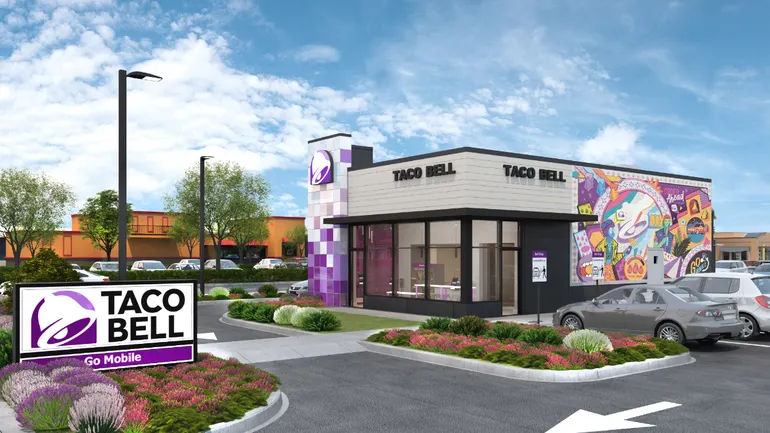
Yum Brands, the parent company of KFC, Taco Bell, and Pizza Hut, is accelerating its transformation strategy. The urgency of this strategy has been significantly heightened by changes in demand brought about by the COVID-19 pandemic.
Last quarter, the company completed two acquisitions: the artificial intelligence (AI) business of performance marketing firm Kvantum, and conversational commerce developer Tictuk Technologies. These deals reflect Yum's aggressive shift in focus toward e-commerce, data, and analytics. Combined with recent executive changes, the restaurant giant is poised to reshape multiple facets of its marketing with a new digital-first vision. In 2020, digital sales across Yum's brands reached a record $17 billion, up approximately 45% year-over-year.
"The key focus of our team is to continuously accelerate digital and technology initiatives globally, all aimed at providing customers with new and seamless ways to engage with our brands," Yum CEO David Gibbs told investors on an earnings call last month. "In some cases, this means enhancing our ability to grow sales at a faster pace and bringing in strong and diverse technology talent."
While executives are enthusiastic about integrating Tictuk and Kvantum as part of Yum's multi-year "Recipe for Growth" blueprint, other business areas are experiencing turbulence. In April, KFC lost its U.S. Chief Marketing Officer Andrea Zahumensky, who had driven the fried chicken chain's creative renaissance, and the company is actively searching for a replacement. Pizza Hut, a brand often viewed as the company's "laggard" before the pandemic, saw its Chief Marketing Officer George Felix depart a few weeks earlier to join Tinder, as the chain was restructuring its marketing team. Lindsay Morgan, formerly Director of Brand Communications, has now assumed the role of Chief Marketing Officer.
It is still too early to assess the full impact of Yum's recent acquisitions and executive departures on its marketing. However, experts point to overall trends in the fast-food industry and shifts in media consumption habits—including the prevalence of digital and mobile ordering and accelerated cord-cutting—as indicators that companies like Yum may allocate more resources to performance marketing in the future, rather than brand-building campaigns that rely more on visual impact. For example, the acquisition of Kvantum is intended to help Yum make smarter, more efficient decisions in media planning, thereby rapidly advancing its data-driven marketing strategy.
When asked about the potential impact of the Kvantum and Tictuk acquisitions on marketing teams and media spending, a spokesperson directed Marketing Dive's inquiries to the earnings call transcript.
"All trends are clearly shifting toward internet- and smartphone-based media. Money is flowing there, and consumers are using these channels," said Robert Kwortnik, Associate Professor of Services Marketing at Cornell University's SC Johnson College of Business. "Large, brand-based upper-funnel campaigns won't disappear... But if digital eyeballs are shifting to app-based media, then performance marketing becomes very meaningful."
Transformation Takes Shape
Before the pandemic, Yum made a key executive appointment by hiring former Walmart Chief Information Officer Clay Johnson as Chief Digital and Technology Officer to oversee its transformation. In 2018, Pizza Hut acquired QuikOrder, an online ordering software platform. A more concentrated investment in technology can be seen as a move that was brewing for some time.
"Honestly, I'm surprised it didn't happen earlier," Kwortnik said. "Yum has always been at the forefront of consumer insights. They've effectively used consumer insights not only for product development but also for thinking about how to go to market, especially in advertising messaging."
Domino's, one of Pizza Hut's main competitors, became a category leader through its early bets on proprietary digital and mobile ordering capabilities. For years, Domino's has marketed itself as "a tech company that happens to sell pizza," but as the restaurant industry navigates COVID-19 restrictions—which have increased demand for contactless sales channels and store concepts with built-in safety protocols—similar mindsets have become increasingly common.
"Domino's remains the gold standard for digital innovation and experience in the restaurant industry," said Chelsea Gross, Director Analyst at Gartner, in an email comment. "While Yum Brands is still catching up to Domino's in digital experience, I believe that with the recent acquisitions, Yum will achieve greater success in both proprietary delivery and partnership delivery services."
In data and analytics, Yum plans to use Kvantum's machine learning and econometric modeling solutions to measure the effectiveness of marketing campaigns across owned, paid, and earned media channels. On the Q1 earnings call, Gibbs said that in markets where the solution was tested, including Pizza Hut UK and Taiwan, Yum saw "substantial improvements" in marketing spend efficiency and same-store sales. KFC and Taco Bell began using some of Kvantum's products in the U.S. late last year.
Tictuk focuses on integration with social media and messaging channels such as WhatsApp, Facebook Messenger, SMS, and email, enabling consumers to engage with brands and perform actions like placing orders. The Tictuk platform was previously used in approximately 900 KFC, Taco Bell, and Pizza Hut locations outside the U.S., but Yum plans to roll out the service globally to capitalize on rising mobile and digital demand.
"These acquisitions are definitely accelerators... If they drive progress, they will likely build confidence to continue investing and possibly acquire even more capabilities."
— David Novak, Senior Partner at Prophet
Neither the Kvantum nor the Tictuk deals are large: according to their LinkedIn pages, the two companies together have about 40 employees.
"We're acquiring these companies to enhance capabilities and provide our franchisees with proprietary services that are unique to us at the lowest possible cost. They are not intended to generate profit for Yum," Chief Financial Officer Chris Turner told analysts. "We believe we have a really good model when we do these small acquisitions, and we can scale it globally."
Nevertheless, these deals highlight Yum's focus as it builds its growth engine in the post-pandemic era—which experts believe could include further M&A.
"These acquisitions are definitely accelerators," said David Novak, Senior Partner at brand transformation consultancy Prophet. "This is a very focused set of capabilities that at least demonstrates where they might be headed. If they drive progress, they will likely build confidence to continue investing and possibly acquire even more capabilities."
Seeking Balance
While the Kvantum and Tictuk deals may not be "game-changing," integration could be a challenge. McDonald's acquired AI company Dynamic Yield for over $300 million in 2019 to support its digital transformation. According to a February report from The Wall Street Journal, Dynamic Yield's products frustrated franchisees and failed to meet some profit targets. McDonald's is reportedly considering selling parts of the business. This could serve as a cautionary tale for Yum and its marketing team.
"Friction between traditional marketing teams and new digital acquisitions is common," said Gartner's Gross. "Digital transformation should support, not contradict, the goals of the marketing team."
Yum's recent CMO departures are a separate issue but equally indicative of changes in its marketing. Under Zahumensky, KFC became known for bold creative campaigns, such as an anime dating sim and a Lifetime original short film starring brand mascot Colonel Sanders.
Experts say whimsical brand-building campaigns will remain in the playbook, but their share of the marketing mix may shift.
"This may come down to the CMO's area of expertise—whether they are stronger in the advertising and creative space or the technology insights space, which is certainly a different skill set," Kwortnik said.
Meanwhile, Kvantum's expertise in AI signals more automation in Yum's marketing, as the industry moves toward programmatic thinking. The company is trying to balance automation with human insight. The Kvantum unit will work closely with Collider Lab, a consumer insights and marketing strategy consultancy Yum acquired in 2015.
"You still need traditional consumer insights, whether it's focus groups or survey-based approaches," Kwortnik said. "If you can internalize some of that intelligence, I think it's a worthwhile investment for a big brand."
"But there's a risk of chasing shiny new things... especially in AI," he added.
Looking Ahead
Beyond helping to expand technology infrastructure, Yum's new assets could be applied to several other areas in the long term. Loyalty programs have become a higher priority for Taco Bell and Pizza Hut, with the former launching a new program last year.
Broader retail categories may also signal where Yum is headed. Kroger acquired a majority stake in data analytics firm DunhumbyUSA in 2015 and has been steadily building a retail media network that serves other advertisers. As the demise of third-party cookies makes first-party data more valuable, other brands including Walmart and Target are increasing their investment in digital advertising.
Restaurant companies possess granular data such as daypart and traffic patterns that are valuable to external brands. According to Novak, although the restaurant industry currently has a weak presence in this area, it is not impossible for companies like Yum to build media networks in the future.
"They could potentially build something that rivals Target," Novak said. "Not many companies have that scale of reach across several different specialty categories like they do."
More immediately, as post-pandemic reopening begins to take shape, differentiating on convenience and speed will be even more critical for the fast-food industry. The health crisis has reset consumer expectations for dining, and many consumers—especially younger demographics—may retain the digital and mobile habits developed during the pandemic. Engaging consumers on these channels requires a different mindset, including in marketing.
"They'll stick with the apps they like and are familiar with. If you're not prominently distributed through that delivery app, it's just another channel," Kwortnik said. "This is more of a push marketing strategy: not just getting people into physical stores, but finding ways to drive the market through these other channels—channels that fast-food restaurants have never relied on before."
