
How Fast Food Brand Marketers Can Seize the Plant-Based Food Wave
The plant-based food market continues to expand, expected to reach $162 billion by 2030. Quick-service restaurant (QSR) brands like Chipotle and KFC have introduced plant-based products to attract younger consumers. Marketers face the challenge of balancing health, environmental, and taste messaging, while also considering brand consistency, supply chain, and consumer acceptance. Experts advise caution in using health or sustainability claims unless they align with the brand's core values.
After years of rapid growth, plant-based foods are expected to continue to take up a larger share of menus, plates, and consumer diets, with the market size projected to grow from $29.4 billion in 2020 to over $162 billion by 2030,according to Bloomberg Intelligence. This trend has impacted the fast-food industry,with Chipotle and KFCrecently following the lead of brands like McDonald's and Burger King in launching plant-based products.
For fast-food marketers, adding plant-based options to menus is an opportunity to attract younger consumers who areseeking healthier, more environmentally friendly food choices。
"For those brands trying to make their brand younger, appeal to a younger generation of consumers, or reach consumers who are curious about health and the environment but don't want to sacrifice taste, I think plant-based meat can fit into almost any foodservice operation," said Zak Weston, senior supply chain manager at the Good Food Institute (GFI).
However, marketing these products—whether in partnership with industry leaders Impossible Foods and Beyond Meat or developing them in-house—comes with a set of challenges, as chains need to maintain consistency with their brand identity, target consumers, menu structure, and back-of-house operations.
Marketing 'Meat' to Diners
Since Beyond Meat and Impossible Foods launched nearly a decade ago, plant-based foods have driven consumer acceptance by emphasizing health and sustainability benefits, as well as their similarity in taste and texture to animal proteins.
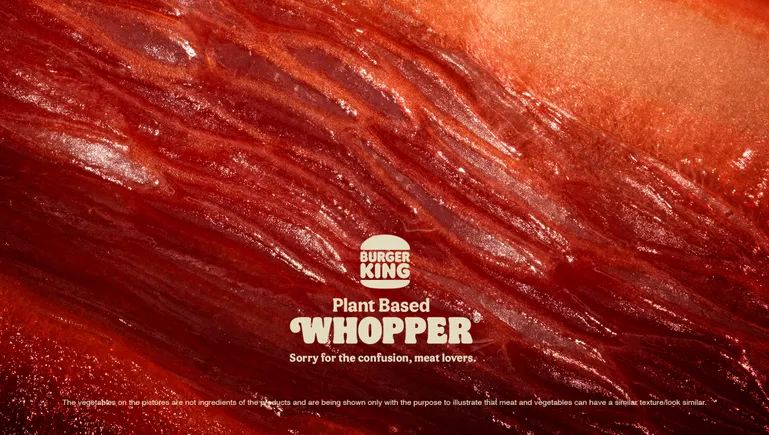
Burger King's new "Meat?" advertising campaign reinforces the messaging of its plant-based alternatives by playing on the visual similarities between meat and plants. In print and out-of-home ads, close-up images that appear to be red meat are actually red peppers, beetroot, and chicory. Created by agency David Madrid, the campaign launched in Costa Rica, Mexico, Brazil, and Germany, with its tagline "Sorry for the confusion, meat lovers" inviting consumers to reconsider and try its Impossible Whopper.
Although fast-food marketers strive to keep up with health and environmental messaging—such as Burger King'sKeep It Real Mealscampaign promoting the removal of 120 artificial ingredients from its menu—taste and food experience remain key marketing priorities.

"There are a lot of very favorable nutritional and health benefits, but as a food brand, you have to be very careful in marketing because if you communicate in a way that it tastes bland or is less worthy of being on the menu than other animal protein products, you're actually hurting sales," Weston said. "We always advise caution with health-oriented, nutrition-oriented, or sustainability-oriented messaging unless that's truly a core part of the restaurant brand's appeal to consumers."
For example, Chipotle's launch of its plant-based chorizo emphasizes that its product is made from fresh, farm-grown ingredients rather than being lab-made. In this way, its promotion of plant-based protein is an extension of its long-standing efforts aroundsustainabilityandsupporting farmers.
"You can criticize Chipotle all you want, but one thing is they're pretty solid on food integrity, they care about 'this farm supplies this,' like Niman Ranch pork," said Dan Rowe, CEO of franchise development company Fransmart.
"We always advise caution with health-oriented, nutrition-oriented, or sustainability-oriented messaging unless that's truly a core part of the restaurant brand's appeal to consumers."

Zak Weston
Senior Supply Chain Manager, Good Food Institute
Marketing plant-based foods is not one-size-fits-all. For example, Chipotle's strategy will differ from that of competitor Taco Bell, which has testedproprietary proteinsas well asproducts in partnership with Beyond Meat.
In the latter case, partnerships between food brands and plant-based food companies have proven mutually beneficial, although co-branded products in the fast-food space have typically been limited to partnerships with Coca-Cola and PepsiCo's Frito-Lay. Major chains like McDonald's and Burger King partnering with Beyond Meat and Impossible Foods, respectively, speaks to the marketing value of these food brands. As the market grows, co-branded products on menus could also become a competitive advantage over animal proteins, since animal meat is essentially an unbranded commodity.
"Plant-based meat brands have been able to build such strong consumer followings, and their brand equity is so high, that restaurants actually want to put them on the menu, and they do drive sales, which is quite compelling," Weston said.
The persistence of some early product launches, such as White Castle's Impossible Sliders (whichlaunched nationallyin 2018), demonstrates that plant-based foods suit different consumer groups. While the food does attract Baby Boomers and Gen X, demand for plant-based foods is primarily driven by Millennials and Gen Z, Weston explained.
"The demand from younger generations is remarkably high, which really signals an upcoming wave of demand for these products, especially as these consumers age and gain more purchasing power," he said. "When they become parents... Millennials and Gen Z will give their children different foods than they grew up with; they have very different eating habits."
Warning Signs and the Future
Despite continued adoption in the food industry, not all plant-based promotions are equally effective. Dunkin' in 2020 enlisted Beyond Meat ambassador and investorSnoop Doggfor an advertising campaign highlighting its Beyond Sausage sandwich, but the product wasremoved from most restaurantsthe following year. Even industry experts optimistic about plant-based foods point to issues that food brands must be wary of.
"Plant-based will be the next big thing in the food industry, but doing plant-based like KFC did, in my view, is just following the trend," said Fransmart's Rowe.
Restaurants that use the same fryer or grill to cook plant-based foods may lose vegetarian or vegan customers concerned about cross-contamination, not to mention the cognitive dissonance of buying plant-based food at a chain that sells animal products. For example, McDonald's is currently embroiled in controversy overpork welfareissues—these headlines could distract from its McPlant promotion. Additionally, despite the brand equity of Beyond Meat and Impossible Foods, their problems could also weigh down restaurant efforts.
"There's a huge backlash right now against Beyond and Impossible because of all the additives," Rowe said. "People are starting to ask, 'Is it really better for me? Is it really better for the environment?'"
For some, adding plant-based proteins to menus is the latest iteration of fast-food chains adding healthier foods over the years, such as early partnerships with Weight Watchers and Atkins Diet brands.
"It's a veto vote: 'Let's put it on the menu, we can show our stance on sustainability and health here, and it gives us a halo effect,'" said Robin Blanchette, CEO of Norton, a creative agency focused on hospitality.
"People are starting to ask, 'Is it really better for me? Is it really better for the environment?'"
Dan Rowe
CEO, Fransmart
Similar to previous health food additions, Blanchette expects plant-based proteins not to become a significant driver of sales—she suggests marketers should give this "shiny new thing" appropriate attention.
"There's always a segment of people who want to try to do better, and I think this is part of that," she said. "When you look at menu mixes and product portfolios, although people say they want to eat healthy, they don't actually order that way."
Nevertheless, restaurants, after nearly two years of the pandemic, are facing labor, supply chain, and inflation issues, and every additional sale helps (these factors alsoaffect plant-based food companies). As with every part of the business, the pandemic may have disrupted launch plans for the plant-based category; efforts by Chipotle, KFC, and others may ultimately help make up for lost time.
"Plant-based meat was one of the hottest trends in foodservice before the pandemic, and we certainly expect plant-based meat can play a significant role in helping rebuild traffic, attract new consumers, and retain existing ones, looking ahead to 2022," said GFI's Weston.
Plant-based meat is helping restaurant chains activate new dayparts, occasions, and consumer segments, and may also help marketers change the rules of existing competition; perhaps aplant-based chicken alternativecould make waves in the chicken sandwich wars. Regardless of format, fast-food marketers must stay true to their brand and value proposition: providing delicious, affordable, and convenient food.
"[Plant-based foods] really have to be something that's available where consumers want to go, like being able to give a child a plant-based Happy Meal," Weston said.