
2024 Restaurant Loyalty Programs Will Be Led by Personalization
As consumers' emotional connection to brands declines, restaurant loyalty programs will shift toward personalized customization in 2024. Chipotle enhances member experience through data engines and gamification, with membership surpassing 36 million; new and established brands like Cracker Barrel and Sweetgreen are adjusting their strategies. Experts point out that successful programs need to design exclusive rewards for different customer segments and leverage real-time data and AI to boost engagement.
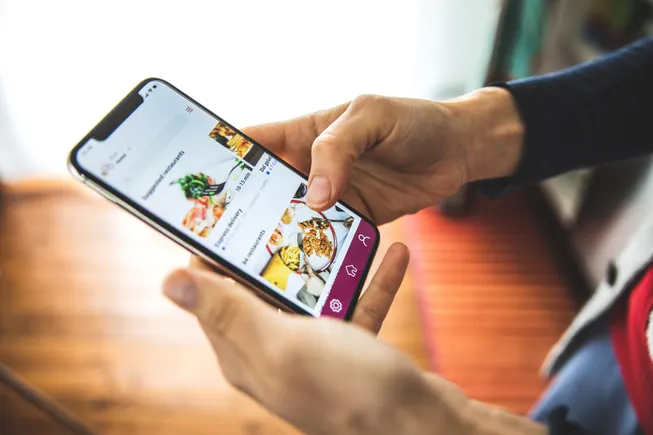
Looking ahead to 2024, Chipotle plans to continue deepening personalized experiences through its rewards program, leveraging research and customer data to "provide relevant experiences in fun ways that inspire future purchases," said Jason Scoggins, senior director of customer activation for the burrito chain.
Chipotle is not alone. Recently, more restaurant chains have launched or fully upgraded their rewards programs, aiming to offer more targeted incentives to loyal members.
Stephen Zagor, head of Steve Zagor & Associates and an adjunct professor at Columbia Business School, noted that building customer loyalty is crucial in the current environment. Technology has standardized customer engagement processes, and competition for consumer spending is fierce. Loyalty programs provide businesses with a significant opportunity to connect and build relationships with customers under pressure.
"Loyalty programs are good at expressing a company's care and appreciation," Zagor wrote in an email. "They make customers feel 'I matter,' like joining a club."
However, not all rewards programs are the same or should be the same. Rick Camac, executive director of industry relations at the Institute of Culinary Education, said that if brands do not measure the emotional connection built with members and only maintain the same rewards, they will eventually lose value and customers.
In 2024, restaurants need to understand their customer demographics more precisely and offer targeted rewards.
"You need to figure out what customers will respond to," Camac said. "How do you make guests feel wanted, understood, and valued?"
For example, Chipotle uses a personalized decision engine to offer members "Freepotle" rewards—a program launched in early 2023 that provides members in the U.S. and Canada with 10 "free food drops" per year, including drinks, guacamole, double protein, or chips.
Scoggins also mentioned that the company introduced multiple real-time interactions and enhanced gamification elements, including earnable achievement badges, to deepen customer engagement.
Scoggins said Chipotle rewards program membership grew nearly 14% in 2023, exceeding 36 million. This followed 20% membership growth in 2022, reaching 31.6 million.
"The rapid growth of Chipotle's rewards program shows that consumers see significant value in participating, and it also allows us to increase purchase frequency among our user base," Scoggins said.
Customized experiences can deepen customer engagement
Loyalty programs have become an increasingly important strategic element for full-service restaurants, coffee shops, and fast-food chains.
Today, winning customer loyalty is critical for businesses because consumer brand affinity is declining. According to a recent Salesforce survey, the percentage of customers with an emotional connection to brands fell from 62% in 2022 to 54% in 2023.
Cracker Barrel launched a rewards program in September to boost sluggish traffic and sales. Through the platform, customers earn one point (called a "peg") for every dollar spent, redeemable for prepared take-home meals, sides, desserts, or retail discounts.
Sweetgreen launched a two-tier loyalty program in April, allowing customers to choose free or paid subscriptions. Through the program, customers can earn rewards, try new products, and purchase merchandise. The paid service offers perks such as a $3 daily order discount. The company later allowed members to redeem rewards on in-store orders.
Camac noted in an email that in most cases, loyal customers account for less than half of a restaurant's total customer base—meaning about half of customers are not swayed by the benefits most programs offer. He said Starbucks has one of the most successful programs, with loyal customers contributing nearly 60% of the coffee chain's total revenue, a figure reported in November.
Zagor said that despite this, cultivating customer loyalty can still increase member spending at a lower cost.
He also noted that these programs generate vast amounts of customer data, providing strategic information for future product decisions and the "ultra-premium goal" of "AI-driven personalization."
The Salesforce survey shows that brands offering exclusive, personalized experiences at every touchpoint are appreciated by consumers. Companies like Starbucks, which successfully deliver personalized experiences, use real-time customer data and AI to drive their programs, making it easier for consumers to engage with the business, thereby improving acquisition, retention, and lifetime value.
Camac said the success of different loyalty program designs depends on their target segments. For example, a program that works for Starbucks may not work for Landry's or Ruth's Chris Steak House.
He suggested that businesses should align their programs with the interests of their target customers. For instance, an upscale steakhouse could offer exclusive wine tastings for regulars.
"Free coffee may not work at a steakhouse," he said.
Rewards programs are evolving with customer needs
While new programs are being launched, other companies are revising existing ones.
To keep loyal customers engaged amid menu price increases, companies have raised discounts offered through points-for-money models. Meanwhile, to enhance customer retention, brands are upgrading rewards programs through various schemes, ranging from NFT digital tokens to palm-payment tools.
Pizza chain Pieology in November allowed subscribers to its Pie Life Rewards program to enjoy daily benefits on custom pizza purchases, such as side salads, cookies, and drinks. Similar daily benefits have been adopted by chains like Noodles & Company over the past year.
In response to market changes and operating costs, Chick-fil-A adjusted its popular loyalty program, Chick-fil-A One, last spring. The fast-food chain added redeemable items and increased the point value of some rewards. These changes echo moves by Dunkin' and Starbucks, which revised their points redemption systems in 2022 and 2023, respectively.
However, not all changes are welcomed. Dunkin's 2022 move to increase points accrual rates while also raising the points needed to redeem drinks sparked backlash from fans and regulars, with some customers saying they would switch to other brands. The change placed more emphasis on food, raising the cost of drink redemptions.
The company said these complaints do not represent the attitude of the majority of loyal customers. But continuously monitoring and adjusting to customer interests is crucial.
Camac said inflationary pressures may, to some extent, change the types of rewards people are interested in.
"When money matters more, interest shifts toward saving dollars rather than other rewards," he said.
The Salesforce survey shows that many companies have not yet shifted transactional loyalty programs to be more personalized because creating such programs in the past required significant resources. The survey found that 54% of retail loyalty programs still offer points-based rewards.
Redesigning, phasing out, or adjusting the rules and rewards of points programs can be a daunting task.
Camac believes most companies' loyalty programs are heading in the wrong direction—the same tiered programs have persisted for so long that most customers take rewards for granted and no longer view them as privileges.
"Getting a free coffee after buying 10 is hardly exciting, but I'll still take the free coffee," Camac said.