
Cost pressures may trigger more restaurant franchise bankruptcies in 2024
In 2023, multiple large fast-food franchisees filed for bankruptcy, driven by common issues such as rising costs, financing difficulties, and declining customer traffic. Entering 2024, these pressures have not eased, and experts expect the bankruptcy wave may continue, but the market has already eliminated some of the weakest players, leaving remaining operators potentially more resilient.
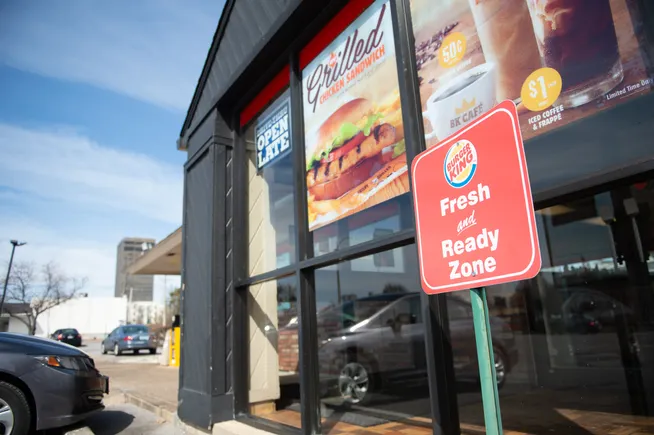
Last year, several large quick-service restaurant (QSR) franchisees declared bankruptcy. Although each bankruptcyhad unique causes, together they reveal common problems plaguing the industry: rising input costs such as labor and food, difficulty raising funds for expansion or renovation, increasingly expensive debt service costs, and stagnant or declining foot traffic.
Today, the operating environment remains dangerous for operators, and experts say bankruptcy filings by restaurant franchisees may be far from over.
"The pressures franchisees cite, and the problems they cause for their operating economic models, showed little sign of easing heading into 2024," said Eric Danner, a partner in CohnReznick's restructuring and dispute resolution practice.
Ab Igram, executive director of the Tariq Farid Franchise Institute at Babson College, believes these issues may only pose a serious threat to highly leveraged operators.
"To a large extent, it depends on the individual operator, the market they are in, and the condition of their stores," Igram said. "If the economy continues to improve, that bodes well for franchisees entering 2024."
Core issues remain
Danner noted that the factors driving up costs have not changed. The unemployment rateremains very low, keeping the labor market tight and forcing employers to compete for workers. This dynamic could drive wage growthabove inflation on a broad basis。
While good news for workers, wage growth could erode the cash flow franchisees use to meet loan covenants, putting pressure on operators' balance sheets, said Kevin Clancy, global director of CohnReznick's restructuring and dispute resolution practice.
Because franchisee debt often comes with cash flow or profitability requirements, margin or cash flow issues caused by supply shocks, labor shortages, or other disruptions can push operators into covenant defaults, Clancy said. Such shocks can be as small as a harsh winter in a region reducing foot traffic.
Danner said the market has generally shifted from "term debt with extensive loan covenants" to "asset-based financing facilities, which have fewer covenants but typically come at a higher cost of capital." Such loans may be less demanding in the performance metrics needed to avoid technical defaults, but that relative flexibility comes with a higher price.
Overall, borrowing costs have risen since 2021 as the Federal Reserve raised interest rates.
"I've seen clients' borrowing costs increase two to three times," Danner said. "That's significant, especially when you borrow large principal amounts for acquisitions or major renovations."
Part of the QSR franchisee distress stems from the sector's success between 2020 and 2021. Danner said QSR outperformed the rest of the industry during that period, attracting investors and lenders who were cautious about other restaurant segments.
"When people bought into franchise systems during COVID, most of the money was borrowed. Now the consequences are starting to show," Danner said. Since then, debt service costs have spiraled, diverting operating profits from renovations, new technology, and reinvestment in core operations to repay debt.
Clancy said that as the post-pandemic consumer enthusiasm for experiential dining returns to normal, the casual dining and full-service restaurant segments may also see more bankruptcy filings.
Danner added that if business traffic and office attendance in central business districts remain sluggish, dining and upscale restaurants in city centers could also see a wave of bankruptcies.
The weakest franchisees may have already been weeded out
Mark Wasilefsky, head of franchise finance at TD Bank, said that although many franchisees remain heavily indebted, given the specific issues faced by bankrupt franchisees last year, there is reason to believe the worst may be over.
Among the major franchisees that went bankrupt in 2023, two were owned by the same founder,whose death left the companies leaderless. OneMcDonald's franchiseefiled for bankruptcy to minimize liability after the company hired a sex offender as a manager who allegedly sexually assaulted a minor employee in the store. Starboard Group, a majorWendy's franchisee, filed for Chapter 11 bankruptcy in November, with its problems stemming from residual debt left by an earlier failed foray into the Brazilian market. And Meridian Restaurant Unlimited, one of the Burger King operators, had adopted a strategy ofacquiring underperforming storesin hopes of turning them around. Otherbankrupt franchiseeswere heavily in debt.
"Some people leveraged too high in 2021," Wasilefsky said. "They may have expected that kind of performance and margins to continue; no one anticipated interest rates, commodities, and wage inflation coming the way they did."
"I don't think all those deals have cleared out," Wasilefsky said. But those operators who have held on have had time to pay down debt and may be close to a position to refinance, depending on loan terms.
"In '22 and '23, there was indeed a certain degree of weeding out the weak," Danner said.
Although many macroeconomic statistics show a relatively healthy U.S. environment—low unemployment, slowing inflation, steady growth—QSR foot traffichas declined since 2022, and brands' value strategies may not reverse that.
"There are other issues behind many of these bankruptcies," Wasilefsky said. "Unless there's an external factor, I don't think we'll see more large bankruptcies."
The market could still face external shocks: Ansar Allah, the Islamic movement based in northern Yemen, has imposed apartial blockadein the Red Sea to stop what the group says are crimes committed by Israel during its invasion of Gaza. The group also aims to pressure Israel to ensure timely delivery of food and water to the besieged Gaza Strip, where the United Nations estimates more than500,000 people are starving. According to the Financial Times, the blockade has causedshipping costs to soar, which could push up oil prices and exacerbate inflation.