
How Restaurant Chains Are Refreshing Their Marketing Menu in a Tough Economy
Amid economic uncertainty and tariff fluctuations in 2025, major restaurant chains are adjusting their marketing strategies, shifting from price-focused approaches to nostalgia and innovation, while upgrading loyalty programs and increasing investments in digital technology. McDonald's boosts sales through cultural collaborations and major events, Starbucks revitalizes its brand with the "Hello Again" campaign, Papa John's launches the "Meet the Makers" creative marketing initiative, Cava optimizes its loyalty program, and Yum Brands leverages AI and digital tools to enhance personalized marketing.
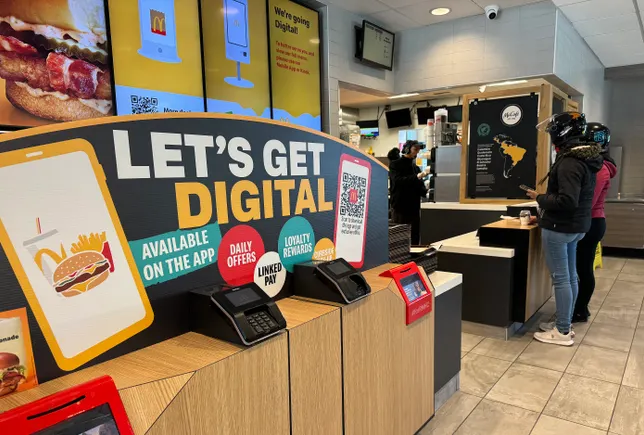
Major restaurant brands often face the commercial reality of intense competition and low profit margins, a challenge that is even more acute during periods of consumer uncertainty. These concerns are particularly prominent in 2025 to date, as the Trump administration's shifting tariff plans continue to weigh on the economy.
Amid the turbulence, many companies are relying on their marketing departments to boost sales, including launching bold creative campaigns, adjusting loyalty strategies, and investing in digital technology.
"With rising uncertainty and the potential for tariffs to drive up prices, many chain brands are shifting their marketing strategies toward nostalgia or innovation rather than price points," said R.J. Hottovy, head of analytical research at location analytics platform Placer.ai.
Although most quick-service and fast-casual restaurants reported few bright spots in their earnings, a recent analysis by Marketing Dive reveals how marketers are striving to maintain positive relationships with consumers.
Betting on culture
QSR leader McDonald's has been the "canary in the coal mine" for the restaurant industry's struggles, with U.S. same-store sales down 3.6% in the first quarter of 2025, a stark contrast to the 12.6% growth in Q1 2023 and 2.5% growth in Q1 2024.
"We entered 2025 knowing the QSR industry would face challenges due to macroeconomic uncertainty and consumer pressure," CEO Chris Kempczinski said on McDonald's most recent earnings call. "We are not immune to industry volatility or the pressures consumers are facing."
McDonald's continues to try to place the brand at the center of culture and replicate the success of its Famous Orders platform and the viral Grimace birthday campaign of 2023. This year, the chain enlisted John Cena to promote its value menu and launched Pokémon Happy Meals, but its biggest win may be its partnership with the Minecraft movie. The campaign, launched in March around the record-breaking game adaptation, is McDonald's largest global campaign to date, reaching over 100 markets.
"We are encouraged by the consumer response to the Minecraft movie campaign and our overall performance in April, which demonstrates the benefits of combining our value platform with full-price promotions and excellent marketing execution," Kempczinski said on the Q1 earnings call.
According to iSpot data, McDonald's estimated national linear TV advertising spending in Q1 was $39.6 million, up nearly 75% year-over-year, with a focus on savings-oriented ads and a partnership with WNBA star Angel Reese. The chain saw web traffic driven by linear TV ads increase 19.5%, outperforming other burger brands in a recent study by TV measurement firm EDO. The findings suggest McDonald's could gain further benefits by optimizing its TV ad spending, shifting from underperforming prime-time slots to early morning slots.
"In times of tightened budgets, QSR brands are seeing strong consumer response to value meal ads, and every dollar—whether for consumers or advertisers—must work harder," Laura Grover, senior vice president and head of client solutions at EDO, said in a statement. "As marketers navigate this uncertain landscape, impression quality becomes key to driving smarter allocation decisions and ensuring stronger returns within existing media footprints."
Transforming through marketing
While McDonald's works to align its brand with pop culture, Starbucks is attempting to revitalize its brand identity as part of a turnaround plan that includes significant marketing investment. The coffee chain's U.S. comparable sales fell 2% in Q1, and comparable transactions fell 4%, partially offset by a 3% increase in average order cost.
The "Hello Again" and "Starbucks Monday" campaigns launched around the Super Bowl generated record customer engagement and drove the second-highest Monday total sales in the chain's history, CEO Brian Niccol said on the company's recent earnings call. The percentage of customers naming Starbucks as their first choice reached a two-year high, and TikTok engagement nearly tripled quarter-over-quarter.
"We're seeing steady traffic from non-Starbucks Rewards members, indicating that our broad marketing efforts to reintroduce Starbucks to the world are resonating with customers," Niccol said. "I think on the marketing front, we will continue to get better from here."
Similar to Starbucks, Papa Johns is also implementing a transformation strategy, with amplifying marketing messages as a key priority. To that end, the pizza chain launched "Meet the Makers" in March, the first creative work under CMO Jenna Bromberg, who joined in November. According to CEO Todd Penegor, the campaign has had positive early results, helping to improve customer awareness and consideration in QSR. Papa Johns' North America comparable sales fell 3% year-over-year in Q1.
Based on consumer insights, the chain plans to evolve the campaign, focusing on its use of simple, fresh ingredients. Papa Johns is also relying on incremental media investment to strengthen the brand and improve transactions.
"As we amplify our marketing messages, we are investing to win share of voice at the national and regional levels, drive transactions, support ongoing testing of value propositions, and improve our agility," Penegor said on the earnings call.
Loyalty evolution
Across the restaurant industry, marketers are working to fine-tune and evolve loyalty platforms and rewards programs to better meet the needs of cost-conscious consumers. McDonald's continues to see strong systemwide sales from loyalty members, reaching $31 billion over the past 12 months, with a goal of $45 billion annually by 2027. Despite encouraging loyalty sales, McDonald's is seeking to balance its everyday value menu with limited-time digital offers.
"Relying on the app as the primary source of value won't work before app usage becomes the majority of traffic, because you can't reach most consumers," Kempczinski said on the earnings call. "So having a broad platform like McValue that's accessible to everyone... that's a must, and that's why we spent the time and effort to launch it properly."
Cava—one of the fast-casual chain winners with 10.8% growth in Q1—is also making its loyalty program a focus. The Mediterranean food purveyor has increased sales through the program as a percentage of total revenue by 340 basis points since its relaunch in October. Total program membership is approaching 8 million, with over 50,000 new registrations weekly. These results validate the chain's new approach to loyalty.
"The initial goal was to shift from a more transaction-based 'spend X, get Y' model to an 'earn and accumulate points' model to drive greater engagement, and that's exactly what we're seeing," CEO Brett Schulman said on the earnings call. "So we lowered the reward thresholds for low- or medium-frequency users, which has made these users more engaged."
For Cava, bringing guests into its first-party ecosystem has increased personalization opportunities and fostered a test-and-learn environment. The chain plans to launch the second phase of its loyalty program, introducing a tier structure based on visit frequency, adding benefits and rewards.
"Our level of guest insight today plays a significant role in informing the execution elements of the loyalty program."
— Michael Skipworth, CEO of Wingstop
Similar to competitor and loyalty innovator Domino's, Papa Johns lowered the redemption threshold for Papa Rewards in November, a change that helped attract approximately 1 million new loyalty members in Q1, bringing the total to over 37 million. While the change also led to a slight decline in order size, it drove growth among medium- and high-frequency loyalty consumers and accelerated repeat purchases.
As brands with mature loyalty programs adjust their offerings, new entrants continue to emerge. Wingstop will pilot a loyalty program in Q4, with a full rollout planned for 2026. The program will leverage insights and members from its MyWingstop digital ordering platform's database of 50 million strong, providing experiential engagement opportunities for Gen Z and millennial consumers.
"We believe our loyalty program will be unique in the industry because we're not taking the typical transactional approach. Our level of guest insight today plays a significant role in informing the execution elements of the loyalty program," CEO Michael Skipworth said on the earnings call.
Investing in digital technology
Beyond the behind-the-scenes work of building loyalty programs and integrating customer relationship management data, restaurant chains are also investing in technology to enhance their mobile and digital ecosystems. In the app space, Starbucks will update its offering to allow scheduling of mobile order pickup times and improve price transparency. Chipotle continues to work on reducing friction in its app, and Wendy's added gamification elements in Q1 to encourage customers to engage with the brand beyond purchases.
Artificial intelligence (AI) remains the hottest technology in marketing, in the restaurant industry and beyond. Papa Johns partnered with Google Cloud last month to use AI to enhance personalization and its ordering and delivery experiences.
"So far, it's mostly generative AI helping companies fine-tune consumer-facing messages, but we're starting to see other behind-the-scenes things—other AI platforms—used to gain better customer insights and for one-to-one interactions," Placer.ai's Hottovy said.
"These advancements are driving smarter targeting, improving efficiency, and enhancing the returns on our digital marketing investments."
— Chris Turner, CFO of Yum Brands
Yum Brands, parent company of Taco Bell, KFC, and Pizza Hut, has partnered with Nvidia to accelerate its AI deployment. The company launched a proprietary software-as-a-service suite called Byte by Yum in February, integrating various technology products across thousands of restaurants. The suite's solutions are already showing early results, helping Taco Bell push creative boundaries in advertising and use personalization to generate incremental sales. Digital sales across Yum's entire portfolio grew 12% year-over-year in Q1, with executives attributing the growth to the company's technology investments. Overall, Yum's global system sales grew 5%, partly driven by an 11% increase in Taco Bell U.S. system sales.
"Our U.S. brands are leveraging our robust data engine and first-of-its-kind cross-brand consumer data platform to deliver personalized marketing campaigns," Yum CFO Chris Turner said on the earnings call. "Since late last year, we've expanded AI-driven marketing use cases across our brands, further embedding intelligence into how we attract and convert consumers. These advancements are driving smarter targeting, improving efficiency, and enhancing the returns on our digital marketing investments."
